
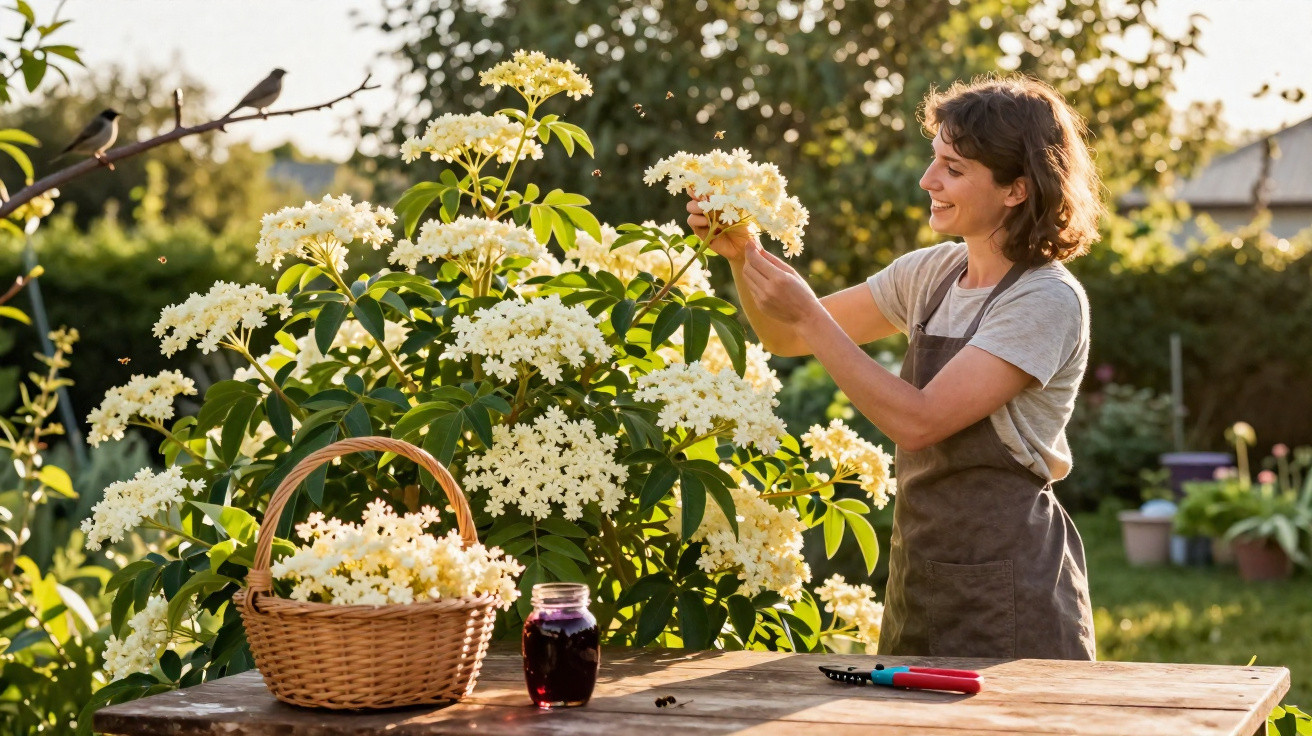
Many gardens look grey and deserted in early spring, as though everything is still dormant. Yet there is a native plant that is best planted now, and within only a few weeks it can support insects, birds and even your own kitchen. Give it a spot at this time of year and, in return, it delivers a free annual display of flowers, berries and garden wildlife.
The overlooked star: Black Elder at a glance
Almost everyone knows the name of the plant in question, yet few people deliberately make use of it in their gardens: Black Elder, botanically Sambucus nigra. It grows beside paths, on wasteland and behind sheds, where it can seem like a ‘random’ shrub. Plant it intentionally in a garden, however, and it becomes one of the most valuable woody plants available.
| Botanical name | Sambucus nigra |
|---|---|
| English name | Black Elder |
| Size | Around 3–6 m tall, 2–4 m wide |
| Position | Sun to partial shade |
| Hardiness | Down to around –20 °C |
| Leaves | Deciduous |
During winter, elder is usually bare and inconspicuous in its corner, appearing almost transparent. It is easy to overlook behind the garden shed or at the far end of a hedge. Once temperatures rise, though, it quickly bursts into life: in a short time, it dresses itself in countless creamy flower heads, as if someone has switched on the lights in the garden.
Anyone who barely notices Black Elder in winter will have a real “aha” moment in spring – complete with buzzing insects and hungry garden birds.
Its flowers have a distinctive scent that immediately evokes childhood, home gardens and homemade cordial for many people. Both this fragrance and the plentiful nectar turn the shrub into a draw for solitary bees, honeybees, hoverflies and butterflies. That makes it close to essential for wildlife-friendly gardens, wilder corners and mixed hedges.
Why this shrub really “wakes up” the garden
Elder does far more than provide a brief flush of flowers. It contributes something different at every stage of the gardening year, from spring through to autumn.
Spring: a cloud of blossom and an insect magnet
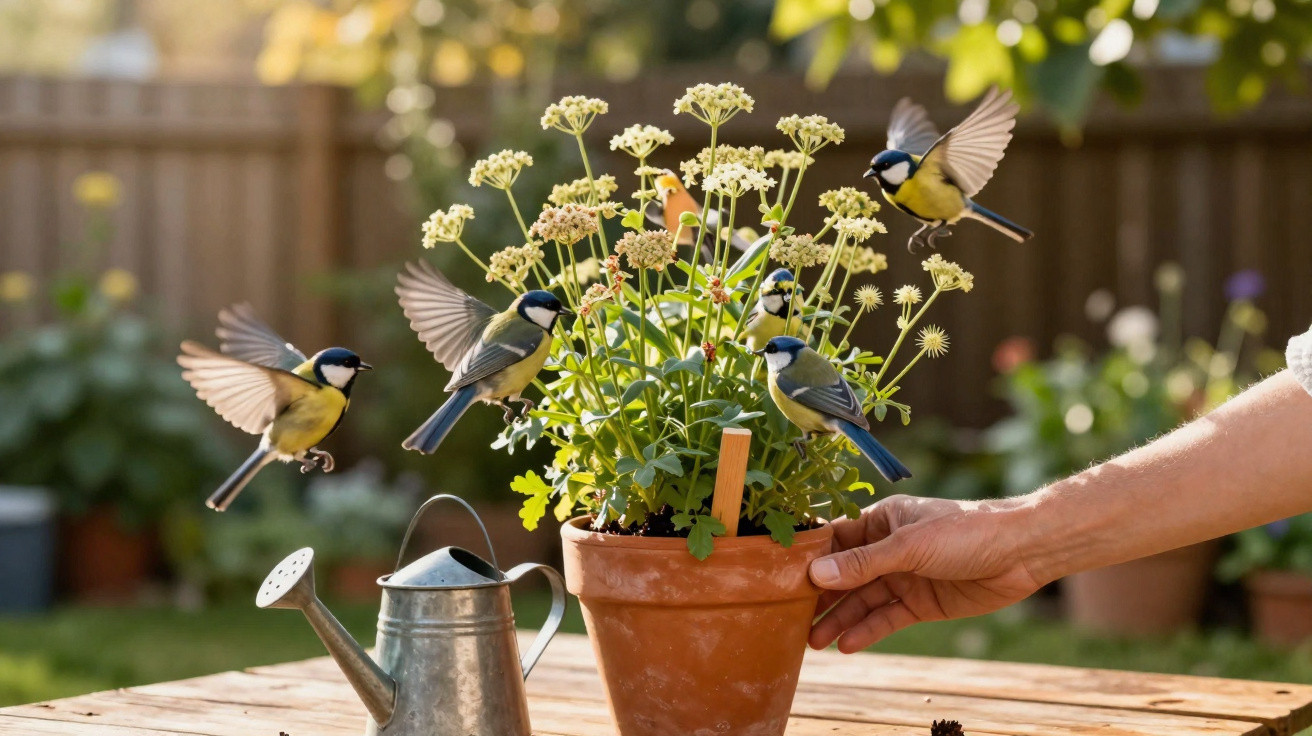
From late spring onwards, large flat flower heads cover the entire shrub. They look airy, almost suspended, and bring brightness to shadier parts of the garden in particular. There is constant activity among the flowers: pollinators find abundant food here when other woody plants have already finished flowering.
Summer and autumn: a berry buffet for birds and the kitchen
Over summer, the flowers develop into dense clusters of deep purple-black berries. Blackbirds, thrushes and many other bird species use them as a natural buffet, especially in dry years. The berries are valuable for people too – when cooked into jelly, juice or purée, always in moderation and thoroughly heated.
- Flowers for cordial, tea, vinegar and desserts
- Berries for jelly, juice and savoury sauces
- A food plant for insects and nourishment for birds
- Screening, structure and shade in the garden
Another advantage is that this shrub is native. It is ecologically suited to local wildlife, copes well with the climate and, once established, needs very little attention.
Plant now: getting Black Elder off to a good start in March and April
To allow elder to fulfil its potential, a good start matters. Early spring – March and April – is the ideal planting period, while the soil is still fresh and has not dried out completely.
Choosing the right position
This shrub is remarkably adaptable, but a suitable site rewards it with strong growth and abundant flowering.
- Light: Sun to partial shade; full sun produces the most flowers.
- Soil: Loose, humus-rich soil, preferably slightly moist at first.
- Space: Allow enough room above and around it – do not place it immediately beside narrow paths.
If you choose cultivars with dark or golden-yellow foliage, prioritise a bright location. Their colours remain more intense there, and the foliage becomes less sparse.
Planting step by step
A few simple actions provide the foundation for a healthy, long-lived shrub:
- Dig a planting hole at least twice as wide as the root ball.
- Loosen the soil and work in well-rotted compost.
- Position the shrub so that the root ball is level with the soil surface.
- Water thoroughly to close air pockets in the soil.
- Cover the ground with a layer of mulch made from bark chippings, leaves or grass clippings to retain moisture.
Water is the most important care requirement during the first few weeks. Regular watering of young elder in dry weather will later give you an almost self-sufficient permanent resident.
Low-maintenance, but not entirely left to itself
Once Black Elder is established, it requires very little work. A few measures each year are enough to keep it vigorous and attractive.
Pruning with restraint
Elder tolerates pruning extremely well and reliably grows back. It is worth inspecting the crown once a year:
- Remove dead branches in spring.
- Cut out branches that rub against or cross one another.
- Restrict vigorous water shoots or unwanted shoots emerging from the base.
If you want to rejuvenate the shrub more firmly, schedule harder pruning for late winter. It will then send up plenty of young shoots from the base or lower sections, and these will flower well again the following year.
Elder in the kitchen: enjoyment with clear rules
Many gardeners grow elder for one particular reason: its flowers. They provide a flavour that no shop-bought product can truly replicate.
Harvesting flowers properly
For cordial, tea or flower heads fried in batter, pick freshly opened flower heads on dry days. Rain washes away some of the pollen and therefore some of the flavour, so choose a sunny morning instead. Snip off the heads carefully; do not shake them, and only brush away larger insects.
Typical uses include:
- Elderflower cordial for water, cocktails or desserts
- Flower heads fried in batter
- Infused vinegar or sugar
- Fragrant tea blends
Only eat berries when cooked
Ripe berries provide a deep, fruity flavour that pairs particularly well with autumn dishes. They should not be eaten raw in larger quantities because they contain substances that can cause intolerance. Heating them while making juice, purée or jelly renders these substances ineffective.
Basic rule: flowers are unproblematic in normal quantities, while berries must always be cooked thoroughly – then nothing stands in the way of enjoying elder.
Avoid confusion: do not pick every ‘elder’
Several elder species grow in the wild. When gathering flowers or berries, it is particularly important to identify Black Elder with certainty. The problematic lookalike is Dwarf Elder, also known as daneweed. It stays much shorter, has more of a herbaceous perennial habit than that of a true shrub, and its stems do not become woody in the same way as Black Elder.
If in doubt, leave wild plants untouched, or use the reliably identified shrub in your own garden for the kitchen.
More useful than expected: screening, shade and climate support
Beyond its flowers and berries, Black Elder offers highly practical benefits. Its height makes it suitable as natural screening along a fence or at the edge of a property. In hot summers, it shades seating areas and beds, helping to create a more pleasant microclimate.
Its rapid growth helps to green bare ground, for example following building work or clearance. As a loosely structured shrub, it also visually softens rigid rows of thuja or cherry laurel and creates transitions between the garden and the surrounding landscape.
Anyone who values biodiversity gains a small ecosystem from a single shrub: flowers for insects, berries for birds, and branches that provide nesting and sheltering places. This places Black Elder among the woody plants that combine classic gardening pleasure with modern, wildlife-friendly design – and it does so with remarkably little effort, provided it is given a good start now in spring.
Comments
No comments yet. Be the first to comment!
Leave a Comment