
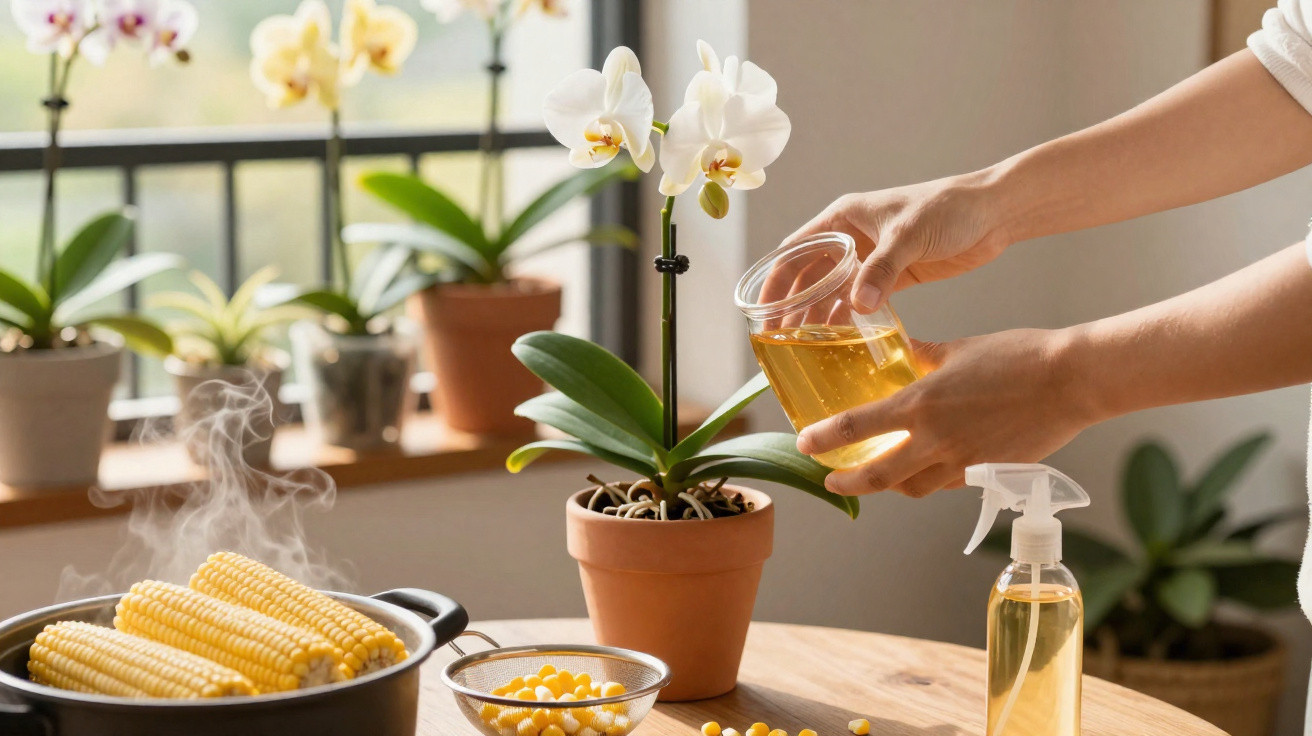
If you own a Phalaenopsis or another indoor orchid, you will know the situation: the flowers have long since dried up, the stem is bare and the leaves look limp. This is often when the plant gets moved to the furthest corner – or straight into the bin. Yet leftover cooked sweetcorn from the kitchen may help it make a fresh start, provided a few basic rules are followed.
How to tell whether your orchid still has a chance
Before trying any household remedy, assess the plant’s health. Start by checking the roots. A transparent pot is ideal; otherwise, carefully lift the root ball.
- Healthy roots: green or silvery, firm and free from a rotten smell
- Warning signs: brown, mushy or hollow-feeling roots, with a musty or rotting odour
If the roots appear sound, the orchid is usually simply in a resting phase. In that case, care is worthwhile, as the prospects for a new flowering shoot are quite good.
Mushy or dark roots mean the orchid first needs a fresh start in a new pot. Remove the old, decomposing material and place the plant in fresh, airy specialist orchid compost. This medium drains quickly and prevents waterlogging – the greatest enemy of healthy roots.
Position matters too: a bright windowsill without full sun is ideal. A temperature difference of around four to six degrees between day and night also encourages the plant to become active again.
Cooked sweetcorn as a gentle booster – the idea behind it
A tip has been circulating in amateur gardening forums for some time: the cooking liquid or a purée made from unsalted cooked sweetcorn is said to give tired orchids a lift. It is not a magic potion, but rather a mild form of support.
“The starch and sugars in sweetcorn feed microorganisms in the growing medium. This makes the roots work more actively and improves their uptake of water and nutrients.”
There has been very little scientific research into this effect. Even so, many amateur growers report noticeably more vigorous roots and firmer leaves when they use the sweetcorn trick correctly.
How to prepare sweetcorn fertiliser correctly
Getting the mixture right is crucial. Here is a simple method that can be followed easily in most homes:
- Cook around 100 grams of unsalted sweetcorn in one litre of water until the kernels are soft.
- Blend the sweetcorn with some of its cooking water.
- Strain the liquid through a fine sieve or cloth so that no pieces end up in the growing medium.
- Leave it to cool completely.
For use, one to two teaspoons of this liquid on already-moistened compost are enough. Leave three to four weeks between applications. Important: do not allow water to stand in the outer pot, as orchid roots do not tolerate waterlogging.
Store any remaining sweetcorn solution in the fridge, where it can be used for no longer than one day. After that, it may ferment and develop an unpleasant smell, so it should be discarded.
What you should never do
Although the method can be useful, it also carries risks if it is overused or prepared with unsuitable ingredients.
- No salt: salted cooking water damages the roots and can effectively burn them.
- No “full baths” in sweetcorn water: the pot must not be completely soaked. Small, targeted amounts are sufficient.
- Do not combine it with other household remedies: mixtures of coffee grounds, banana skins and sweetcorn solution can overwhelm the fragile root system.
“As soon as the growing medium feels sticky or smells sour, stop the sweetcorn treatment immediately and repot into fresh compost if necessary.”
When will the first results appear?
Anyone trying the sweetcorn trick needs patience, but not endless patience. Many amateur growers notice the first positive signs after roughly three weeks:
- Roots change from grey to fresh green.
- Tiny new root tips emerge.
- Leaves feel less limp and lift slightly.
The sought-after flowering shoot takes a little longer to appear. Depending on the season and the plant’s starting condition, it may take several weeks or several months before a new flower stem develops. The sweetcorn solution is intended as gentle support, not a guarantee of a spectacular burst of blooms.
When you should stop using sweetcorn
Even a helpful household remedy reaches a point where it has done enough. Three signs are particularly important:
- The growing medium feels slimy or smells fermented.
- The roots look better but continue growing at their usual rate.
- The plant produces new leaves or a flowering shoot.
In these situations, return to a normal, careful watering routine using clean water and occasional weak applications of specialist orchid fertiliser. If the plant remains weak or loses leaves despite good conditions and sweetcorn treatment, a more radical step is needed: repot it, remove diseased roots, check the location – and end the sweetcorn experiment.
What orchids need besides sweetcorn to thrive
Sweetcorn solution can only work when the rest of the conditions are right. In everyday care, three factors often determine success or frustration:
| Factor | What orchids like | What causes problems |
|---|---|---|
| Light | A bright spot without direct midday sun | Full sun in a south-facing window or dark corners |
| Water | Water thoroughly, then allow the compost to dry well | Constant dampness and standing water in the outer pot |
| Air | Good air circulation without draughts | Heating air directly below or cold draughts |
Particularly difficult periods are winter by a window above a radiator and high summer behind a glass frontage. In these conditions, roots can dry out more quickly or become scorched, even when the sweetcorn trick is applied correctly.
How safe is it, and which varieties suit it?
This trick is primarily intended for the classic moth orchid, Phalaenopsis. It is hardy, generally responds calmly to experiments and forgives minor care mistakes. With more delicate species such as Vanda or Miltonia, test far more cautiously or stick entirely to proven care methods.
The number-one risk is overfeeding with organic material. Starch and sugars can attract fungi and bacteria if the plant is kept too cool or too wet. If you are unsure, begin with a very heavily diluted solution and increase the amount only if the plant reacts positively.
However, the method also has clear benefits: leftover sweetcorn from the kitchen costs nothing extra, is often available anyway and therefore reduces food waste. At the same time, orchid enthusiasts can avoid expensive specialist products that often end up sitting unused in a cupboard.
Practical tip: when is the experiment really worthwhile?
It makes most sense for plants that look weakened but still have living roots. If you are unsure whether to keep the orchid, there is little to lose – the sweetcorn booster can then become a kind of “last chance” before the bin.
“If the roots are in good condition, the location is suitable and you dose carefully, leftover sweetcorn from the kitchen can genuinely provide the small boost that nudges your orchid towards new flowers.”
If, on the other hand, you find completely rotten roots, blackening leaves or mould in the pot, deal with the basics first: cut away damaged material cleanly, let the plant dry out and repot it. Only then should sweetcorn go back into the pot – in tiny amounts, as a quiet helper in the background rather than a miracle cure.





Comments
No comments yet. Be the first to comment!
Leave a Comment