
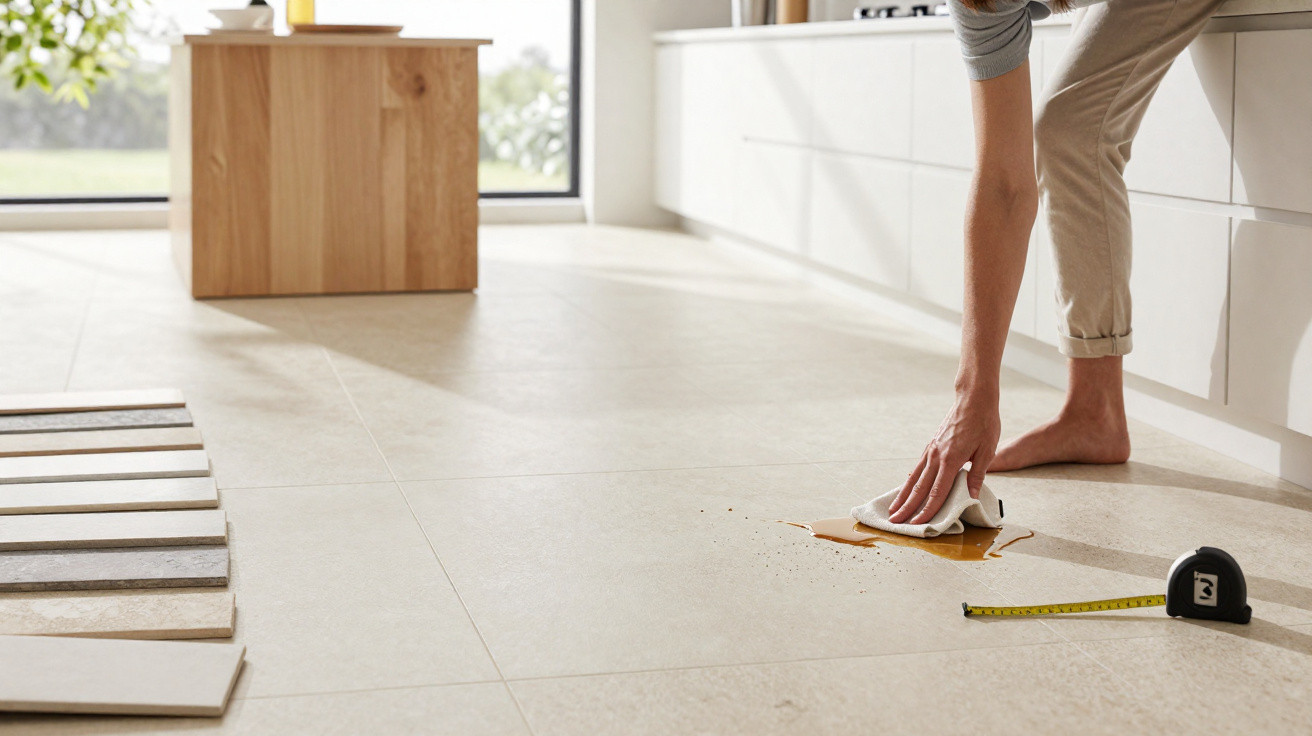
Porcelain tiles are the surface material most often chosen to replace standard ceramic tiles in modern kitchens. They are also part of the ceramic tile family, but their manufacturing process is denser and more tightly controlled. This produces low water absorption, stronger resistance to foot traffic and a more consistent finish for heavily used rooms such as kitchens.
Why are porcelain tiles replacing ceramic tiles?
Traditional ceramic tiles remain an affordable choice, although they are generally more porous and less dense than porcelain tiles. Porcelain tiles, by contrast, have water absorption of less than 0.5%, making them more resistant to moisture and wear in spaces such as kitchens, bathrooms and hallways.
That density matters in everyday use. Kitchen floors must withstand splashes, grease, chairs being moved, heavy appliances and dropped utensils. Porcelain tile is not unbreakable, but it will usually cope better with heavy traffic, pressure and regular cleaning than many standard ceramic tiles.
Why are porcelain tiles more resistant to impacts and weight?
Porcelain tiles are made from a more refined body and fired at higher temperatures, creating a more compact tile. This limits internal pores and improves mechanical strength, particularly when the flooring is laid on a properly levelled screed with the appropriate adhesive.
When a floor cracks under weight, the tile itself is not always the only issue. Poor installation, gaps in the adhesive, an uneven screed and unsuitable joints can also cause cracking. For this reason, porcelain tiles perform best when large formats are installed using the double-buttering method and correctly levelled.
How do porcelain tiles make kitchen cleaning easier?
Their low porosity means the floor absorbs less liquid and dirt. In practical terms, grease, sauce, coffee and water are less likely to leave marks if they are cleaned promptly with neutral detergent and a damp cloth.
- Satin porcelain tiles: conceal marks and are comfortable for daily use.
- Glazed porcelain tiles: provide a wide choice of colours, patterns and textures.
- Rectified porcelain tiles: allow narrower grout lines and a more seamless appearance.
- Polished porcelain tiles: look attractive, but can be more slippery and show stains more easily.
- Wood-effect or concrete-effect porcelain tiles: update the kitchen without making the look feel too heavy.
Which porcelain tile should you choose for a kitchen?
For kitchens, the best overall balance is usually offered by satin or glazed porcelain tiles with a lightly slip-resistant finish. They are easier to maintain than highly glossy floors and more comfortable than extremely rough surfaces, which can trap grease and make cleaning harder.
It is also worth checking the slip-resistance rating, the manufacturer's recommended application and the PEI rating for glazed porcelain tiles. Kitchens require flooring intended for floors, rather than decorative wall tiles, because foot traffic and cleaning demands are considerably greater.
How can porcelain tiles be installed without removing the entire kitchen floor?
In some situations, porcelain tiles can be laid over an existing floor, provided the old ceramic tiles are secure, level, free from loose pieces and unaffected by moisture. This approach requires an adhesive specifically designed for overlay installation and an assessment of the finished floor height, as doors, skirting boards and thresholds may need adjusting.
- Check that the existing floor does not sound hollow or contain cracks.
- Remove grease and residue before applying the adhesive.
- Use an adhesive suitable for porcelain tiles and, for overlays, for tile-on-tile installation.
- Apply adhesive to both surfaces for large tiles to prevent voids.
- Maintain installation joints and movement joints.
- Select grout that is moisture-resistant and easy to clean.
What is the average cost per square metre?
Prices differ considerably according to brand, size, finish, location and labour costs. As a market reference, trade reports show that ceramic tile prices in Brazil can vary widely between locally made and imported products, with average import values exceeding export values; at retail level, standard porcelain tiles often begin at accessible price points but increase substantially for large-format, rectified or premium options.
In practice, a quote should cover more than the cost per square metre of tile. Porcelain-tile adhesive, grout, levelling clips, cuts, skirting boards and labour can account for a significant share of the overall cost, especially in small kitchens with numerous corners and fitted units.
The visual effect can transform the whole kitchen
Porcelain tiles can transform a kitchen by reducing the look of wide grout lines and creating a cleaner visual foundation. Large tiles make the room appear more spacious; light shades improve brightness; concrete-effect designs give the space a contemporary feel; and wood-effect versions add warmth without the maintenance required by natural wood.
Saying that ceramic tiles have “gone out of fashion” would be an exaggeration, as they remain practical and economical. However, for anyone seeking strength, low absorption, straightforward cleaning and a modern appearance, porcelain tiles have become the strongest option. When properly installed, they withstand the demanding routine of a kitchen more effectively and provide a more seamless, durable and valued finish.

Comments
No comments yet. Be the first to comment!
Leave a Comment