
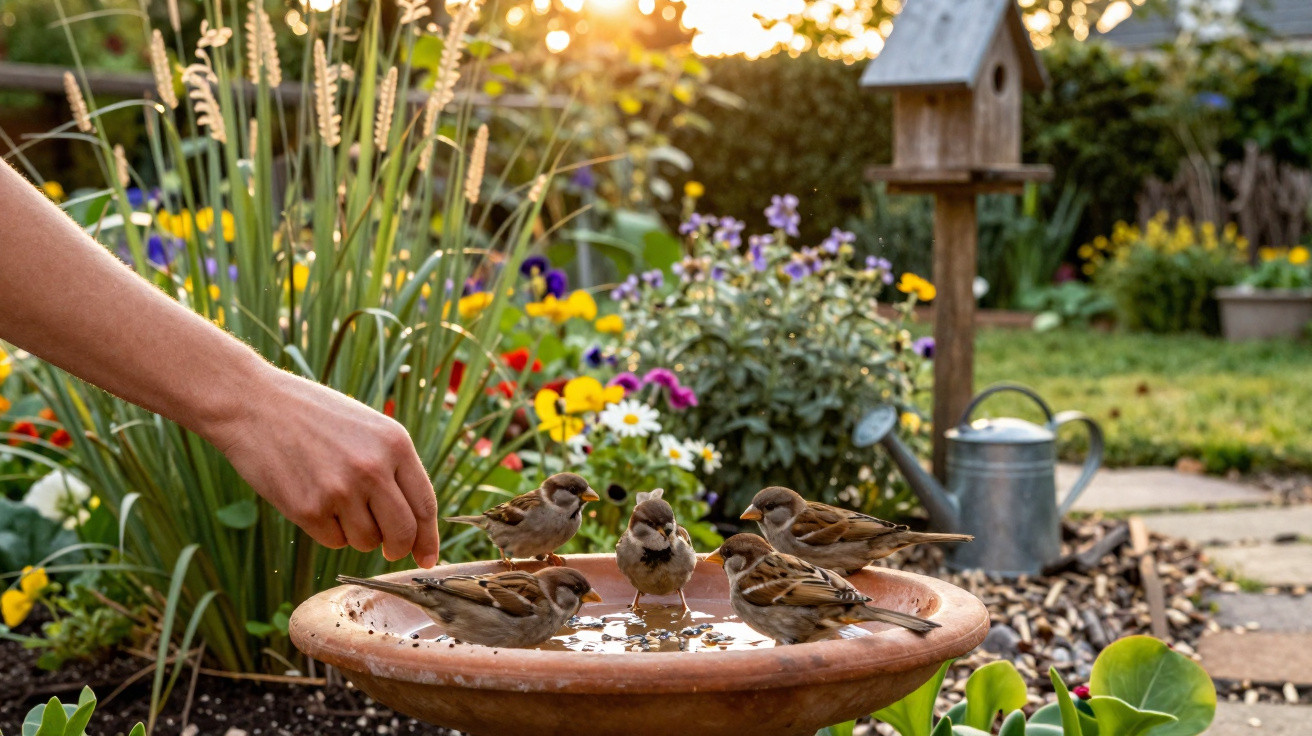
When spring sunshine strengthens, buds begin to swell and the first pollen drifts through the air, many people turn their attention to robins and tits. They are seen as the ‘favourites’ among garden birds. Yet one unassuming neighbour is frequently undervalued: the house sparrow, the familiar everyday sparrow. Bird conservationists are now raising the alarm – not because it is a nuisance, but because we need it more urgently than many people realise.
From ‘pest’ to indispensable garden neighbour
For decades, sparrows were regarded as troublesome birds in agriculture. They peck at grain and seeds in fields and eat newly sown crops – quickly earning them a reputation as a ‘pest’. That label still persists in many people’s minds, including in residential areas and allotments.
Modern biologists consider this view completely outdated. Experts at the Ligue pour la protection des oiseaux (LPO), the French counterpart to the German NABU, stress that this classification arose chiefly from a purely economic perspective. The amount of grain consumed by sparrows was easy to measure, while their beneficial effects within the ecosystem were largely ignored.
Every bird species contributes to balance in the garden – it is usually human intervention that makes something ‘harmful’.
Only since biodiversity has no longer been assessed solely in terms of money and yield has a different understanding gained ground: the sparrow is not a troublemaker, but an important component of stable habitats – including those right outside our homes.
A faithful companion to people
The sparrow is a species that follows human settlement, having adapted closely to life alongside people. Wherever there are houses, stables, farmyards and gardens, sparrow colonies are usually present too. Specialists therefore describe it as a “regular companion to people”.
It performs roles in built-up areas that often go unnoticed. The bird commonly thought of as a seed eater is surprisingly selective when raising its family: grain alone is not enough for its young.
How sparrows help in the garden
During the breeding season, sparrows feed their nestlings mainly protein-rich food. Their menu then consists not of seeds, but of insects and, above all, their larvae.
Sparrow parents fill their chicks with insect larvae for days on end – significantly reducing the number of potential ‘pests’ in the flowerbed.
A beneficial bird, not a nuisance
A pair of sparrows must fly back and forth to the nest countless times each day to feed their young. Among the creatures they collect are:
- caterpillars of butterflies and moths
- aphids and their larvae
- small beetles and beetle larvae
- spiders and other small creatures that could feed on plants
Without natural predators, many of these insects could multiply rapidly and chew through vegetables, roses or young fruit trees. Sparrows act like free biological pest control, catching creatures that would otherwise often be tackled with chemicals.
Bird conservationists refer to this as “regulation of insect populations”. In other words, the bird maintains balance. It does not wipe out a species, but limits population explosions that cause problems in gardens.
Why sparrows need support right now
Despite these advantages, house sparrows are faring worse than they once did in many regions. Studies from several European countries reveal a marked decline in urban areas. Sealed surfaces, barren front gardens filled with gravel instead of shrubs, and smooth building façades without gaps or niches all deprive sparrows of nesting sites and food.
The LPO emphasises that every species has its place in nature’s wider system. Whether something is “useful” or “harmful” often depends only on our viewpoint. When an ecosystem becomes unbalanced, human actions are usually responsible: pesticides, sealed ground and monocultures. Not the sparrow.
Where gardens remain diverse, hedges are retained and insects are present, sparrows will also find enough room – and repay it with more stable ecosystems.
What garden owners can do for sparrows
Those who do not drive sparrows away but actively support them benefit in the long term from a healthy, lively garden. Many helpful measures are straightforward and inexpensive.
Structure rather than gravel
Sparrows need shrubs, hedges and dense bushes as shelter. Bare gravel areas with three grasses may appear ‘tidy’, but they offer birds little protection and no food.
Useful features in a sparrow-friendly garden include, for example:
- dense hedges of native species such as hornbeam, privet or hawthorn
- climbing plants on fences or walls, providing cover and insects
- an area of lawn allowed to grow wild, attracting both seeds and insects
- old cracks in walls or purpose-made nest boxes fixed to the house wall
Water, food and nesting places
Sparrows appreciate simple water sources, such as a shallow dish of fresh water. They use them not only for drinking but also for bathing. This loosens their plumage and helps protect against parasites.
Feeding stations stocked with seed mixes are useful in winter. During the breeding season, however, an insect-friendly garden is the best ‘feeding station’: avoiding insecticides automatically ensures enough protein sources for young birds in the nest.
Misconceptions about sparrows
Many reservations are based on old assumptions that have little in common with modern research. Three common misconceptions repeatedly arise in conversation:
| Prejudice | Reality |
|---|---|
| “Sparrows only eat my seed.” | They do eat seeds, but they also control insects that could severely damage young plants. |
| “They only make mess and noise.” | A typical noisy flock of sparrows primarily signals a thriving ecosystem – including natural plant protection. |
| “Sparrows are everywhere, so they are not at risk.” | Numbers are declining noticeably in many towns and villages because nesting sites and food are disappearing. |
Why garden diversity benefits you directly
A garden containing sparrows, tits, robins and insects may look less sterile, but it is more resilient. The more species involved, the lower the likelihood of one pest gaining the upper hand. Sparrows are just one piece of a larger puzzle.
Those who plant a variety of species, avoid heavy chemical use and welcome birds can often save on expensive plant protection products. For example, a vegetable bed of cabbage and lettuce in a neighbourhood with plenty of birds will usually suffer far less damage from caterpillars and aphids than one in a bare setting without woody plants or nesting opportunities.
What is particularly interesting is that the benefit is not limited to summer. When sparrows and other birds remain in the same place over many years, populations of many insects settle at a level plants can cope with. This reduces stress on trees and shrubs, making them more resistant to heatwaves or disease.
What the term ‘biodiversity’ means
The term ‘biodiversity’ comes up constantly in this context. It means the variety of species, habitats and genetic variation within a species. Sparrows contribute to it because they form part of a network of predators and prey, plants and microorganisms.
Removing a species from this network changes the relationships within it. Fewer sparrows often mean more insect damage, greater use of chemicals and less plant diversity – a domino effect that drives away other birds in turn. Preventing this destabilisation of individual components is precisely what organisations such as the LPO seek to do.
For gardening enthusiasts, the practical message is this: accepting sparrows indirectly supports many other animal and plant species. A single preserved nest can make an entire system more stable. These birds provide a service that money can scarcely compensate for – even if they occasionally steal a few grains from the patio.
Comments
No comments yet. Be the first to comment!
Leave a Comment