
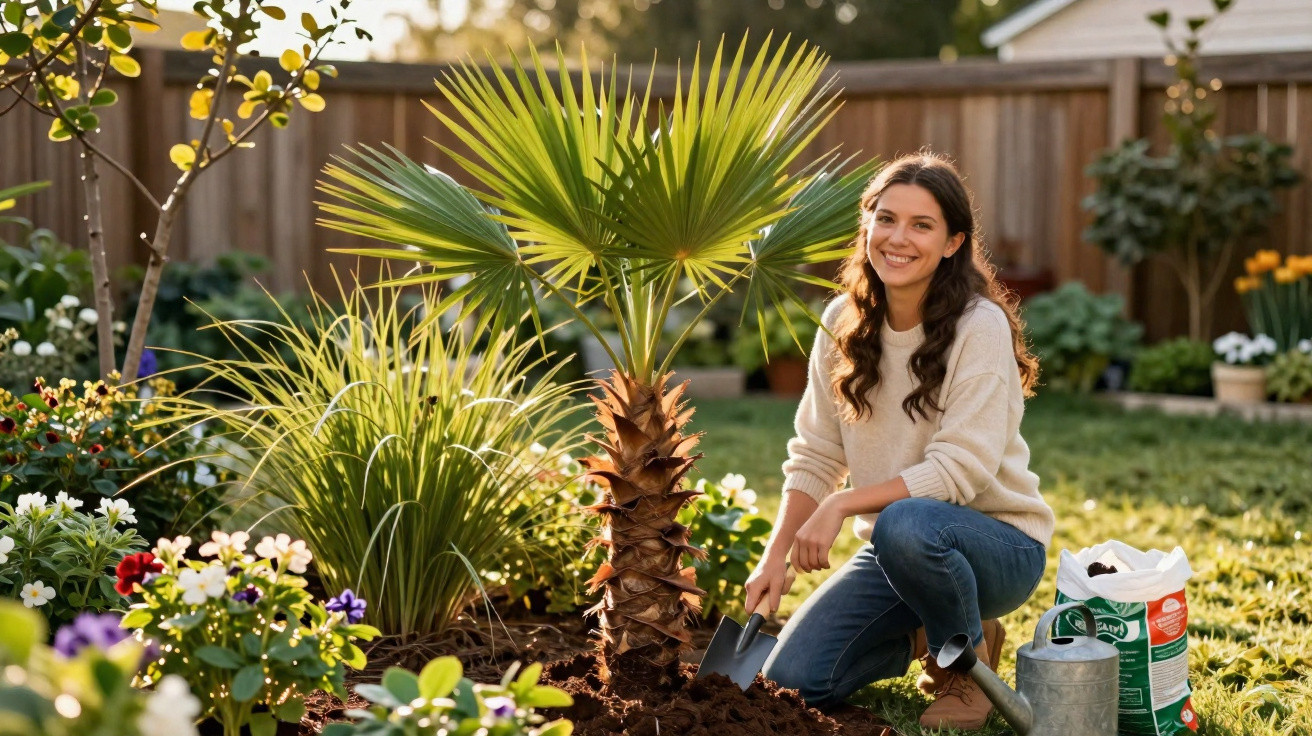
While many amateur gardeners are already looking ahead to autumn in August, there is a surprising opportunity to seize: one carefully chosen plant can turn an ordinary garden into a lasting exotic setting, without having to worry about frost.
The standout among hardy palms
Why the windmill palm is so popular in Central European gardens
Trachycarpus fortunei, commonly known in the UK as the windmill palm, is regarded as one of the toughest palms available. It tolerates temperatures down to around -18 °C, allowing it to cope with Central European winters far better than most other exotic plants. Its slender trunk and large fan-shaped leaves immediately give any garden a holiday feel.
“This windmill palm brings tropical character while remaining remarkably resilient – even in hard frost.”
For anyone wanting to break up a garden layout, add structure to lawned areas or give a patio more personality, this palm is a genuine design feature. It is appealing beyond the summer months, remaining green and providing form throughout the year. This “year-round effect” is precisely what makes it so appealing to many homeowners.
Frost-hardy, undemanding and versatile
The windmill palm has several strengths: it copes with relatively dry soil, does not need excessive watering and grows at a comparatively slow pace. That makes it particularly suitable for people who do not want constant pruning and watering. At the same time, it remains decorative even when lawns and borders are suffering from high-summer drought.
- frost-hardy down to around -18 °C
- relatively low water requirements
- suitable for gardens, front gardens and large patio containers
- evergreen and structurally effective all year round
- rarely affected by pests and diseases
Its upright habit means it needs little width, yet it adds noticeable height to a border. This also makes it suitable for narrow terraced-house gardens or compact urban plots, where every square metre matters.
The right position: partial shade is enough, but wind is the enemy
Light, shelter and impact: where the palm performs best
The windmill palm is happiest in a sunny or partially shaded spot. Above all, it needs a position sheltered from wind. Cold winter winds that sweep through a garden can affect even robust plants and may leave the fan leaves looking ragged.
Good locations include:
- a south- or west-facing position against a heat-retaining house wall
- a sheltered courtyard or patio
- the transition between patio and garden, lightly screened by hedges or walls
- a prominent spot at the end of a path, where it acts as a natural focal point
Whether used as a specimen on a lawn, a vertical feature in a perennial border or a green divider between areas, thoughtful positioning allows the palm to enhance the appearance of the entire garden.
Smart pairings with other plants
Trachycarpus fortunei becomes especially striking when combined with other plants. Those who favour a Mediterranean-inspired scheme can choose drought-tolerant companions such as:
- lavender and sage for fragrance and flower colour
- ornamental grasses, including fountain grass or feather grass, for movement in the breeze
- agaves and houseleeks in gravelled areas for an almost desert-like feel
- rosemary, thyme and oregano as aromatic ground cover
In more understated gardens with an “Asian” feel, the windmill palm works well with white gravel, stepping stones and individual clipped shrubs. Two or three palms planted along a driveway can also create a bold, almost boulevard-like effect.
Best planting time: late summer to mid-autumn
Why late summer is the insider’s choice
The best period for planting a windmill palm is generally from late August until around mid-October. At this time, the soil is still warm, strongly encouraging root development. Rainfall also becomes more frequent, helping newly planted specimens establish more easily.
“Planting the windmill palm in good time before winter gives it an important head start – it enters the cold season stronger.”
Very late planting, such as in November, carries more risk. The roots have little chance to establish before the first significant frost, greatly increasing the likelihood of damage during the first winter.
How to plant it step by step
The soil needs to drain freely, as the windmill palm does not tolerate winter waterlogging well. Heavy clay can be opened up with sand and a little grit. A blend of garden soil, coarse sand and well-rotted compost has proved effective.
- Dig a planting hole at least 60 × 60 cm, and deep enough for the root ball to sit comfortably.
- Loosen the base with a garden fork and, if required, add a drainage layer of gravel.
- Water the root ball briefly, then carefully loosen the outer roots slightly.
- Place the palm so that the point where trunk meets root, known as the root collar, sits just above soil level.
- Backfill with the prepared soil mix, firm it gently and water thoroughly to remove air pockets.
- Finally, mulch the area around the trunk with bark mulch or another organic material.
In particularly exposed locations, a support stake can be useful until the roots are firmly anchored. A secure footing matters, as newly forming roots can otherwise be rubbed away in the soil.
Everyday care: little effort, strong impact
Watering, mulching and protection
During its first few months after planting, the windmill palm benefits from regular watering. The soil should remain lightly moist but never saturated. Once the root ball has integrated with the surrounding ground, its water needs fall considerably; in most gardens, targeted watering during prolonged dry spells is then sufficient.
A mulch layer around the trunk serves several purposes at once: it retains moisture in the soil for longer, suppresses weeds and insulates the roots against severe winter frost. In areas with particularly cold winters, light winter protection is also worthwhile, for example leaves and fir branches around the base.
Keeping the palm healthy and well shaped
Compared with many ornamental shrubs, Trachycarpus fortunei requires very little pruning. Dry, brown leaves can be removed with secateurs once they are entirely dead. Many gardeners deliberately leave the lower section untouched for a while, as the old leaf bases give the trunk its distinctive texture.
During exceptionally low temperatures or in harsh sites, horticultural fleece can provide short-term protection for the crown. Pests rarely become widespread. Checking the central growing point and the undersides of leaves from time to time makes it possible to spot any problems early.
How the windmill palm changes a garden’s character
Playing with light, shade and perspectives
Its large fan leaves cast soft, filtered shade. The area beneath the crown becomes suitable for low-growing perennials or herbs. Carefully placed lighting is particularly effective in the evening: a ground spotlight directed at an angle towards the trunk and leafy crown turns the palm into a real centrepiece.
Combining several layers, such as gravelled areas, taller grasses and the palm’s pyramidal outline, quickly creates interesting sightlines. Even a small terraced-house garden can therefore feel much more spacious.
From lawn to a low-maintenance retreat
Many homeowners are reducing their lawn areas because of costs and dry conditions. The windmill palm fits this trend perfectly. It brings structure to places that were previously only closely mown grass, and it can be incorporated easily into low-maintenance mulched beds.
Adding a few ornamental grasses, drought-tolerant perennials and selected stone features creates an enduringly attractive garden scene with manageable effort. A formerly monotonous area can then become a lively yet low-maintenance retreat.
Practical extra information for anyone now tempted by a palm
Growth, size and container growing
The windmill palm grows at a fairly moderate rate. In favourable conditions, it usually gains 10 to 25 centimetres in height each year. Older plants can reach several metres when grown in the ground, although they stay considerably more compact in pots.
| Feature | Details |
|---|---|
| Final height in the garden | 3–6 metres, depending on location and climate |
| Position | sunny to partially shaded, sheltered from wind |
| Soil | well drained, moderately nutrient-rich |
| Frost tolerance | down to approximately -18 °C |
| Use | specimen planting, group planting, large container |
A windmill palm in a container needs a little more care during winter. Its root ball freezes through more quickly, so an insulating base or a wrap made from bubble wrap and hessian is worthwhile. Water it only very sparingly on frost-free days.
Risks, benefits and useful additions
The greatest risk comes from waterlogging and very heavy soils. Anyone inclined to water too generously should make sure drainage is consistently good. Strong winds are another consideration, as they can damage leaves and loosen the trunk. A sheltered site prevents these issues to a large extent.
Its advantages include an exceptionally long lifespan, low maintenance costs and a powerful visual effect. The windmill palm suits modern, clean-lined architectural gardens just as well as traditional family-house plots with mixed borders. Combined with ornamental grasses, flowering perennials and individual stone elements, it almost automatically produces a look reminiscent of southern regions, without requiring the gardener to water and prune constantly.
Anyone planning to transform an outdoor space gradually can begin with one well-positioned windmill palm. After only a year, it often becomes clear how strongly a single woody plant can alter the overall impression, turning an everyday corner into a personal retreat with a distinct touch of exotic character.



Comments
No comments yet. Be the first to comment!
Leave a Comment