
Parsley is one of the herbs most commonly found in Brazilian kitchens and, with proper care, it can remain green and productive throughout the year in a garden. The key is straightforward management: the right soil moisture, effective drainage and correct harvesting. These measures limit leaf yellowing and encourage continual new growth without the need for expensive equipment.
What is the essential care to stop parsley turning yellow?
To prevent parsley from yellowing or becoming weak, keep the soil consistently slightly moist, never waterlogged, and use a loose growing medium that is rich in organic matter and drains well. This helps to prevent root rot and water stress, two frequent reasons for yellow leaves and premature leaf drop.
In practical terms, the amount and frequency of watering should be adapted to the soil type, pot size and local climate. Gardeners in very hot areas will usually need to water more often, whereas those in milder places can generally leave longer between watering sessions. In every case, check the moisture with a finger before adding more water.
Watch a video on the Saúde da Mente YouTube channel about the importance of strengthening the core and back muscles to ease pain and protect the spine from injury:
https://www.youtube.com/watch?v=N3b8K2m_L4o
How do you prepare ideal soil for healthy parsley growth?
Suitable soil for growing parsley combines ordinary garden soil with organic compost or worm castings, plus a drainage-improving material such as coarse sand or carbonised rice husks. This blend lets water move through the roots, provide sufficient moisture and drain away without creating standing water, giving the plant a stable environment in which to develop.
Once the bed, pot or planter has been filled, gently press the surface with your hands without over-compacting it, so the roots have room to spread. To make preparation easier, use the following basic mix at home:
- 40% loose ordinary soil;
- 40% organic compost or worm castings;
- 20% coarse sand or another drainage material.
How should you organise a daily parsley watering routine?
Parsley should be watered according to its actual needs rather than simply as a habit. One easy method is to test the soil with a finger: when the top two centimetres are dry, the plant needs water; if it is still damp, watering can wait for a few more hours or until the following day, depending on the temperature.
In many gardens, daily watering is needed on hot days, while cooler periods often require watering only three to four times a week. Apply water directly to the soil and avoid soaking the leaves, especially late in the afternoon or at night, to lower the risk of fungal problems and keep the plant hardier over long periods.
How do you harvest parsley to encourage new leaves all year round?
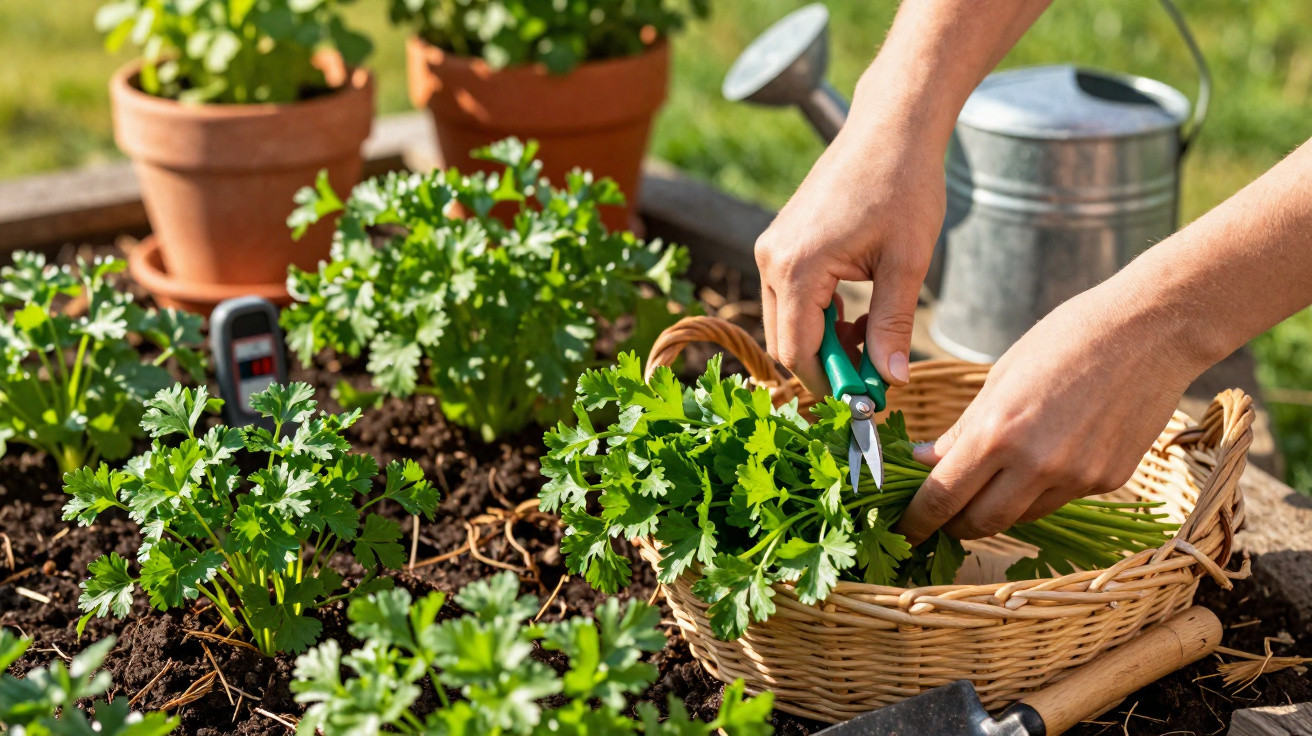
After getting the soil and watering right, harvesting technique becomes crucial to keeping parsley productive. Rather than pulling out the entire plant or taking only the leaf tips, harvest the outermost stems close to the base, leaving the centre of the clump untouched, as this is where new shoots emerge.
A useful rule is to view the plant in “layers”: older leaves are on the outside, while newer ones grow in the centre. Using clean scissors or a sharp knife to cut each stem near its base prevents jolting the roots, while taking no more than one third of the plant at a time allows it to recover, regrow vigorously and provide green, aromatic leaves for virtually the entire year.
Comments
No comments yet. Be the first to comment!
Leave a Comment