
Many amateur gardeners know the taste of artichokes, but not their imposing relative: cardoon, often also called cardy. This ancient cultivated vegetable looks like an ornamental perennial in the border, works discreetly as a helper in the orchard, and at the same time provides a refined winter vegetable that is now rarely grown – even though it is surprisingly easy to cultivate.
Cardoon: the imposing relative of the artichoke
Originating in the Mediterranean, cardoon belongs to the daisy family, just like the artichoke. Its appearance sits somewhere between a thistle and a perennial: broad, thick, gently ribbed stalks are topped by deeply cut leaves with a silvery sheen, which may also be slightly prickly depending on the variety.
Historically, this was a true prestige vegetable. The Romans already appreciated the delicately savoury, slightly bitter flavour of its peeled stalks. Cardoon later became an established part of regional cooking, particularly in southern France, around Lyon, in Provence and in the area surrounding Geneva. In Switzerland, the variety “silvery prickly cardoon from Plainpalais” is especially regarded as a culinary showpiece with a protected designation of origin. Cardoon gratin is traditionally served there at Christmas.
“In the garden, cardoon provides the structure of a perennial; among fruit trees, it improves the soil – and in the kitchen, it is a fine vegetable.”
Despite this heritage, cardoon varieties remain a niche crop in German-speaking countries. They are seldom found in shops and are virtually absent from supermarkets. Anyone wanting to taste this vegetable will almost always need to grow it themselves. That is exactly what makes it appealing to keen amateur gardeners: it is an unusual addition to the plot that few neighbours will know, yet it can elevate any celebratory meal when prepared well.
Starting in spring: growing cardoon from seed
Early spring is the ideal time to begin. From March onwards, cardoon can easily be started on a windowsill. It enjoys warmth and light, but young plants are sensitive to frost.
Step-by-step sowing guide
- Fill small pots or seed trays with a loose, finely sieved seed compost.
- Place two or three seeds in each pot, around 1 centimetre deep.
- Firm the compost and water lightly, keeping it moist but not wet.
- Put the pots somewhere warm; roughly 20°C is ideal.
- Germination usually takes ten to fifteen days.
Once sturdy young plants have developed, thin them out. Leave the strongest seedling in each pot and cut the weaker ones off just above soil level. This prevents damage to the main plant.
Moving outdoors: plenty of room and sunshine
The final position in the garden determines whether the crop succeeds or fails. Cardoon is not suited to a narrow gap between two perennials – it grows large, very large.
Ideal planting time and spacing
Do not plant out until there is no longer a risk of overnight frost. In many areas, the period from mid-May onwards is suitable. The chosen site should provide the following:
- Full sun, without permanent shade
- Deep, loose soil with no waterlogging
- A high humus content, ideally improved with plenty of compost
- At least 1 metre of space from other plants
Before planting, thoroughly loosen the ground and remove stones so that the deep taproot can establish without obstruction. Firm the soil well after planting and water generously. During the first few weeks, a mulch layer of straw, grass clippings or leaves helps to prevent drying out and suppress weeds.
For crop rotation, remember that cardoon, like artichoke, belongs to the daisy family. It should therefore not immediately follow sunflowers, lettuce or related crops in the same bed. Good companions include leeks, carrots and beetroot: they benefit from cardoon’s powerful root system without competing with it.
Cardoon: a hidden ally in the orchard
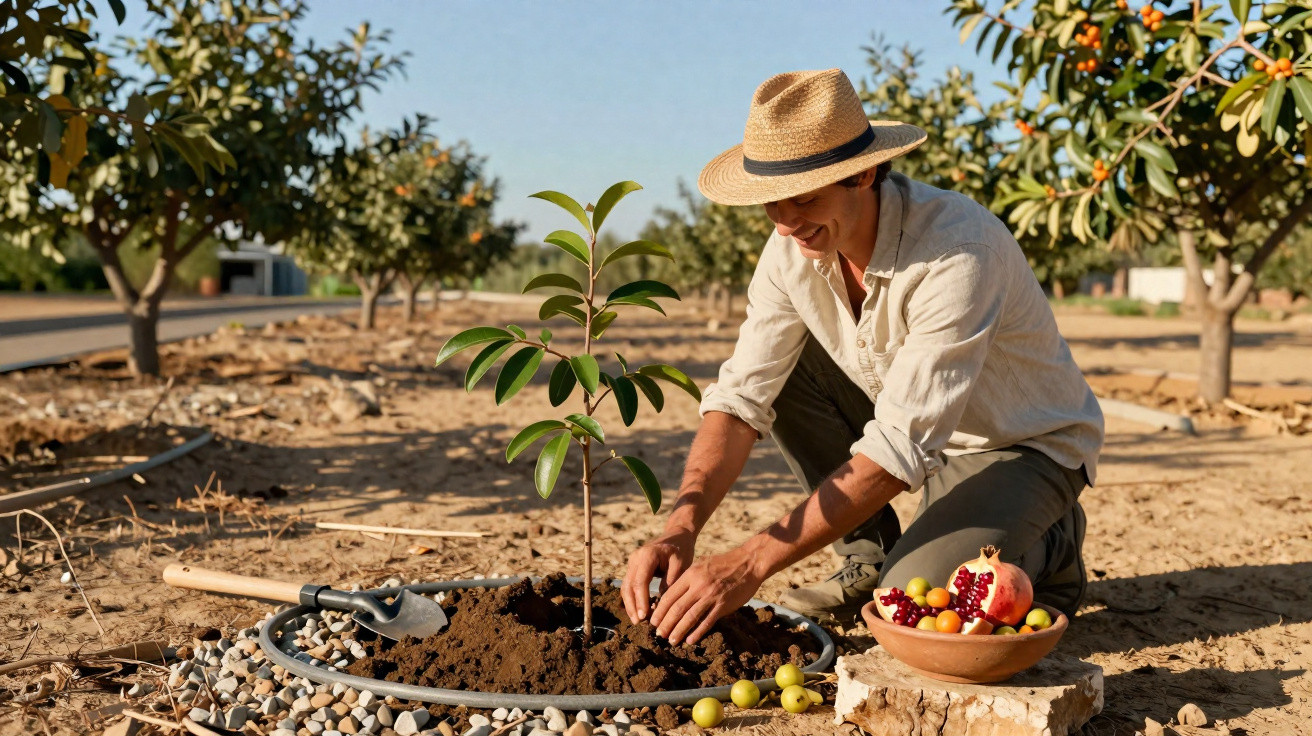
Cardoon becomes particularly interesting when it is planted in an orchard rather than a conventional vegetable bed. There, it offers several strengths that are not immediately obvious.
How cardoon supports fruit trees
Its taproot penetrates deeply into the soil, breaks through compacted layers and acts like a natural “soil drill”. This allows water to infiltrate more effectively. At the same time, the plant draws minerals up from deeper layers, where they can later benefit the fruit trees – for example, through decaying leaves.
The expansive foliage creates a shaded microclimate at the base of apple or plum trees. The soil loses moisture more slowly, evaporation is reduced, and trees experience less drought stress in hot summers. This is an effect that should not be underestimated, especially in increasingly dry years.
“Planting cardoon beneath fruit trees combines ornamental value, soil protection and yield in the same space.”
If allowed to flower, the plant also attracts numerous insects. Its purple, thistle-like blooms draw in pollinators that also benefit the fruit trees. Those growing cardoon mainly for its stalks should remove the flower buds early, directing its energy into the leaf ribs. Anyone wishing to support bees can simply allow one or two plants to grow on and flower.
From the garden to the festive table: what cardoon tastes like
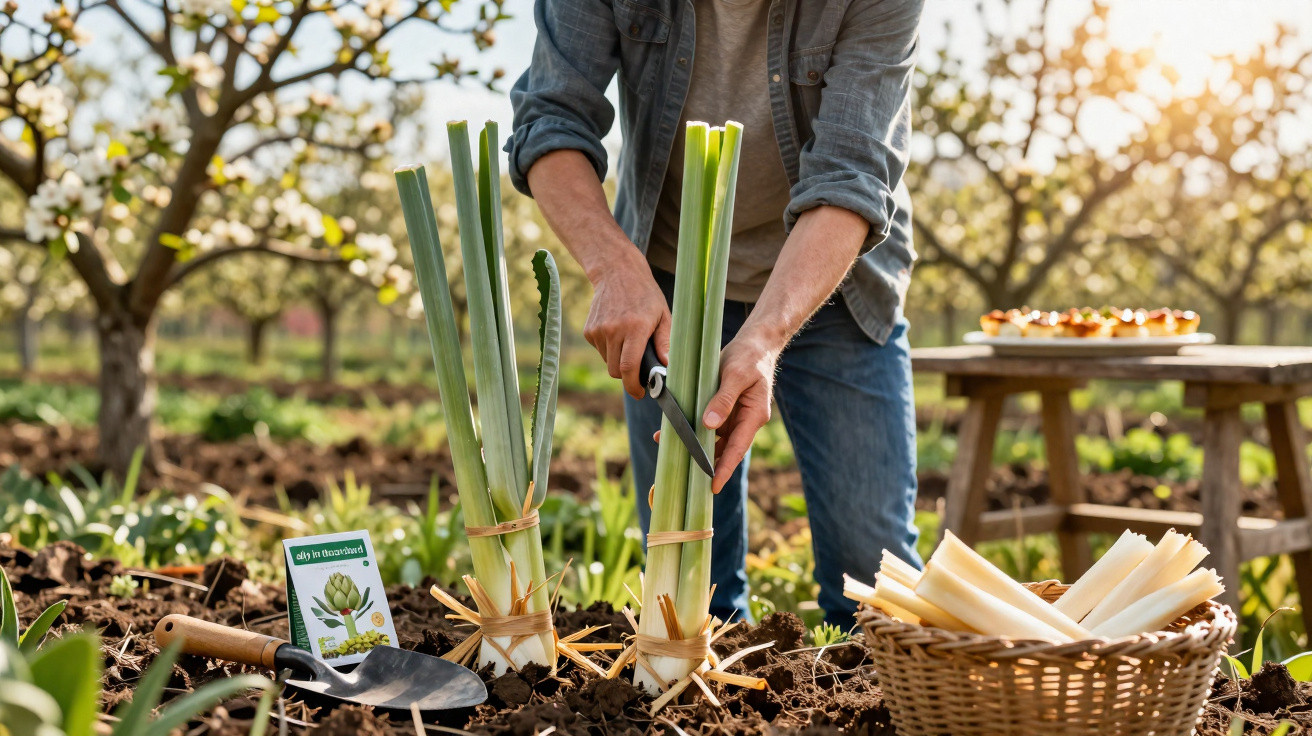
Cardoon is harvested in late autumn. The key culinary technique is called “blanching” – not in a saucepan, but in the garden. Its purpose is to make the stalks more tender and milder in flavour.
Blanching in the garden
- Around three to five weeks before the intended harvest, loosely tie the leaves and stalks together.
- Cover the entire bundle with an opaque material, such as corrugated cardboard or hessian sacks.
- Protect the base of the plant from damp so that it does not rot.
- Once the blanching period is complete, cut the covered stalks close to ground level.
Prepared in this way, the stalks become pale, almost whitish, and taste considerably more delicate. After peeling and removing the fibres, they can be used much like salsify or celery. Their flavour is strongly reminiscent of the tender heart of an artichoke.
Typical cardoon dishes
- A gratin of cardoon pieces with cream, cheese and nutmeg
- A creamy soup combined with potatoes and a little white wine
- A braised vegetable side dish, for example with beef or lamb
- An elegant starter with lemon butter and flaked almonds
Anyone wanting to impress guests can serve cardoon as a dish in its own right and share the story of this almost forgotten vegetable. Its refined character is especially suited to Christmas and other festive occasions.
Practical advice for beginners
Many gardeners are put off growing cardoon because it appears large and is considered “space-hungry”. With a few simple measures, however, it can fit easily into everyday garden planning.
- Grow only a few plants: Two or three specimens are entirely sufficient for a family.
- Use it as a specimen plant: Cardoon makes a striking architectural feature in an ornamental border.
- Provide good nutrition: An annual application of compost or well-rotted manure keeps the plant productive.
- Maintain watering: Water regularly during dry spells so that the stalks do not become tough.
As the plant is fairly robust, serious diseases occur only rarely. Slugs sometimes nibble young leaves, but this can be limited with physical barriers or beer traps. In very wet summers, rot can develop around the root collar where drainage is poor – another reason to choose loose, deep soil.
Why cardoon is especially worthwhile today
Gardeners looking to make their plots more resilient as well as more interesting will find cardoon to be a surprisingly versatile ally. It combines yield, ornamental appeal and ecological function – qualities that are increasingly sought after in an era of climate change and limited space.
It also offers a distinct advantage: because this vegetable is scarcely available in shops, just a few plants provide an exclusive ingredient for the home kitchen. Amateur cooks who enjoy experimenting with regional specialities can make the most of it here. Combined with classic winter ingredients such as potatoes, nuts, cheese or game dishes, it creates flavoursome yet reassuringly down-to-earth meals.
So, anyone with a spare corner of the garden in spring can set several projects in motion with cardoon at once: loosening the soil, supporting fruit trees and securing a refined festive vegetable for winter. It does not require a great deal of experimental courage – simply a little space, sunshine and the desire to grow something that is far from common in the garden.


Comments
No comments yet. Be the first to comment!
Leave a Comment