
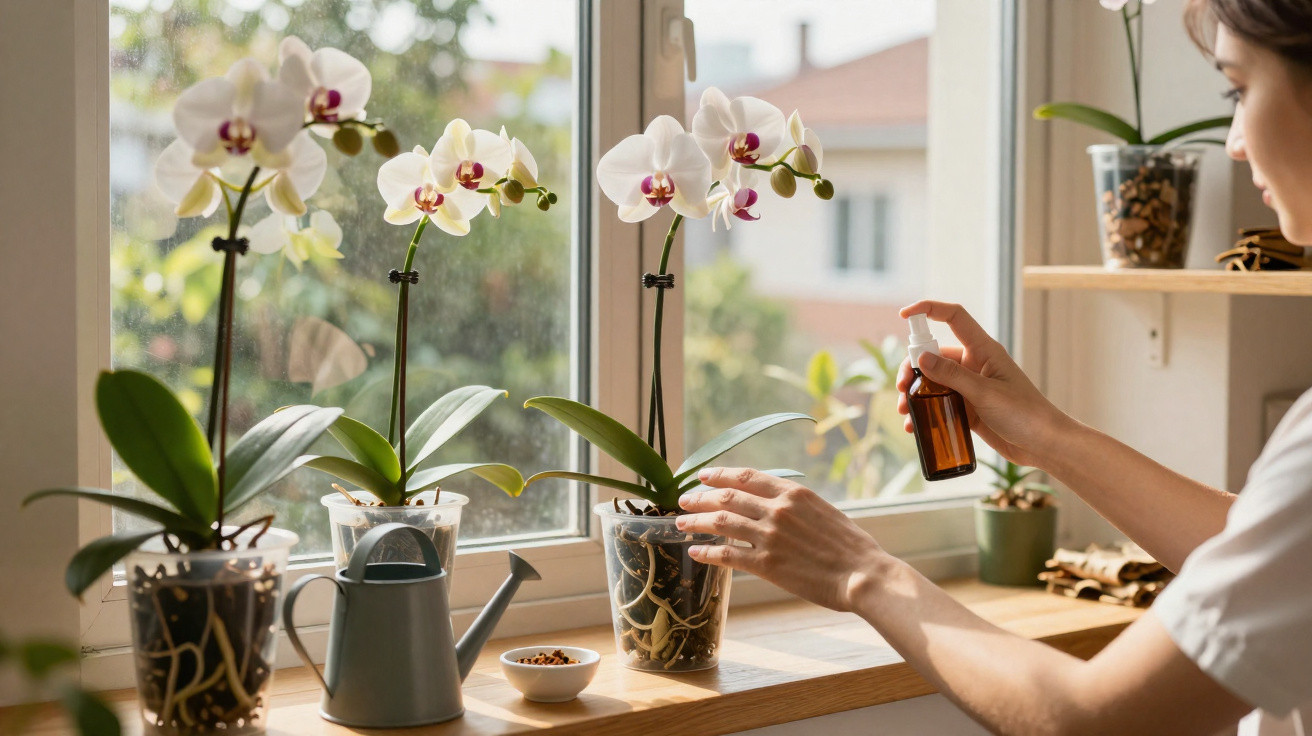
Growing flowering plants at home can seem daunting, particularly when you have just been given a special gift. Understanding the habits of these species is essential if they are to remain healthy and full of life for a long time.
How can you stop orchids losing their flowers soon after you receive them?
A common mistake is leaving the original pot inside its restrictive decorative wrapping for an extended period. This damaging habit traps too much heat and moisture, hastening the early loss of the beautiful petals and seriously affecting the plant’s health.
Ideally, take the plant out of this wrapping as soon as you have taken the initial photograph of your gift. Allowing air to move freely around its structure helps it adjust to its new home and prevents the stress that can quickly ruin its flowering.
To help the species survive indoors, pay attention to these key immediate protective measures:
- Remove wrapping: Take off decorative plastic coverings as soon as you receive the plant.
- Air circulation: Allow air to pass freely around the roots and leaves.
- Position near a window: Keep the pot close to the glass so it receives plenty of light.
- Original pot: Leave the plant in the grower’s container for up to four years.
- Smell check: Repot only when the growing medium has a noticeably sour smell.
Why is direct sunlight important for these plants?
Contrary to popular belief, these beautiful plants need natural, direct light if they are to flower again with real vigour. A complete lack of sunlight weakens the plant’s internal structure, preventing healthy new shoots from developing.
The best location is very close to the glass of a bright window in the home. Giving it a few minutes of gentle morning or late-afternoon sun supports the full development of the leaves and promotes long botanical life.
For a clearer understanding of how to place your pots and provide the right light, watch the practical guidance on the Minhas Plantas YouTube channel:
How do you know the right time to water the growing medium?
Incorrect watering is the main reason these species die when they are grown at home by beginner growers. Although they enjoy water around their roots, liquid sitting at the bottom of the container causes rapid, fatal rot throughout the root system.
The Finger Test
Physical growing-medium check
Push the tip of your finger deeply into the centre of the growing medium to check its true internal moisture before adding any more water.
If your finger comes out dirty or with particles stuck to it, the plant is still hydrated and watering should be postponed straight away.
Forget old fixed rules about watering household pots on particular days, as local weather conditions can vary considerably. Checking each plant by touch prevents both severe water stress and the harmful build-up of moisture in the growing medium.
Follow these effective watering guidelines:
- Water the entire pot generously until water runs out through the drainage holes underneath.
- Moisten all the foliage, paying particular attention to the undersides of the leaves.
- Avoid watering open flowers directly to help them last longer.
What care is needed for effective fertilising?
Regular nutrition is vital because a home environment does not supply the natural organic compounds found in forests. Without a continual supply of suitable nutrients, potted orchids can suffer severe starvation and stop flowering.
Using the complete organic fertiliser sold as bokashi addresses this shortage in a practical and safe way. Applying one teaspoon each month in porous sachets provides a gradual release of highly beneficial plant food.
Use the following method to fertilise your plant at home:
- Put the recommended amount of granular fertiliser into a small protective sachet.
- Place the tied sachet in one corner of the pot, on top of the bark.
- Water directly over the sachet to release essential nutrients with every watering.
When is it genuinely necessary to replace the grower’s pot?
Many beginner growers wrongly believe that the original container must be changed as soon as the plant is bought from the shop. However, these species can remain perfectly well in the plastic pot supplied by the grower for up to four consecutive years, without any structural problems.
Replacement is only needed if the growing medium gives off an unpleasant smell similar to sour beans left in the fridge. To preserve the ideal root health of plants at home, learn the correct watering methods to prevent root rot once and for all.
Comments
No comments yet. Be the first to comment!
Leave a Comment