
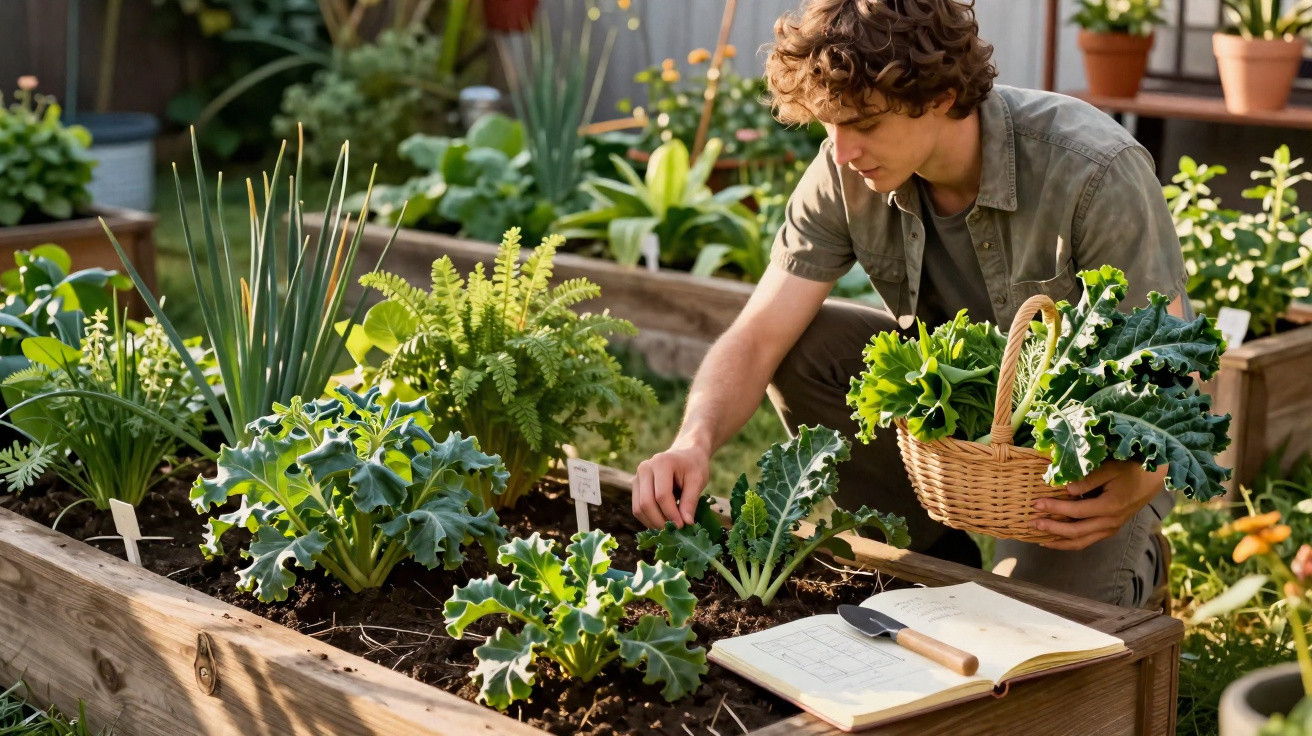
If you raise the same varieties every spring, watch anxiously for late frosts and barely put down the hose, you will know the frustration: a vegetable garden consumes time and energy. Perennial vegetables can turn that model around – plant once, harvest for years. That is precisely the appeal of so-called perennial vegetables, which many gardeners now use as the foundation of an almost self-sufficient garden.
What ‘perennial vegetables’ means
Perennial vegetables are crops that remain in the same spot for several years and regrow regularly. Some are genuinely perennial, such as asparagus and rhubarb. Others maintain themselves by self-seeding or spreading through root runners, repeatedly reappearing, as with Jerusalem artichokes and Chinese artichokes.
The principle is simple: prepare the bed thoroughly once, then let the plants do much of the work. They overwinter in the ground, emerge again in spring and provide fresh harvests without the need to create a new bed every year.
“Perennial vegetables save work, protect the soil and often produce reliable yields for many years.”
Many of these crops fit ideally into wildlife-friendly, permanently cultivated gardens and permaculture projects. As something is always growing, flowering or remaining in place to give the bed structure, they support soil life, insects and beneficial wildlife.
The main benefits for everyday gardening
The attraction of a perennial vegetable bed is not so much its novelty as its very practical everyday advantages. Gardeners who embrace it gain several benefits at once:
- Less soil work: There is no need for annual rotavating or digging, so the soil is largely left undisturbed.
- Far less watering: Deep roots draw water from lower soil layers, while mulch reduces evaporation.
- Extended harvest periods: Many varieties provide edible leaves, stems or tubers for weeks or even months.
- Greater resilience: Even in an exceptionally wet or very dry year, the harvest does not fail completely.
- More garden life: Flowers, foliage and roots continually provide food and habitat for animals and microorganisms.
Some crops are especially long-lived. Asparagus takes two to three years before full harvests are possible, but can then produce for ten to twenty years. Rhubarb can easily last a decade. Chives, sorrel and perennial winter leeks also return dependably each spring.
Top 15 perennial vegetables for an almost self-sufficient garden
For a first attempt, choose sturdy crops that perform well in most gardens and will not overwhelm beginners. Here are 15 of the most popular and practical perennial vegetables:
| Vegetable | Edible part | Special feature |
|---|---|---|
| Perennial winter leek | Leaves, stems | Returns every year; ideal for soups and frying pans |
| Tree cabbage / perennial kale | Leaves | Grows into a bushy plant and provides an ongoing supply of kale leaves |
| Sorrel | Leaves | Tart flavour, excellent in salads and sauces |
| Rhubarb | Stalks | Large clumps give an early spring harvest for cakes and compotes |
| Lovage | Leaves, stems | Highly aromatic and grows large |
| Chives | Leaves | Extremely low-maintenance and regrows repeatedly |
| Perennial basil (keep frost-free) | Leaves | Reliable flavour when grown in a pot or greenhouse |
| Perennial fennel | Leaves, seeds | Delicate foliage for fish dishes, with seeds for seasoning |
| Ramsons | Leaves | Loves shade and gradually spreads |
| Jerusalem artichoke | Tubers | Vigorous and tall, producing a generous autumn harvest |
| Chinese artichoke | Tubers | Delicate, twisted tubers with a nutty flavour |
| Horseradish | Root | Strong, hot and very eager to spread |
| Globe artichoke | Flower buds | Both ornamental and edible; needs a warm, sheltered site |
| Asparagus | Shoots | Requires patience, then crops for many years |
| Welsh onion | Hollow leaves, spring onions | A very hardy perennial alternative to chives |
The common thread is that every one of these crops returns over several years and delivers continuing harvests with little care. Combined thoughtfully, a single bed can supply leaves, tubers, stems and aromatic herbs.
Planning a perennial vegetable bed: the right place for each crop
Before planting, it is worth considering a few practical details. Not every crop thrives everywhere, and some simply need more room than others.
- Space requirements: Lovage, globe artichokes and rhubarb become large, so avoid squeezing them into a tight corner.
- Soil type: Asparagus prefers light, sandy soil, while rhubarb does best in slightly moist, nutrient-rich ground.
- Light conditions: Ramsons favour shade and fresh soil, whereas sorrel copes well with partial shade.
- Kitchen use: Gardeners who make plenty of soup will appreciate perennial winter leeks, lovage and chives. Jerusalem artichokes, Chinese artichokes and globe artichokes suit oven dishes.
One common mistake is planting aggressively spreading crops too close to more delicate ones. Jerusalem artichokes, horseradish and Chinese artichokes readily gather momentum and will eventually take over an entire bed if allowed to do so.
How to create a perennial vegetable bed with ease
Getting started is less difficult than many people expect. If you set aside a part of the garden for perennial vegetables over the long term, the process is roughly as follows:
- Loosen the soil gently, using a digging fork or a broadfork.
- Work in mature compost and, where soils are nutrient-poor, perhaps a little rock dust.
- Thoroughly clear the area of persistent perennial weeds.
- Plant young plants or set tubers, keeping to the appropriate spacing.
- Apply a generous mulch of grass clippings, leaves or straw.
Mulch has a central role in this kind of system. It shields the soil, retains moisture, feeds soil organisms and eliminates much of the need for hoeing. Watering is mainly necessary during establishment and through prolonged dry spells.
How the rest of the garden changes
Once a permanent bed is established, the work involved in growing vegetables shifts. Traditional annual crops such as tomatoes, courgettes and beans are better placed in supplementary beds. Those areas can be planned more flexibly, while the perennial vegetable framework provides a dependable ongoing supply.
Many amateur gardeners find that harvesting becomes noticeably less pressured: instead of harvesting “everything at once” in summer, something reaches the basket throughout the year – ramsons in spring, then rhubarb, followed later by Jerusalem artichokes and Welsh onions.
Practical advice: control, harvesting and small risks
Although perennial vegetables may seem convenient, they are not entirely maintenance-free. Two areas deserve particular attention:
- Keep spreading under control: It is best to grow invasive crops in separate corners or large containers.
- Divide plants regularly: Rhubarb, globe artichokes and lovage respond to dividing established clumps every few years with renewed growth.
In colder locations, protect more tender crops such as globe artichokes from severe frost with leaves or twiggy prunings. Perennial basil varieties must also be kept frost-free indoors or in a greenhouse.
For people new to eating these crops, one point matters: not every part of every plant belongs on the plate. With rhubarb, the large leaves must be avoided; only the stalks are used. For horseradish and lovage, it is primarily the root and the foliage respectively that are used in the kitchen.
Why perennial vegetables suit small gardens too
The benefits can also be enjoyed on a balcony, terrace or in a tiny garden. Chives, Welsh onions, perennial fennel and perennial basil all grow well in large containers. A shaded balcony is particularly suitable for ramsons or sorrel, provided the compost never dries out completely.
By combining several crops, just a few pots can become a living kitchen store cupboard, supplying fresh herbs, hot roots and tender leaves. Best of all, rather than starting from scratch every year, the plants become more valuable with each spring.



Comments
No comments yet. Be the first to comment!
Leave a Comment