
A reader tried one simple trick – and suddenly there was peace and quiet.
Anyone living in a city will know the issue: pigeons are drawn to balconies, window ledges and roof terraces. They leave behind dirty tiles, damaged plants and a constant cleaning chore. One reader said she cleaned her terrace every week, with no success – until she tested a combination of natural remedies and minor alterations. Since then, the birds have avoided her balcony.
Why pigeons find your balcony so appealing
Before trying to deter the birds, it is useful to understand why they stay in the first place. Pigeons are opportunistic: they choose places that offer plenty of comfort with very little effort.
- Food sources: Crumbs, leftover food, bird feed and unsealed rubbish bags are a ready-made feast for pigeons.
- Comfortable perches: Window ledges, railings and wall projections provide safe, elevated places to rest.
- Sheltered corners: Recesses beneath roofs, balcony ceilings and corners of buildings make ideal nesting spots.
As long as these three conditions are met, pigeons will keep returning – regardless of how frequently you wipe and scrub.
The turning point: from a weekly cleaning routine to a clever strategy
The frustrated terrace owner had reached exactly this stage: pressure washing, scrubbing and disinfecting brought a week of calm, then everything was covered in droppings again. Eventually, she decided to stop merely reacting and tackle the cause instead.
“Rather than constantly cleaning, it is worth making the balcony as unattractive as possible to pigeons – without harming them.”
She combined three measures: strict food hygiene, unpleasant smells and uncomfortable landing areas. The result was that the birds quickly moved on to another roof.
Cleanliness first: without food, there is no reason to stay
Avoiding food leftovers consistently
Pigeons reliably remember where food is available. Just a few bread crumbs can be enough for a regular feeding spot to become established. Anyone wanting to deter them should start here:
- Briefly sweep or vacuum the floor after every meal on the balcony.
- Do not leave crisps, bread or food leftovers exposed.
- Always seal rubbish bags and, where possible, keep them inside the home rather than on the balcony.
- Clear away empty plates, bowls and glasses immediately after parties or barbecues.
Those who enjoy feeding songbirds should use dedicated pigeon-proof feeders, such as tube feeders that are harder for larger birds to access.
Smells pigeons dislike – but you can still live with
Using household remedies rather than harsh chemicals
Pigeons are more sensitive than people to certain scents. This can be used to deter them without resorting to aggressive chemicals.
- White vinegar: Put a 1:1 mix of water and vinegar in a spray bottle, then apply it regularly to railings, window ledges and preferred landing spots.
- Strong spices: Pepper, curry powder or cinnamon can be placed in small bowls or carefully scattered over window ledges. Reapply after rain.
- Fragrant plants: Herbs such as rosemary and mint, or strongly scented ornamental plants including scented geraniums, may deter pigeons while also looking decorative.
Vinegar in particular was the game changer for the terrace owner. At first, she sprayed the critical areas every day. After a few days, the first pigeons stopped appearing; after two weeks, the terrace was almost pigeon-free.
Uncomfortable landing spots: where no pigeon wants to perch
Straightforward ways to make a balcony less inviting
Pigeons favour stable, wide surfaces where they can land and walk securely. If those areas wobble, become slippery or prickly, they will look elsewhere.
- Bird spikes: Narrow strips with plastic or metal spikes fitted to window ledges and wall projections prevent landing without injuring the birds.
- Tension lines or thin wires: Stretched directly above the railing, these make landing feel uncertain.
- Smooth surfaces such as Perspex: Smooth covers on broad ledges can cause the birds to slide off.
On the affected terrace, only a few metres of transparent wire stretched above the railing and two narrow strips of spikes on the parapet were needed. They were barely noticeable visually, but completely put the pigeons off.
Reflections and movement: how flashes of light unsettle pigeons
Making use of simple everyday items
Pigeons are naturally cautious. Shiny and moving objects confuse them and suggest danger.
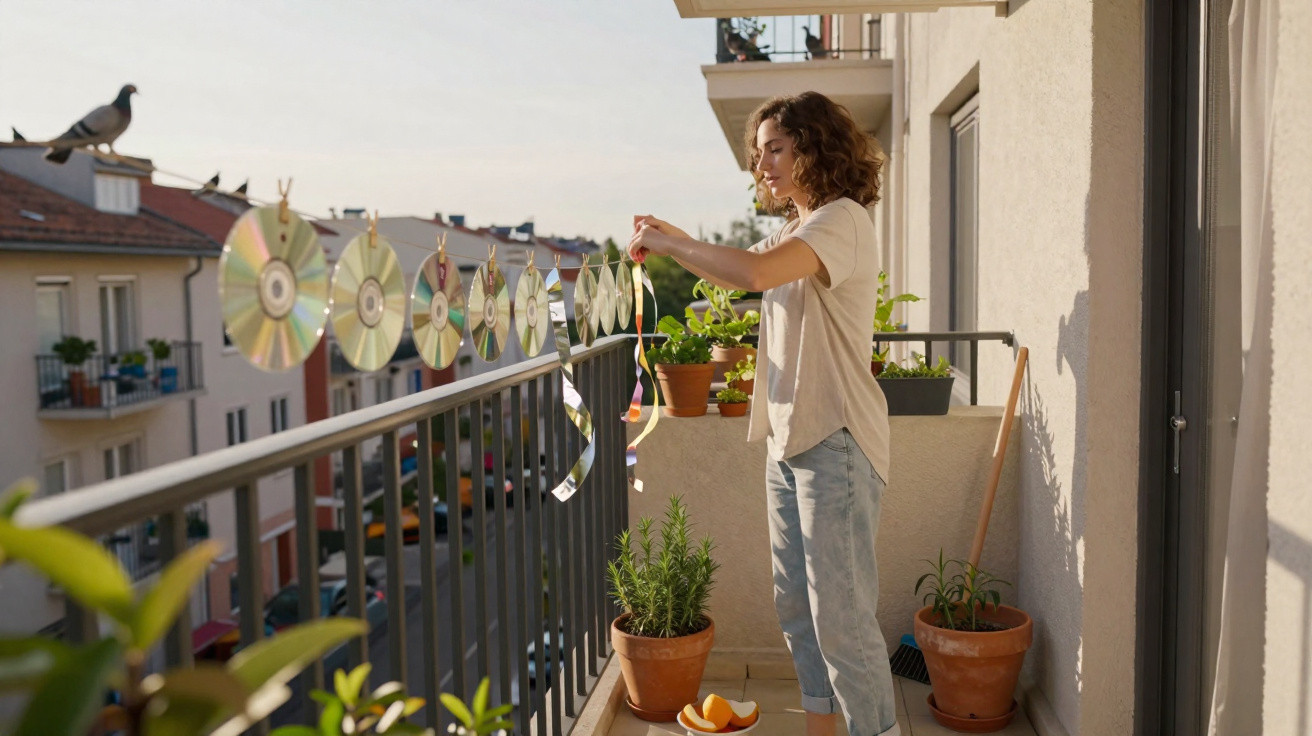
- Hang old CDs or shiny metal strips from string.
- Fix wind spinners in flower boxes – the more colourful, the better.
- Attach small mirrors or reflective film to the balcony parapet.
It is important to move these deterrents around from time to time. Pigeons are creatures of habit, and if nothing changes for weeks, they may become used to many scare objects.
Technical aids and structural solutions
Ultrasound and visual “predators”
Those who prefer a more technical approach can choose from a range of products:
- Ultrasonic devices: These emit high frequencies that may disturb birds. Their effectiveness depends greatly on the model and where it is positioned.
- Plastic birds of prey: Decoys of falcons or owls can be placed on roof edges or balcony parapets. Move them regularly to retain their effect.
- “Eye” balloons: Large printed balloons featuring eye patterns appear threatening to many birds.
Nets and barriers as a final measure
Where balconies are heavily affected or used as nesting sites, a close-mesh net may be the only long-term solution. It closes off the area from outside without blocking air or light. Careful installation is crucial so that birds cannot become trapped.
| Method | Effort | Effectiveness |
|---|---|---|
| Vinegar and spice spray | Low, requires regular application | Good for minor problems |
| Spikes and wires | One-off installation | Very effective on ledges and railings |
| Reflectors and wind spinners | Low, move occasionally | Moderate, effective in combination |
| Nets | High, often requires a professional | Almost complete exclusion |
Legal limits and fair treatment of city pigeons
As irritating as pigeons can be, they are animals that must be protected. In many cities, feeding them is expressly prohibited because it can cause the population to grow sharply. Injuring or killing them is not permitted and may result in penalties.
“Only methods that keep the animals away without injuring or killing them are permitted.”
Anyone planning larger structural measures – such as nets on a façade or beneath a roof – should involve their landlord or property manager. In blocks of flats, a joint strategy is advisable; otherwise, the birds will simply move from one balcony to another.
An often overlooked hygiene issue
Pigeon droppings are not merely unsightly; they can also damage building materials. The waste is relatively aggressive and can leave lasting marks on concrete, natural stone and metal over time. Fresh mess should therefore not be left for days.
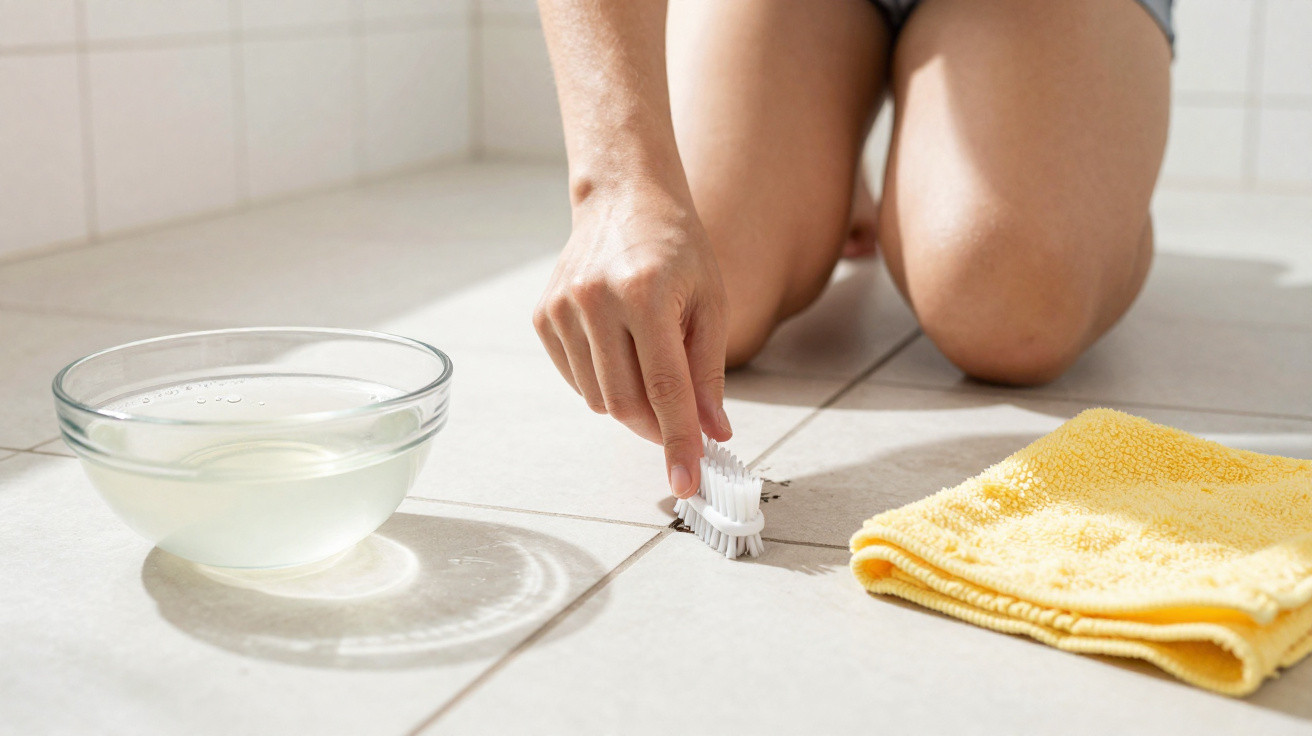
Gloves are helpful when cleaning and, for heavily soiled areas, so is a simple face mask. Lukewarm water with a little all-purpose cleaner or vinegar cleaner is ideal. Only use a pressure washer where it will not damage the façade – on old rendered façades, it can cause more harm than the droppings themselves.
Why combining methods works best against pigeons on balconies
The experience of many balcony owners shows that a single measure is rarely enough. The successful terrace owner combined consistent cleanliness, vinegar spray, a few reflective elements and wire above the railing. It was precisely this combination that made the birds abandon the spot.
Anyone facing a similar problem can proceed step by step: remove food sources first, then address smells and landing areas, and finally add technical or structural solutions if needed. This significantly reduces cleaning effort – and restores the balcony to what it should be: somewhere to take a breather, not a place for endless scrubbing.
Comments
No comments yet. Be the first to comment!
Leave a Comment