
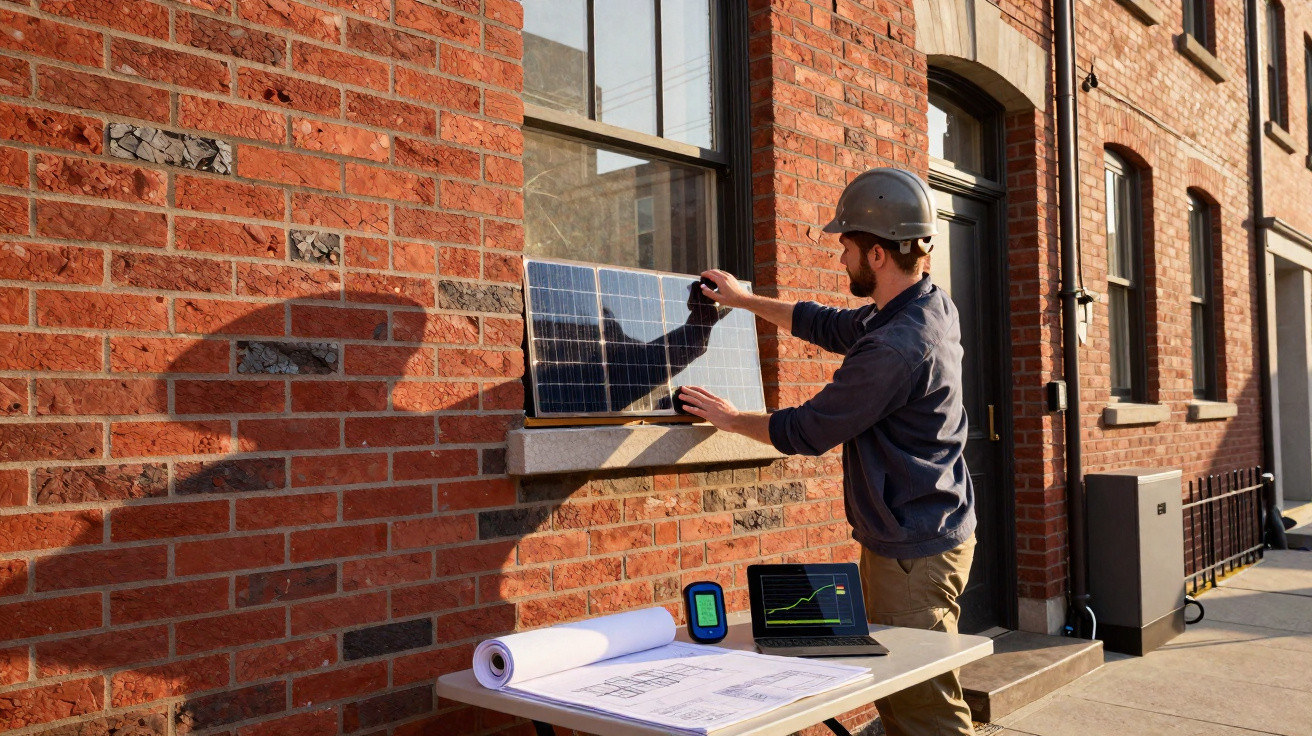
The drive for energy efficiency is encouraging construction solutions that combine sustainability with practical design. Solar bricks offer an innovative alternative: they capture radiation without disrupting a property's visual harmony, turning ordinary façades into ongoing sources of clean electricity.
How do solar bricks work in modern architecture?
These innovative modules pair high-performance photovoltaic cells with exterior finishes that accurately replicate the texture of conventional brickwork. This advanced architectural system enables a building's outer structure to produce renewable energy continuously, bringing sophisticated technology into contemporary engineering.
Unlike the highly visible systems fitted to roofs, integrated panels retain the property's original appearance through a seamless finish. This sustainable approach provides strong thermal insulation while converting previously unused vertical surfaces into power-generating areas for a range of essential equipment.
How can ordinary windows become solar energy generators?
Scientists have created a specialised translucent compound that turns incoming light into clean electricity through glass without… Read more
What are the benefits of installation on older buildings?
This intelligent cladding technology opens up new possibilities for restoring historic buildings and older homes. Modular panels can be fitted over existing walls, protecting historic heritage while adding generating capacity with no unwanted visual impact.
For retrofit projects, extensive vertical areas can readily provide tens of kilowatts of installed capacity. This building transformation increases a property's value, improves its overall energy efficiency and delivers substantial financial savings on monthly electricity bills.
The video below, from the Mitrex – Building Integrated Solar Technology YouTube channel, shows how this photovoltaic structure operates:
How does this technology meet household electricity demand?
Energy produced by these photovoltaic façades is used to meet the everyday requirements of homes and offices. Its electrical production supplies internal circuits reliably, ensuring the full operation of high-demand appliances, including refrigerators and modern home climate-control systems.
As the number of modules installed on the façade rises, the building's self-sufficiency increases substantially. This distributed generation decentralises consumption, reduces reliance on the public electricity grid and reinforces the energy security of the entire household.
Key system highlights
Photovoltaic façade features
The main elements defining this technology include:
- Seamless aesthetic integration, with a finish identical to traditional bricks;
- The ability to generate clean energy for high-consumption appliances;
- Direct compatibility with refurbishment schemes and existing buildings.
Which methods enable installation on existing walls?
Modules are secured to existing buildings using established civil-engineering techniques. The process relies on metal support structures that provide mechanical stability, enabling a fast, safe architectural renewal without complex structural disruption.
Among the available options, recladding and over-cladding methods stand out for their practical benefits during construction work. This overlay installation removes the need to demolish old walls, preserving the interior of the property and ensuring long-lasting durability against the weather.
Implementation involves technical measures essential to the project's success:
- Installing metal profiles to support solar panels securely;
- Electrically connecting the integrated modules to the internal distribution network;
- Applying a protective overlay directly, without disruptive demolition work.
Why does this solution outperform traditional solar panels?
Many property owners are reluctant to adopt solar power because conventional roof-mounted photovoltaic panels can look metallic and bulky. This integrated technology addresses that aesthetic concern by building generating cells into the façade finish itself, with complete visual elegance.
Beyond its architectural discretion, making use of side walls considerably expands the light-capturing area available on urban properties. This innovative investment combines environmental responsibility with increased property value, delivering excellent energy efficiency for decades to come.






Comments
No comments yet. Be the first to comment!
Leave a Comment