
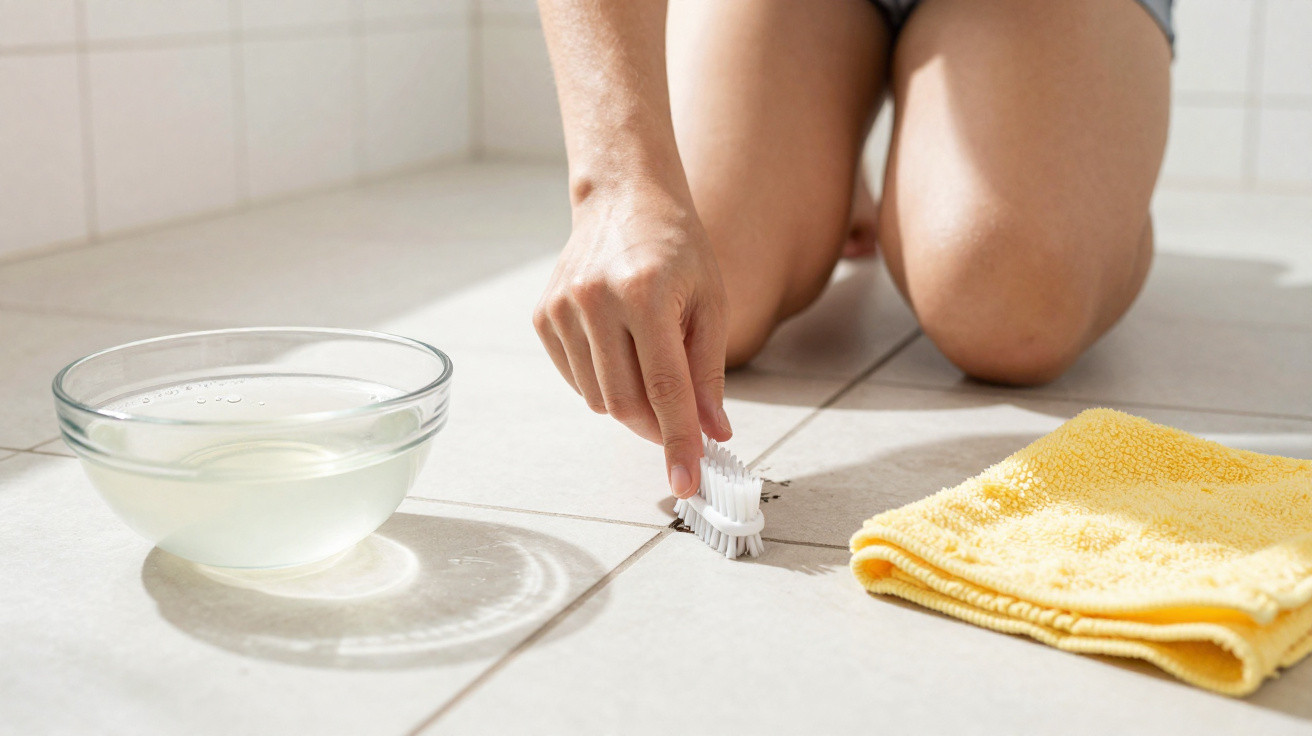
Grout between tiles often collects dust, product residue and grime, particularly in the narrowest sections. Since a large sponge struggles to reach these lines, an old toothbrush can be a straightforward tool for getting into those areas.
Why does a toothbrush reach tile grout more effectively?
Its fine bristles can get into tight gaps and follow the grout line. This makes it possible to focus cleaning precisely where dirt has built up, rather than scrubbing a much larger surface.
The compact brush head also makes it easier to clean wall joins, corners and areas close to tile edges. A toothbrush can be particularly useful for targeted cleaning.
How should grout be prepared before scrubbing?
Before using any cleaning product, remove loose dust and debris. A dry brush or cloth can help with this initial stage, preventing dry dirt from turning into a paste during cleaning.
Next, apply a product that is suitable for both the surface covering and the grout. Follow the manufacturer’s instructions and avoid mixing different cleaning products, especially substances that could react with one another.
How can you use a toothbrush without damaging grout?
Dampen the bristles and make short strokes along the grout line. Excessive force is unnecessary: repeated movements help loosen surface dirt.
On delicate surfaces, first test both the product and the method in an inconspicuous area. Very stiff brushes or too much pressure can wear away certain types of grout.
When is a small brush worth using?
This approach is useful for corners, narrow lines and small areas requiring extra attention. There is no need to use a toothbrush across an entire wall or floor if a larger tool can already do the job.
Once cleaning is complete, remove product residue with a cloth or rinse as directed by the product instructions. Dry the area where needed to avoid leaving moisture behind.
In this way, cleaning grout with a toothbrush is a simple solution for reaching awkward spots. Its benefit lies in the small bristles and compact brush head, which let you concentrate the effort directly on the lines where dirt tends to become trapped.


Comments
No comments yet. Be the first to comment!
Leave a Comment