
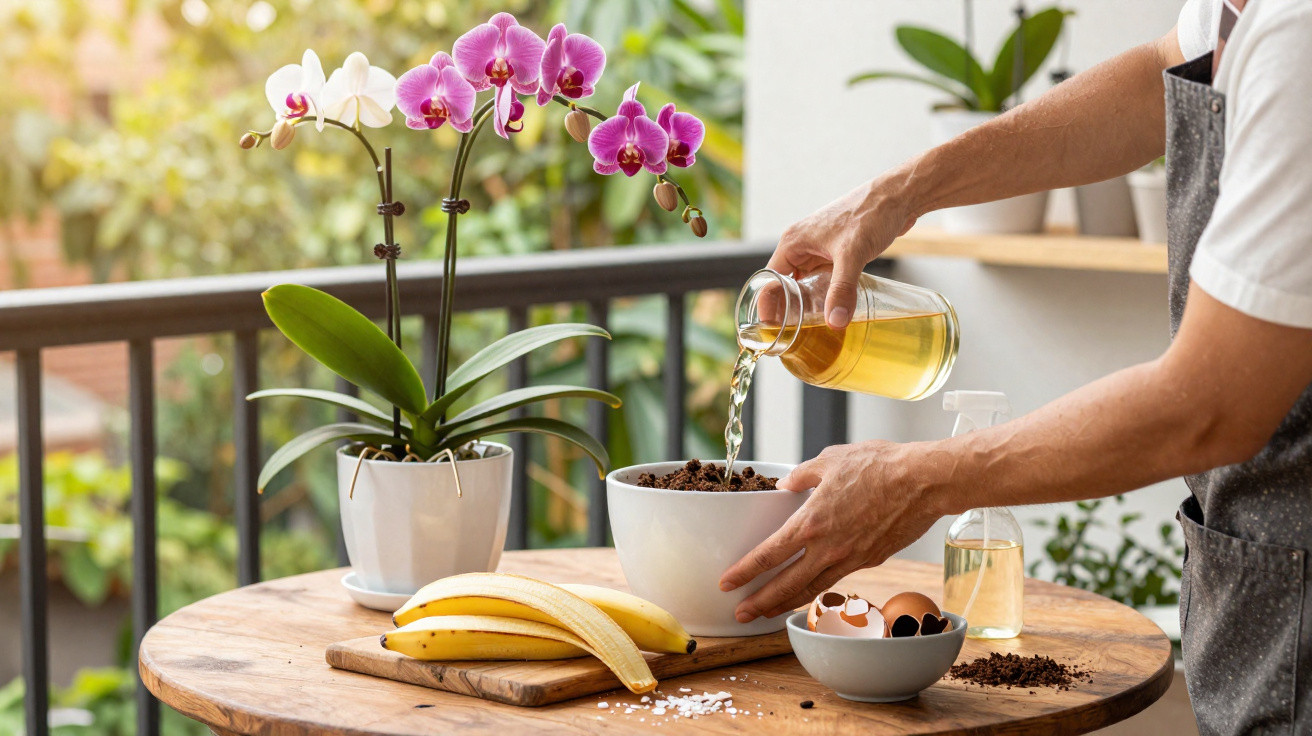
Banana peel has become popular with people who grow orchids at home as a low-cost natural fertiliser. The method has spread because it is straightforward, makes use of kitchen waste and requires no advanced gardening knowledge, although it must be handled carefully to benefit the growing medium without creating unpleasant smells or attracting insects.
What does banana peel release when growing orchids?
When exposed to moisture and the microorganisms in the pot, the peel gradually breaks down, releasing nutrients that orchid roots can take up. It does not replace fertilisers designed specifically for orchids; instead, it works only as a supplement within proper light, watering and ventilation management.
As it decomposes, banana peel releases chiefly potassium, as well as phosphorus, calcium, magnesium and certain micronutrients. These nutrients are associated with plant resilience, the development of sturdier flowers and water balance. They also feed beneficial microorganisms in the growing medium, helping to create a more stable root environment.
Why do so many people use banana peel for orchids?
Banana peel is widely used as a fertiliser because it costs virtually nothing, is easy to prepare and comes from a natural source. For beginners, repurposing household waste can seem like an affordable way to support a plant before buying specialist products.
Accounts on social media, videos and informal experiments have helped popularise the technique, often linking banana peel to abundant flowering. However, it mainly supplies potassium and only some of the required nutrients. Orchids also need nitrogen and other elements found in fertilisers formulated for the plant, such as balanced NPK fertiliser or suitable organic feeds.
How can banana peel be used safely on orchids?
To lower the risk of fungi and insects, many people choose to dry or boil the peel before applying it to orchids. The following common methods can be used sparingly, while always monitoring how the plants respond:
- Dried and crushed peel: Cut into thin strips, dried in the sun or in a low oven, then crushed and placed in a small amount on top of the growing medium, without touching the roots.
- Banana peel tea: Pieces are boiled in water, strained and allowed to cool; the enriched water is used for watering every few weeks, alternating with ordinary watering.
- Thoroughly dried whole pieces: Well-dehydrated strips are placed on the surface of the growing medium in small quantities, so that they break down gradually.
Use is generally infrequent, at intervals of 30 to 60 days, to prevent an excess of decomposing organic matter and unpleasant odours. Good ventilation is important, the peel should not be buried deeply, and use should stop if there is an increase in small flies, ants or visible fungi in the pot.
Which other kitchen waste can support orchid nutrition?
Some household leftovers can supplement orchid nutrition, provided they are used in very small quantities so they do not damage the aeration of the growing medium. They offer only light support, never a sole source of fertiliser, and require careful observation of the plants.
Dried coffee grounds, finely crushed eggshells and unsalted vegetable cooking water are common choices. Fruit scraps, however, are preferably put into a separate compost bin rather than directly into the pot, to prevent flies and odours. In every case, the aim is to keep the growing medium free-draining, airy and without excess organic matter, supporting healthy roots and more vigorous flowering throughout the year.


Comments
No comments yet. Be the first to comment!
Leave a Comment