
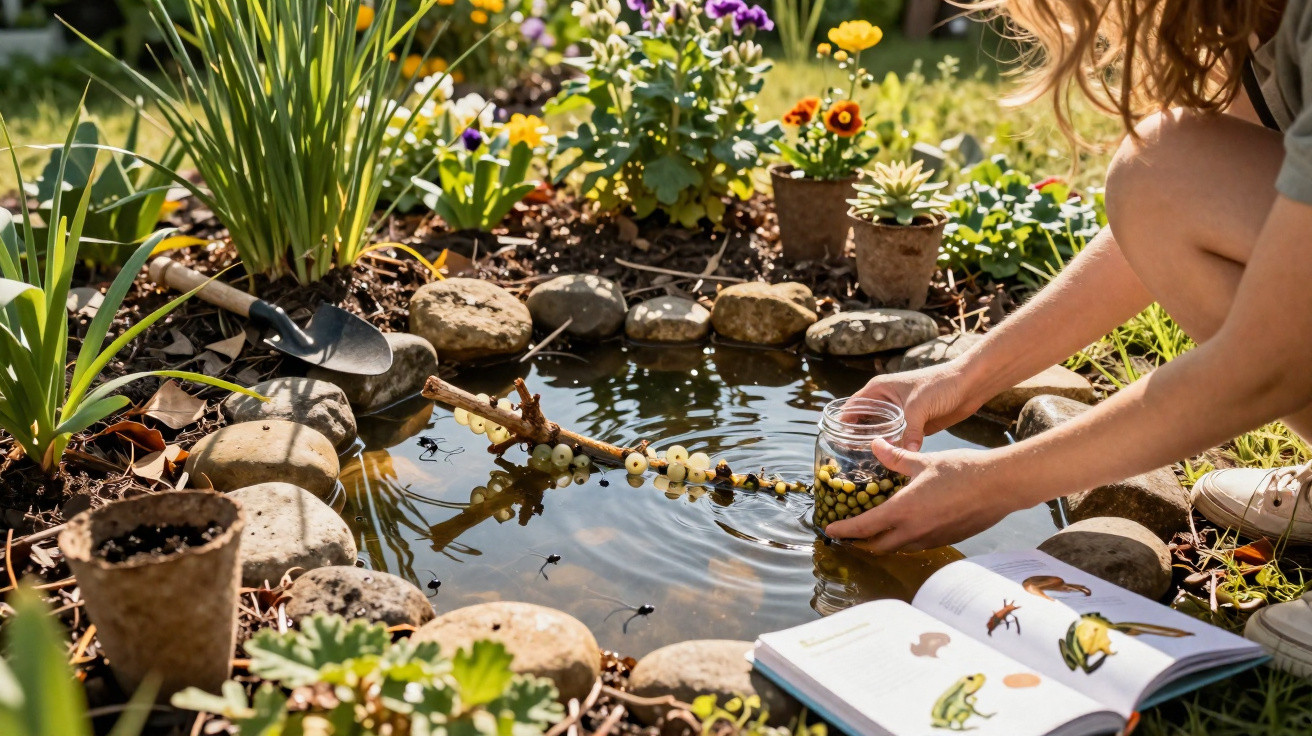
Creating small pools of water in your garden can transform the wildlife found at home. This temporary ecosystem draws native species looking for shelter and suitable breeding sites, boosting biodiversity across your residential lawn.
How do vernal pools work?
These features are natural or man-made hollows in the ground that collect rainwater seasonally. They stay full at certain times of year before drying out completely, acting as an important natural nursery that helps conserve a range of local amphibians.
The key ecological benefit of this temporary habitat is that it contains no predatory fish. With this constant threat removed from the ecosystem, laid eggs can develop safely, supporting the survival of local salamander populations and other small frogs.
The main components of this ecosystem include:
- Frogs: They find a quiet place in which to lay their eggs.
- Salamanders: They use the pool as an essential early refuge.
- Water: It gathers temporarily through seasonal rainfall.
- Vegetation: It provides protective cover for newly hatched tadpoles.
- Nutrients: Fallen leaves feed the local biological chain.
Why is the absence of fish so important?
Fish are voracious predators of eggs and larvae in the natural world. When a water pool dries out at regular intervals, it prevents these aquatic animals from becoming established there, creating an essential protective zone for the healthy development of fragile native species.
As a result, small animals can complete their metamorphosis without being eaten too early. This natural cycle shows how the lack of permanent water can be beneficial, turning a temporarily dry space into a valuable sanctuary for frog wildlife.
Which animals benefit from this habitat?
Many amphibians rely entirely on these seasonal pools to continue their generations. Beneficial aquatic insects and small birds also find a rich source of food and quick hydration in these spots, creating a positive effect on the biological chain throughout the surrounding area.
Biodiversity in Focus
The Impact of Temporary Pools
These small aquatic spaces are vital to the survival of species that cannot breed in permanent ponds because of predation.
Protecting these areas helps sustain ecological balance in both urban and rural settings in a simple way.
The regular presence of these animals assists with the natural control of urban pests and mosquitoes in the garden. Encouraging these small wet biomes on a rural or urban property is therefore an important ecological strategy for protecting valuable wild fauna.
These animals use the space for:
- Raising healthy tadpoles.
- Providing food for small local birds.
- Temporary shelter from land-based predators.
How can you create a safe nursery in your garden?
Choose a low-lying part of the land where rainwater naturally tends to collect. Digging a small, shallow, sheltered hollow will help retain water and provide an excellent starting point for your new sustainability project.
Place dry leaves, branches and stones on the bottom to create ideal hiding places for future inhabitants. Avoid allowing any chemicals or pollutants into the water, keeping the setting entirely clean and suitable for the full development of wild biological life.
Essential set-up steps:
- Select the best location on the land.
- Add natural substrate to the bottom.
- Keep the space free from fish.
What long-term care is required?
Maintenance only requires monitoring water collection and ensuring that larger predators do not enter the area. Careful planning can turn the space into a thriving amphibian nursery, promoting genuine environmental balance on your property.
Remember that the pool drying naturally is part of the expected biological cycle. This process prevents the unwanted spread of disease-carrying mosquitoes and ensures that nature follows its perfect course in a wholly sustainable way.
Official source: Information obtained directly from University of New Hampshire Extension.
Comments
No comments yet. Be the first to comment!
Leave a Comment