
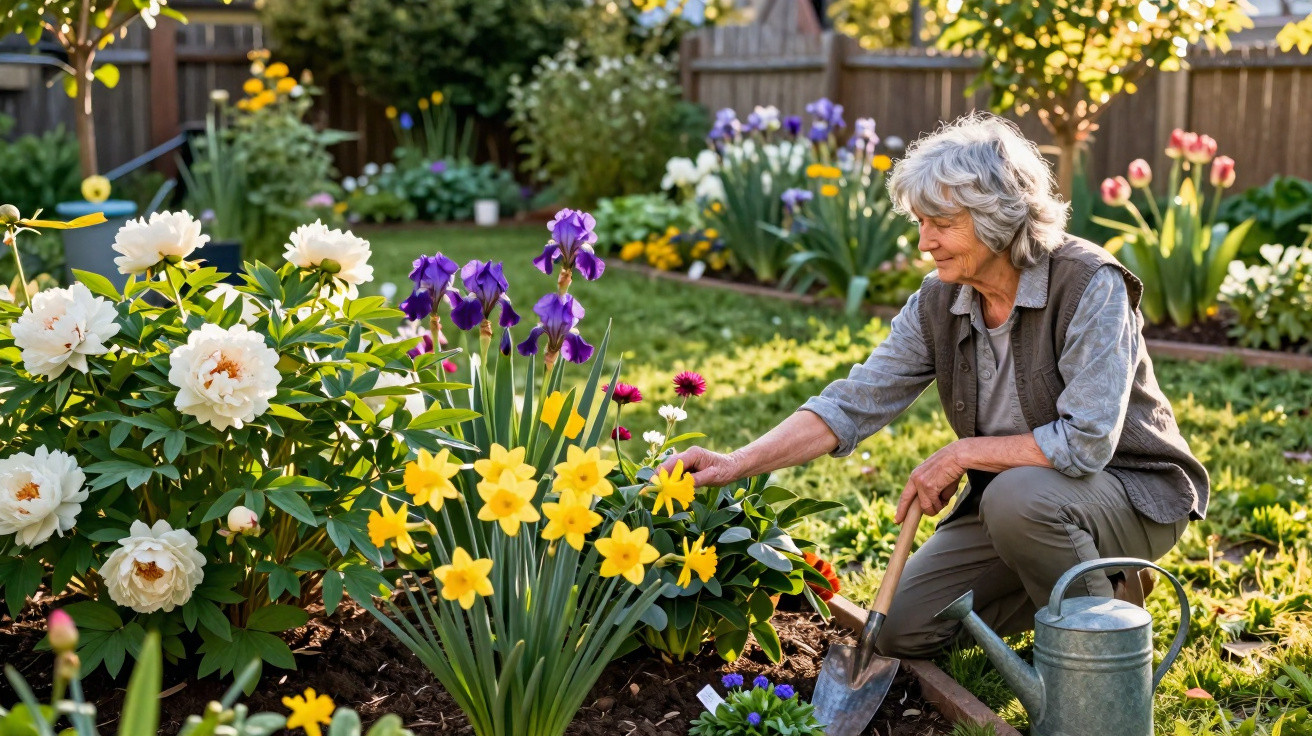
Many gardens look bleak in late winter: bare beds, soggy soil and a few forgotten stems. However, planting wisely now can soon give you a bed that returns year after year, without the need to keep buying, planting and deadheading anew.
Why perennial flowers are ideal for lazy gardeners
Perennial plants regrow each year from the same roots, tubers or rhizomes. They die back in autumn, store up energy below ground and begin growing again when the first milder temperatures arrive. Choosing the right combination of varieties effectively creates a self-sustaining flower bed.
“Choosing long-lived perennials turns one weekend of work into decades of flowers.”
Unlike annual flowers, which often bloom exceptionally lavishly but have to be bought and planted again every year, perennial varieties offer three key benefits:
- They save time because they return unaided.
- They save money because the initial planting lasts for a long time.
- They add structure to the garden by reliably occupying the same space.
Some varieties are almost considered family heirlooms, as they can remain in one position for several decades and become more beautiful over time.
The queen of long-lasting bloomers: herbaceous peony
Herbaceous peonies are among the longest-lived plants for flower beds. Given well-drained, nutrient-rich soil and a sunny position, they can stay in place for more than 50 years. They establish slowly, but become a little larger every year.
Their enormous blooms are typical, often wider than a man’s hand. Anyone who has seen a peony in full flower in May will understand why so many gardeners never want to move one.
“Peonies hate being moved repeatedly – give them a good spot and they will reward you for decades.”
How to help peonies thrive
- Position: Full sun to partial shade.
- Soil: Loose, deep and never waterlogged.
- Planting depth: Cover the buds with only 2–3 cm of soil, otherwise flowering will be poorer.
- Patience: They can be restrained in their first few years, then become increasingly floriferous.
A common mistake is planting too deeply or constantly redesigning the bed later on. Both take a great deal of energy from the plant and reduce its abundance of flowers.
Daffodils: self-propagating plants for an early start to the gardening year
Daffodils are perfect for ushering in spring. Their bulbs remain in the soil throughout winter, experience the cold and push up their first green shoots in late winter or early spring. As the years pass, the bulbs divide more and more.
After just a few seasons, a small cluster of bulbs can therefore become a broad sweep of yellow, white or bicoloured blooms.
What daffodils need in a flower bed
- Planting time: Autumn, while the ground is still frost-free.
- Groups: For a natural-looking display, plant 5–7 bulbs in each spot.
- Planting depth: Around three times the height of the bulb.
- Leaves: Do not cut them back until they have turned completely yellow; only then can the bulbs recharge.
With a few years of patience, daffodils can transform lawn edges, orchard meadows or a front garden into a lasting ribbon of spring colour with very little effort.
Iris: the robust structural plant for perennial borders
Bearded iris (Iris germanica) bring striking splashes of colour and height to the border. They grow from rhizomes: thickened, creeping shoots that sit just beneath the surface. These storage organs make the plants resistant to drought.
Depending on the variety, their stems can reach up to 90 centimetres. Although the flowers have an almost exotic appearance, they are surprisingly easy to care for.
“Iris like sun on their backs and air around their middles – that keeps the rhizomes healthy.”
Care tips for long-lasting iris
- Position: As sunny as possible, with no persistent wetness.
- Rhizomes: Plant them shallowly; they may remain partly visible.
- Dividing: Roughly every 4–5 years, when flowering begins to diminish.
- Feeding: Apply sparingly, as too much nitrogen makes them prone to disease.
Their distinctive foliage means iris continue to provide important structure in the border even after flowering has finished.
The ideal long-lasting flower bed: a tried-and-tested trio
Combining daffodils, iris and peonies provides flowers over several months while requiring remarkably little care. Arranged thoughtfully, this trio creates a bed that remains visually effective from late winter into summer.
| Plant | Main flowering period | Height | Special feature |
|---|---|---|---|
| Daffodils | Late winter to spring | 20–45 cm | Multiply by themselves through bulbs |
| Iris | Late spring | 60–90 cm | Rhizomes store water and are very robust |
| Peonies | Early summer | 60–100 cm | Extremely long-lived, with huge flowers |
Once this framework is in place, low-growing ground cover plants or grasses can be added between them without disrupting the basic system.
Self-seeders: annuals that behave like perennials
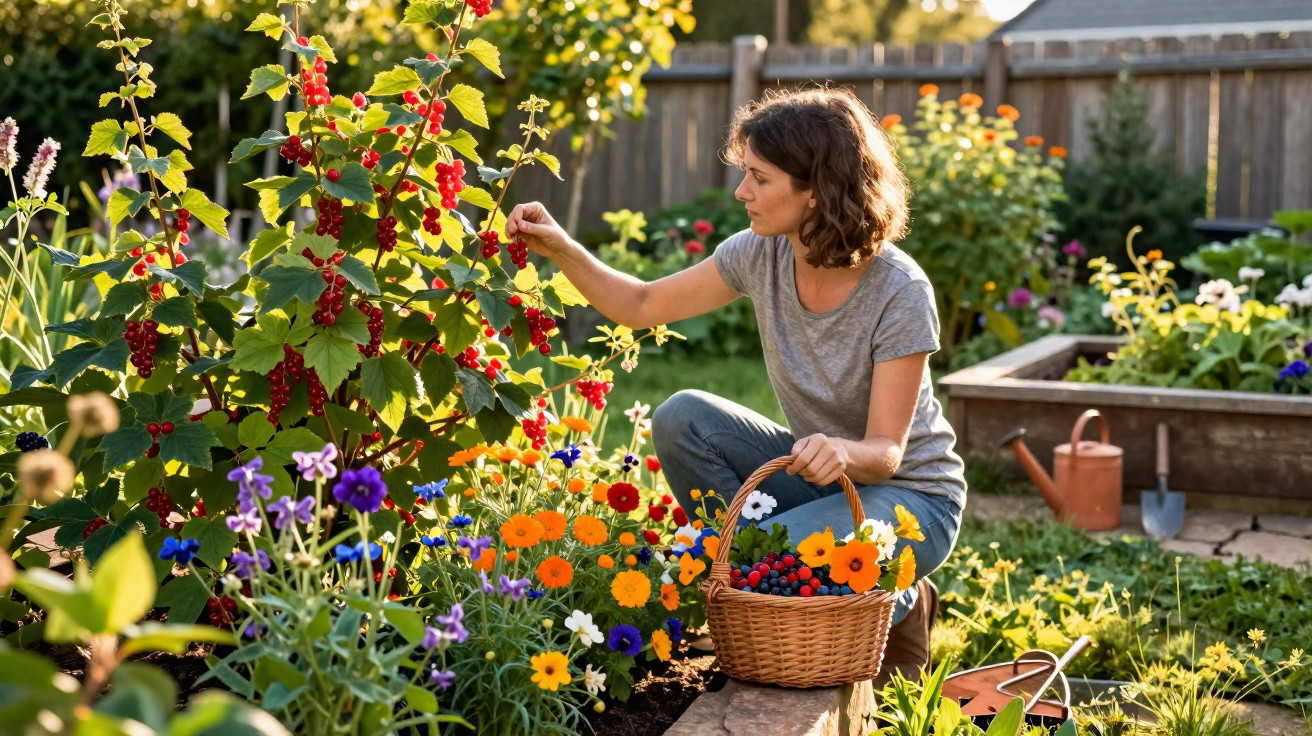
Perennials and bulb plants are not the only route to a lasting floral display. Some annual flowers behave as if they were perennials because they self-seed.
These include, for example:
- Cornflowers
- Cosmos
- Love-in-a-mist
- Sunflowers, particularly single-flowered varieties
If not every spent flower head is removed, seeds will ripen, fall to the ground and germinate the following spring. Some of these seeds also provide food for birds, which is a welcome extra benefit.
“Anyone who does not cut off every flower immediately will get free new plants next year.”
How to encourage self-seeding deliberately
A few simple measures help promote self-seeding:
- Leave some faded flower heads in place until the seeds are dry.
- Do not dig the soil deeply in autumn, so the seeds remain where they are.
- Thin out seedlings that emerge too densely in spring, giving the plants room to develop well.
This creates a bed that looks slightly different each year while retaining its character. Many gardeners value this gentle disorder because it feels more natural than strictly planned planting schemes.
One weekend of work, years of impact
With a little planning, a single gardening weekend in late winter or autumn is often enough to lay the foundations for a long-lived flower bed. Planting in layers can also keep large pots full for many months without gaps:
- At the bottom: Late tulips or tall bulb flowers.
- Above them: Daffodils for spring.
- Top layer: Very early-flowering bulbs such as grape hyacinths.
In this way, one display follows another without constant replanting. The same principle works in a border and in a large container on a balcony or terrace.
Why long-lasting plants make sense for beginners too
People new to gardening often instinctively choose colourful seasonal plants from the garden centre. They look spectacular when purchased, but provide enjoyment for only a few months. By contrast, combining durable perennials, bulb plants and a few self-seeders allows the garden to develop further by itself each year.
These plants also offer a gradual way to learn: you can observe bulbs dividing, rhizomes producing new shoots and tiny seedlings appearing at the edge of the bed. This sharpens your understanding of how the garden fits together and removes the pressure to keep every border constantly “perfect”.
Anyone who has seen a peony planted years earlier suddenly become the star of early summer will understand why experienced gardeners value perennial varieties so highly. They not only reduce the workload; over time, they also tell a story – the story of a garden that looks more mature with every season.

Comments
No comments yet. Be the first to comment!
Leave a Comment