
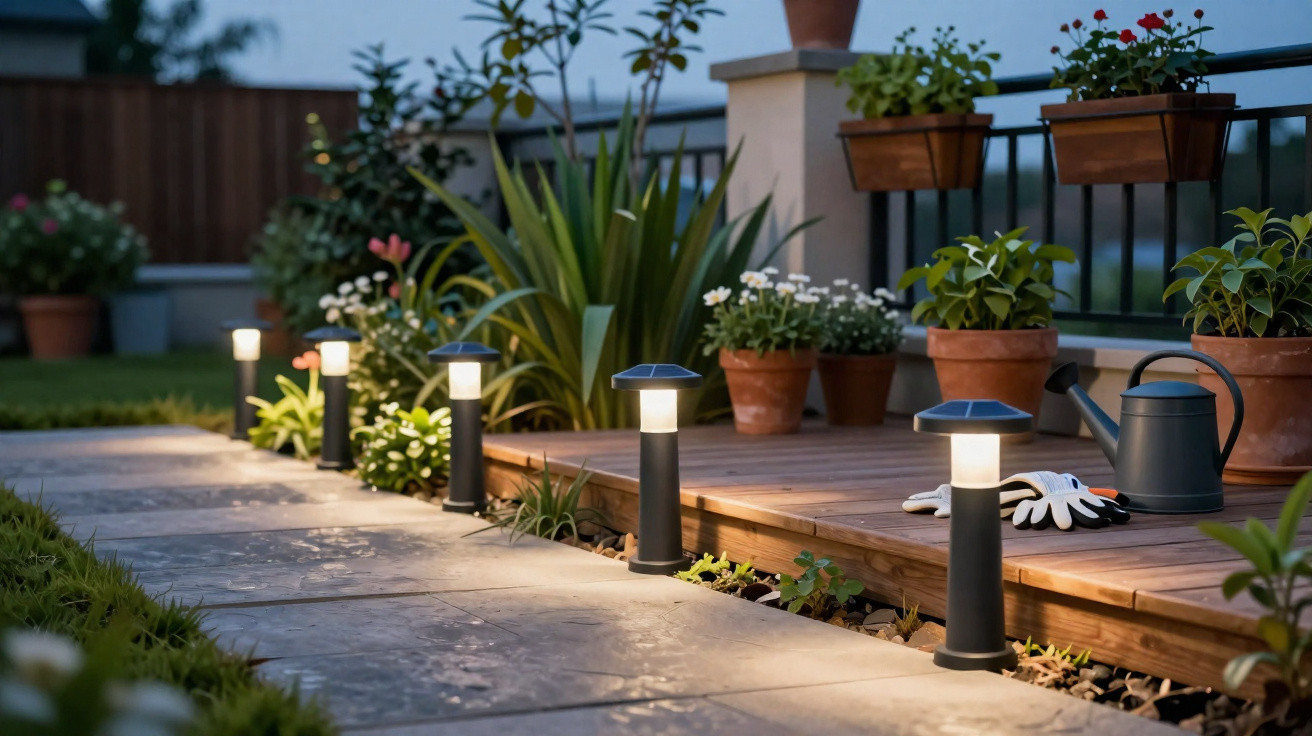
More and more people in German-speaking countries are spending extra time at home, turning balconies, terraces and gardens into a second living room. This is precisely where Aldi’s new Garden Bright Solar Uplighter comes in. It is a simple, affordable light designed to illuminate paths, flower beds and seating areas without adding to electricity bills.
What the Garden Bright Solar Uplighter offers
The Garden Bright Solar Uplighter is a compact outdoor light with a built-in solar panel. It collects solar energy during the day, then switches on automatically once darkness falls. There are no cables, no need to find a socket and no switch to operate.
The light gathers sunlight during the day and turns it into soft, warm illumination for the garden, terrace and driveway in the evening.
Aldi sells the lamp as a special offer item. It costs £9.99, which is equivalent to just over €10. It is aimed chiefly at families and garden owners seeking to create more outdoor atmosphere without much effort.
How the solar light works in everyday use
The Garden Bright Solar Uplighter uses a very straightforward system. The solar panel sits at the top, with the housing containing the battery and LED beneath it. The battery charges in daylight, and the lamp turns itself on in the evening.
- During the day: the panel captures solar energy and charges the battery.
- At dusk: the integrated sensor detects that daylight is fading.
- At night: the LED switches on and provides light for several hours.
- In the morning: the light automatically switches off again when daylight returns.
Because the process is automatic, users do not need to set up or programme anything. This makes the light suitable for people who do not want to tinker with technology or who deliberately prefer not to have electrical cables in the garden.
Where the Garden Bright Solar Uplighter works especially well
The Garden Bright Solar Uplighter casts its beam upwards or at a slight angle, making it ideal for highlighting particular areas. Experimenting a little with its position can produce surprisingly effective results.
Lighting paths and driveways
Paths in particular are overlooked in many gardens. Placing a few solar lights along a walkway not only improves safety but also immediately gives the property a different feel.
- Position the lights along the garden path at intervals of 2 to 3 metres.
- Aim them slightly towards the ground so that the edges remain visible.
- Place the lights closer together in key areas, such as near steps.
Families with children benefit twice over: trip hazards are easier to spot, while children can stay outside longer in the evening without stumbling around in the dark.
Accents for terraces, beds and planters
The uplighter can also be used as an accent light. A single spotlight can showcase a large planter, sculpture, low wall or raised bed.
Popular locations include:
- at the edge of the terrace, to gently frame seating areas
- in front of a hedge or specimen shrub, lit from below
- among perennials in a flower bed for a subtly shimmering glow
- beside the house wall, to bring out the texture of render or brickwork
With only a few carefully chosen positions, a garden can be visually divided into zones – from a peaceful reading corner to an illuminated barbecue area.
Design, colours and guarantee
The light has a slim, contemporary appearance and is available in two colour options: black and silver. This allows it to suit most settings, from a minimalist balcony in a new-build home to a more romantic terraced-house garden.
The two-year guarantee is a practical feature. Buyers of solar lights often wonder how long the battery and LED will really last. The longer warranty inspires confidence and makes the comparatively low price more appealing.
Why solar lighting appeals to families
Almost everything in many homes now runs on electricity, from smart-home systems to heat pumps. The prospect of using free sunlight in the garden is therefore particularly attractive. For families, it brings several advantages.
| Aspect | Benefit of the Solar Uplighter |
|---|---|
| Electricity costs | No additional costs, as the light uses solar energy only. |
| Safety | No cables for children or pets to trip over. |
| Operation | Automatic switching on and off, with no switch required. |
| Maintenance | Only occasional cleaning of the panel is needed, with very little other upkeep. |
| Flexibility | The location can be changed at any time; simply move it and it is ready to use. |
For parents who want to sit outside briefly in the evening while their children are asleep, the warm light also creates a pleasantly calm setting. Visitors can find their way more easily, and the terrace feels less like a dark patch beyond the glass doors.
How to position the lights correctly
To get the best effect from the Garden Bright Solar Uplighter, its position is especially important. The solar panel needs enough sunshine. Areas with some shade may work, but deeply shaded corners are less suitable.
- Allow for at least several hours of direct sun during the day.
- Position the panel so that trees or walls do not completely block it.
- On very narrow paths, use more smaller pools of light instead.
- Avoid shining directly at eye level to prevent glare.
Anyone unsure about placement can first test different positions with one light before deciding whether to buy additional units.
Why small lighting accents often work better than one large lamp
Many homeowners initially consider installing one powerful wall light in the garden. The usual result is a harshly lit patch on the façade surrounded by deep shadows. Several smaller solar spotlights tend to look more natural.
Several weaker pools of light create depth in a space, whereas one very bright lamp often makes everything appear flat.
Uplighters create light and shadow that bring out the structure of plants. A simple boxwood sphere, lit from below, can suddenly look like a decorative object. Even plain gravel areas or timber decking gain character when light comes upwards at an angle.
A few practical care tips
Although solar lights are considered low-maintenance, a little care can significantly extend their lifespan. This mainly applies to the panel and battery.
- Regularly wipe dust and pollen from the panel with a soft cloth.
- Remove fallen leaves in autumn so that the cells are not left permanently in shade.
- During severe frost, store the lights in a shed if the manufacturer recommends it.
- Check that they remain upright so rainwater can drain away properly.
These simple measures help to keep the light output more consistent and allow the battery to make better use of its capacity.
Combining the uplighter with other garden ideas
Anyone already considering a small makeover of their outdoor area can pair the Solar Uplighter with other features. Popular choices include seating areas with an outdoor rug, string lights and plant pots. The spotlight can then provide focused accents, while the string lights deliver more general illumination.
The lamp also works in naturalistic gardens, provided that the panel is not completely shaded. Light points can be positioned among grasses, wild perennials or near insect hotels without permanently lighting sensitive areas. This keeps the garden reasonably peaceful at night and avoids disturbing animals.
Those with a narrow balcony can even place the uplighter in large pots or balcony planters. It can then mark the boundary with a neighbouring balcony while offering a little privacy, as the edge of the light helps direct the eye.




Comments
No comments yet. Be the first to comment!
Leave a Comment