
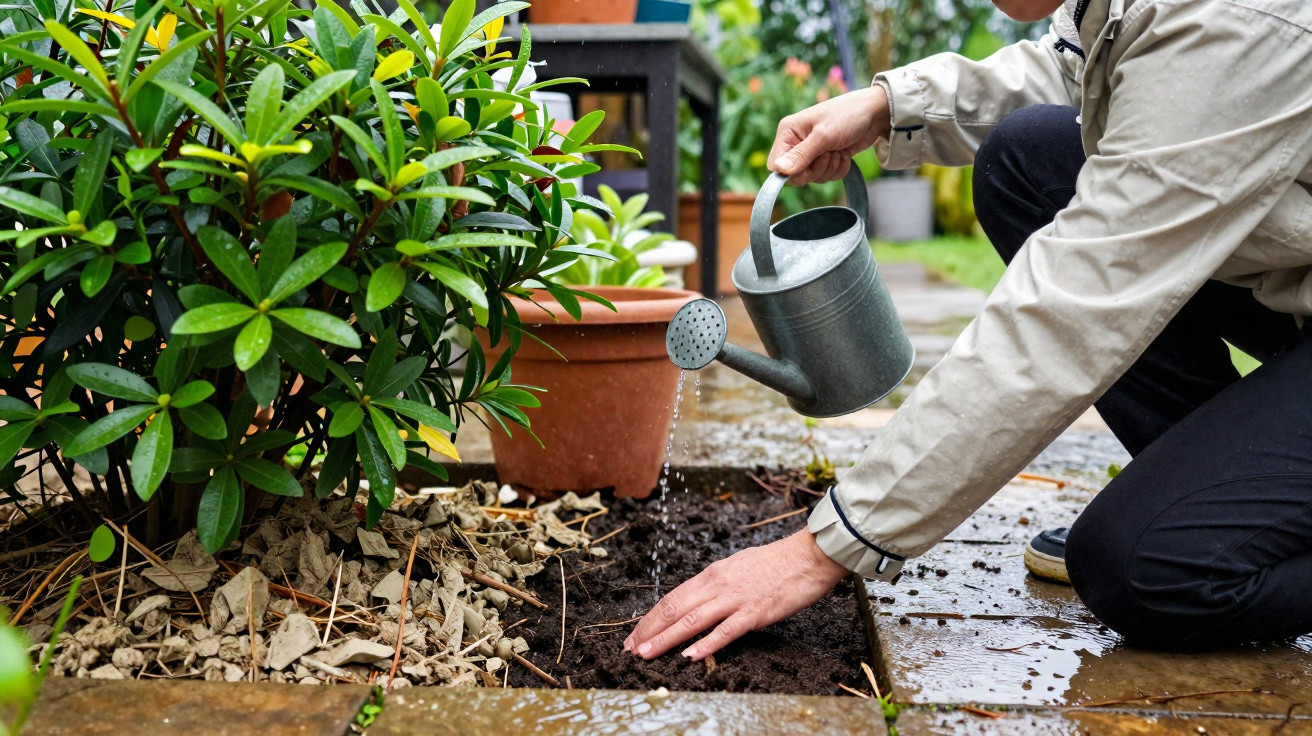
Many amateur gardeners breathe a sigh of relief as soon as the sky darkens and rain begins to fall. No more lugging watering cans about, no more worrying that beds will dry out. Yet appearances are often deceptive. Not every shower reaches the places where plants truly need moisture: at their roots, several centimetres below the surface. Anyone who relies solely on the view from the window risks dry pots, stressed shrubs and weakened vegetable beds – precisely when growth and flowering should be at their strongest.
When a major rain front becomes a dangerous illusion
Why wet paths do not necessarily mean moist soil
A heavy thunderstorm can look impressive: large drops, puddles on the path and the sound of rain drumming on the roof. Many gardeners instinctively conclude: “The soil is soaked, my plants have had enough.” In reality, this is often not the case.
During intense downpours, water hits the ground quickly and with considerable force. If the soil is cold, compacted or already somewhat dry, much of it simply runs off. It travels across the surface towards lower parts of the garden or into a drain. Surprisingly little reaches the deeper root zone.
What matters is not how heavily it rains, but how much water reaches a depth of 5 to 10 centimetres.
Gentle, prolonged drizzle can therefore be far more effective than a dramatic cloudburst, as the drops have time to seep in gradually. In both cases the surface looks wet, but the real difference happens unseen beneath the soil.
Wind and temperature: the unseen opponents
Especially in spring, soil can dry out remarkably quickly after rain. Wind and strengthening sunshine rapidly draw moisture from the upper layers. Check the top few centimetres a few hours after a shower and the soil often already looks dusty again.
- Strong wind + cool soil = water is more likely to run off than soak in.
- Wind + sunshine after rain = rapid evaporation from the surface.
- Clay-heavy, severely compacted soils = water pools on top while roots remain dry.
Anyone fooled by gleaming paving stones puts the watering can down far too soon.
The “umbrella effect” of dense leaf canopies
How foliage can stop real rain from reaching the ground
One particularly deceptive issue is rarely discussed in meteorology but matters greatly in gardens: dense leaf canopies. Large-leaved perennials, vigorous vegetable crops such as chard and cabbage, and evergreen shrubs can all form virtual roofs as spring progresses.
The result is that rain bounces off the leaves and drips away at the edges. The soil immediately around the stem or in the centre of the plant remains almost dry. It is an effective “umbrella effect” – unfortunately at the roots’ expense.
The plant looks lush green and healthy while several centimetres of dry soil lie directly around its base.
Those who only look at the overall area from a distance will miss the deficiency. The dryness becomes apparent only when leaves are pushed aside or the soil is checked by hand.
Hidden dry patches beneath apparently lush shrubs
A surprisingly dry microclimate often develops beneath dense shrubs. Even after two days of continuous rain, digging down a few centimetres under a thickly leafed ornamental shrub may reveal an almost dusty layer. Such growth directs much of the rainfall sideways.
Typical risk areas in the garden include:
- old, densely grown hydrangeas
- rhododendrons and evergreen hedges
- spreading rose bushes
- large-leaved vegetables such as squash, cabbage or courgettes
Larger, “established” plants in particular may seem resilient, but persistent drought stress around their roots gradually weakens them, leaves them more vulnerable to disease and reduces their willingness to flower.
Why balcony plants can go thirsty despite a downpour
Rain often simply does not reach sheltered corners
People gardening in towns and cities are especially likely to depend on rainfall: “If I get wet at the window, the pots must be getting enough too.” The difficulty is that architecture and wind direction interfere.
Covered balconies, recessed balconies, roof overhangs and awnings divert much of the rain. Drops rarely fall vertically. Even a light breeze can carry the rain past the building, while pots next to the wall remain almost dry.
One common example: clothes get wet while airing the room, but the balcony boxes directly beneath stay nearly dust-dry – particularly if they are positioned in a shallow recess.
Potted plants have little water in reserve – and react sooner
Plants growing in a bed can, to some extent, reach deeper soil layers where residual moisture remains. Their roots can grow downwards. In a pot, that option does not exist. A few litres of growing medium combined with wind constantly drawing water from it creates the perfect recipe for stress.
In a container, a missed watering causes considerably more stress than it does in open ground.
What is more, old, dry compost can become hydrophobic and repel water. A brief shower runs down the inside of the pot and out again instead of soaking the root ball. This is the hidden danger of relying on the weather forecast alone.
The simplest moisture check: use your finger, not technology
The soil touch test
No expensive measuring equipment is needed to establish whether the rain was sufficient. One quick action gives remarkably dependable information: put a finger into the soil.
This is how many experienced gardeners proceed:
- Use one finger to loosen the top 5 to 7 centimetres of soil.
- Push another finger deeper into the ground.
- Assess how it feels: cool and slightly damp = enough moisture; crumbly and warm = water is needed.
Making this a regular habit, ideally after rainfall, develops an instinct for your own garden. You quickly learn which areas dry out particularly fast and which spots retain moisture for longer.
The weight test for pots and balcony boxes
Pots and window boxes benefit from another equally simple technique: lift them. Regularly picking up containers briefly gives you a remarkably accurate sense of the difference between a thoroughly moist pot and a dry one.
A pot that has become noticeably lighter signals an urgent need for water – even if rain is splashing onto the street outside. Small containers with little compost volume respond extremely quickly to wind and sunshine.
Why watering in the rain can sometimes be the best idea
Rainy weather as an opportunity for severely dried-out growing media
Many people hesitate to use a watering can during a shower. In fact, this can be exactly the right thing to do. When humidity is high and skies are overcast, very little water evaporates. The conditions help dried-out growing media absorb moisture again.
Older, crusted compost especially benefits if it is moistened slowly on a wet day with temperate, preferably collected rainwater. The water is less likely to rush down the sides, and the root ball absorbs it more evenly.
Targeted extra watering at critical spots
A brief inspection during a rain shower is particularly worthwhile:
- check the soil beneath densely leafed shrubs by hand
- lift balcony boxes and judge their weight
- push aside large-leaved vegetable plants and check the soil moisture
If the soil proves dry, direct the water to the base of the plant rather than onto its leaves. This makes the best use of the already humid air without using unnecessarily large additional amounts.
How to develop a better feel for water in the garden
Anyone who does not want to rely blindly on rain above all needs regular observation. Over time, a clear picture emerges of which zones are thirsty. South-facing walls, areas beneath low canopies and container plants in windy corners are all classic risk locations.
Keeping a small garden diary can also help: when did it rain, for how long, and which plants looked stressed a few days later? Notes like these sharpen your understanding of your own soil and of the microclimate on a balcony or terrace.
This approach saves water in the long term, prevents stress for plants and reduces the need to intervene once leaves start drooping or buds suddenly shrivel. Rain remains a blessing – just not always the convenient all-round service many people assume it to be.

Comments
No comments yet. Be the first to comment!
Leave a Comment