
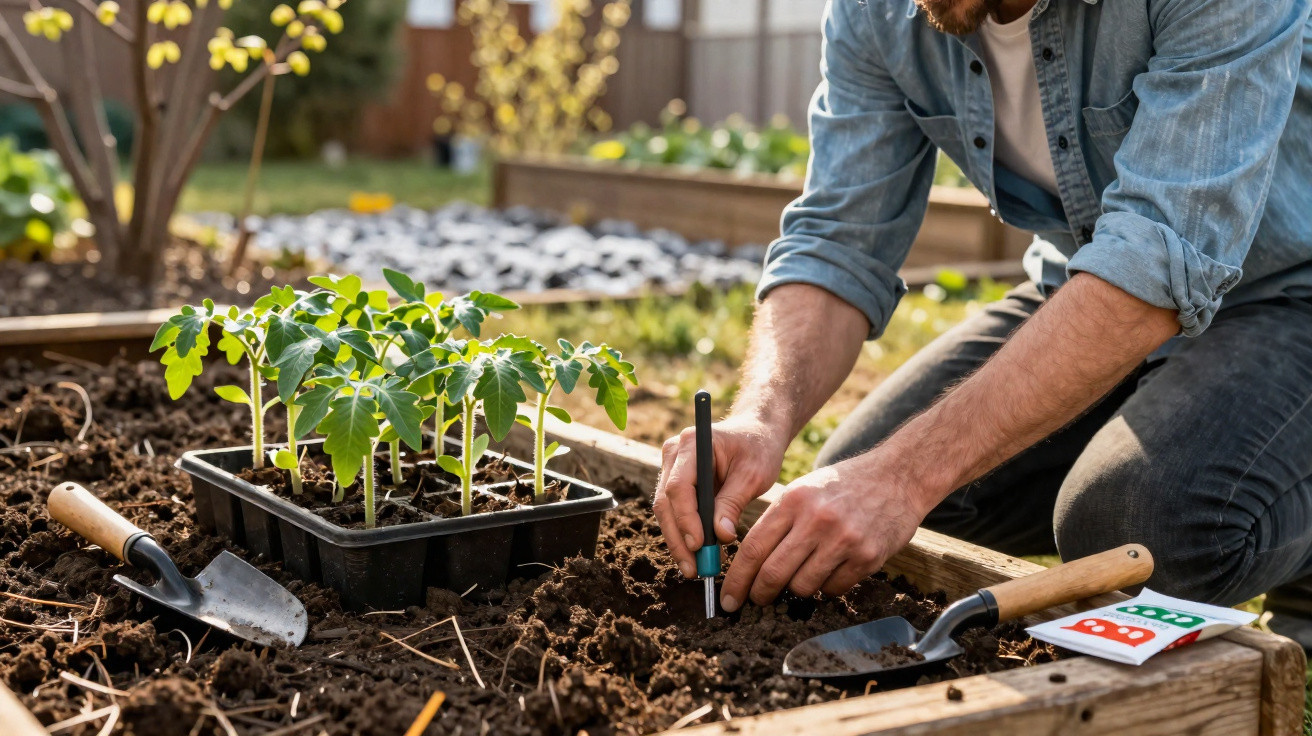
When the first warm days arrive, amateur gardeners instinctively reach for seed packets and a rake. With tomatoes in particular, however, this early start is a classic mistake. This heat-loving plant has little tolerance for cold – and what begins hopefully in March or early April often ends with stunted stems and no harvest at all by high summer.
Why the first day of spring is still no time for your tomatoes
In March, tomato seeds take centre stage in many DIY stores and garden centres, while the sunshine suddenly feels genuinely mild. It can seem as though everything is saying: “Get out into the garden!” That is precisely where many people make the wrong move.
Although the afternoon air may feel pleasantly warm, the soil often remains bitterly cold. Tomato seeds sown directly outdoors will then germinate only slowly. The result is long, thin and unstable shoots that suffer with every drop in temperature.
The tomato’s real enemy is not rain or wind, but cold soil and freezing nights.
Tomatoes originate from warm areas of South America and have virtually no built-in protection against frost. Just one cold night can be enough to cause serious damage to young plants. Even if they survive outwardly, they often remain “behind” for the rest of their lives, flower later and produce far fewer fruits.
Late frost: May’s hidden trap
Anyone who starts planting in the bed in early or mid-April is taking a gamble on the weather. Ground frost can still occur in many regions even in May. If the thermometer briefly falls into single figures overnight, young plants become stressed:
- Growth stops or slows down considerably
- Leaves turn yellowish or take on a translucent appearance
- The plant becomes more susceptible to fungal diseases such as tomato blight
- Flowering is delayed by weeks
By August, this can leave you with plants carrying only a sparse crop, while the neighbour who planted later is already harvesting buckets full of fruit.
The two crucial temperature rules for tomatoes
Nothing works without warm soil
For tomatoes, what matters is not how the air feels in the afternoon, but how warm the soil is
Comments
No comments yet. Be the first to comment!
Leave a Comment