
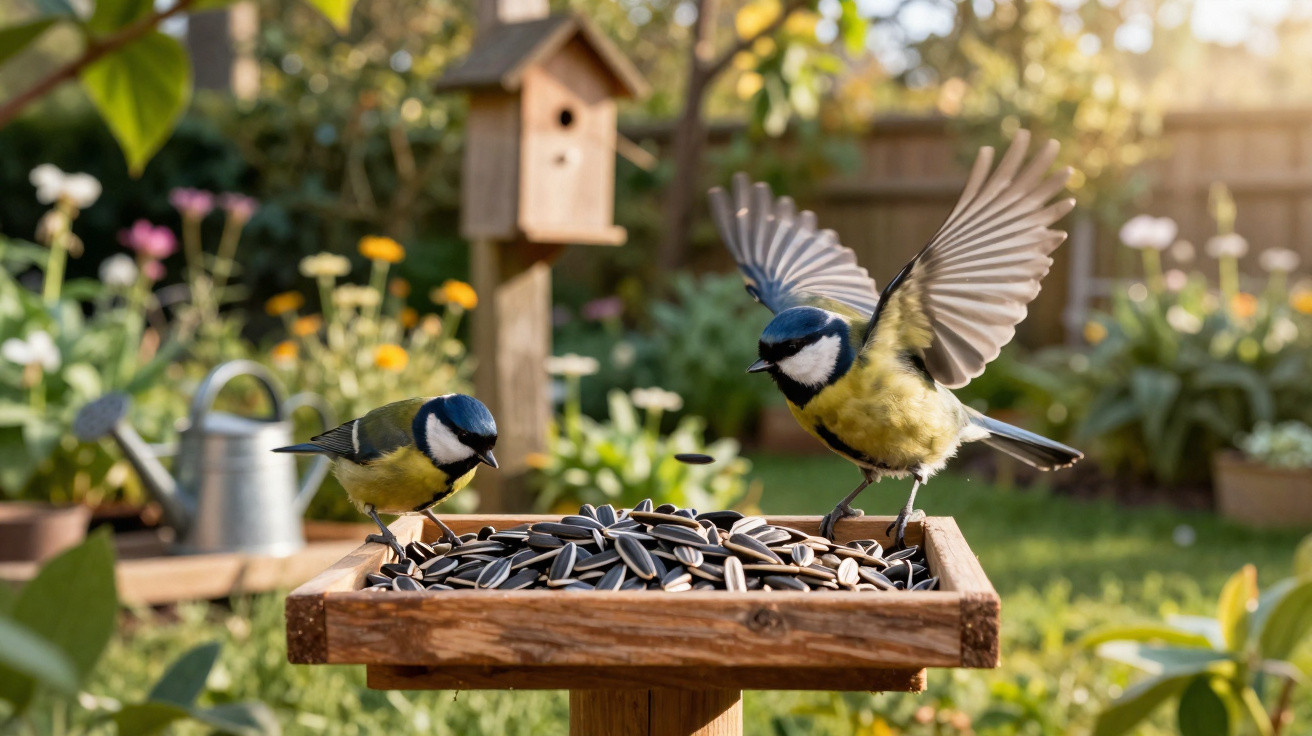
Suddenly, tits seem to be everywhere, and the garden takes on an entirely different character.
Anyone who has watched a flock of tits climbing, swinging and squabbling at a feeding station will not want to miss the spectacle again. These small birds bring activity, colour and, as a useful extra, natural plant protection to any garden. One straightforward, readily available food can greatly improve your chances of seeing them return regularly.
Why tits are so keen on sunflower seeds
Tits are among the garden birds with the greatest energy demands. Their rapid metabolism means they must search for food almost continuously throughout the day. This is precisely where sunflower seeds come in.
“For tits, sunflower seeds are what our favourite snacks are to us: rich in fat and protein, easy to crack and instantly available.”
Especially during the colder months, the seeds are among the most important energy sources for these little acrobats. They provide:
- plenty of fats to help protect against the cold
- protein for muscles and feather growth
- minerals and trace elements for a resilient immune system
By putting out sunflower seeds regularly, you help birds get through frosty nights and spare them long, risky foraging flights. Tits soon remember gardens with dependable feeding spots and return to them repeatedly – often bringing other birds of their species along.
Choosing the right type: black or striped?
Why black sunflower seeds have the advantage
Sunflower seeds broadly come in two types: black and striped. Black seeds are the preferred option for tits. They contain more oil and are usually smaller, making them easier for delicate beaks to handle.
- Black seeds: particularly oily, high in energy and with thinner shells
- Striped seeds: tougher shells, less fat and more suitable for larger bird species
If you specifically want to attract tits, black sunflower seeds are therefore the best choice – ideally organic ones. This avoids pesticide residues in the feed while supporting environmentally friendly farming.
Whole seeds or shelled seeds?
Shelled sunflower seeds are now available in many shops. At first glance, they are convenient, leave behind fewer discarded shells and are often readily accepted. For tits, however, whole seeds offer an added attraction: cracking the shells reflects their natural feeding behaviour and keeps them at the feeding station for longer.
A practical option for gardens and balconies is a mix: mainly whole black seeds, supplemented with a smaller amount of shelled seeds during particularly severe frosts or for very young and weakened birds.
How to position the food correctly
Height, location and safety
Tits are cautious and watch their surroundings closely. They avoid feeding stations where cats or martens could easily catch them by surprise. Three factors matter:
- Height: around 1.5 to 2 metres above ground level
- Protection: close to shrubs or trees, so the birds have an escape route
- Visibility: the feeder should be easy to approach in flight and visible from a distance
A sturdy wooden or metal feeding station, firmly secured, is entirely sufficient. If you only have a balcony, use a hanging feeder or a balcony-mounted holder. Crucially, position it so that no cat can jump up to it from the ground.
A clean feeding station means healthy birds
When numerous birds eat in a confined space, the risk of disease rises. A few simple routines are enough to prevent problems:
- remove leftover food and old shells regularly
- rinse feeders with hot water every few weeks
- never leave mouldy or heavily contaminated seeds in place
Where possible, choose feeders in which birds cling to the outside rather than sit in the food. This keeps more droppings and dirt away from the seeds.
Feeding sensibly throughout the year
Winter: maximum energy supply
In winter, sunflower seeds can be a real lifeline for tits. They burn vast amounts of energy in cold weather to maintain their body temperature. At this time, the feeding station can be generously stocked. It is better to top it up daily with small amounts than to put out very large portions infrequently, as these can become damp.
Spring and summer: less, but not none
For a long time, the general advice was not to feed birds in summer. Many bird conservationists now recommend an adapted approach. Tits raise their young in spring and early summer, when they mainly eat insects. Sunflower seeds serve more as an energy snack for adult birds.
If you wish to continue feeding in summer, you should:
- offer only small quantities of food
- make sure seeds are fresh and not rancid
- provide sufficient water in a shallow dish
During very hot periods, it is often enough to reduce feeding and rely on water sources and natural food such as insects, berries and seeds.
More than food: turning your garden into a paradise for tits
Provide nest boxes – and hang them properly
Tits like to breed in cavities. In the wild, they use holes in trees, but suitable features are rare in gardens. Nest boxes fill that gap. Key points include:
- an entrance hole of around 28–30 millimetres in diameter
- a height of two to three metres above the ground
- an east- or south-east-facing aspect for a mild climate inside the box
- a sheltered position, away from intense midday sun and strong winds
Clean the boxes in late summer or autumn to remove parasites and old nests. This improves the chance that tits will move in again the following year.
A natural garden rather than a sterile lawn
Treating a garden like a clinically tidy design space attracts little wildlife. Tits benefit from varied features:
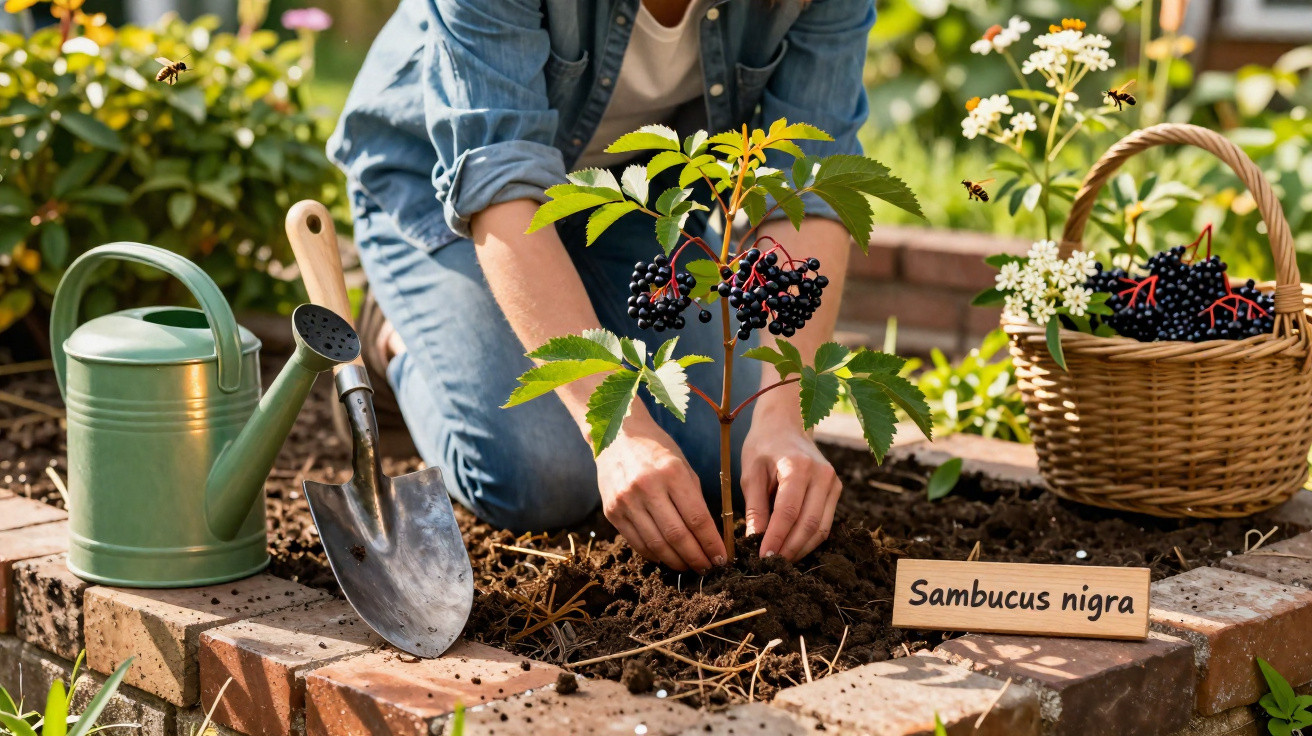
- native shrubs such as elder, hazel or hawthorn
- flowering perennials and herbs such as lavender, oregano and thyme
- a few untidy corners with leaves and dead wood for insects
The greater the supply of insects, the better a tit family is fed in spring. Sunflower seeds then become a dependable extra ration – effectively a bed-and-breakfast package in the garden.
Avoid poison: use tits as natural pest hunters
Avoiding chemical sprays brings two benefits. First, more insects survive to provide food for tits. Second, the birds actively target many species that gardeners regard as troublesome.
“During the breeding season, parent tits may collect hundreds of caterpillars and other insects each day – making a serious dent in aphids, oak processionary moth caterpillars and the like.”
This creates a kind of quiet agreement: the gardener provides food, water and nesting places, while the tits assist with pest control. A garden that works this way needs considerably fewer artificial aids.
Practical tips to get started
You do not need a large budget to begin. A basic set-up is enough:
- a stable feeding station or tube feeder
- a bag of black sunflower seeds, preferably without additives
- a simple nest box with the correct entrance-hole size
- a shallow dish of water for drinking and bathing
The first tits often arrive only a few days after the feeder is installed, particularly in leafy residential areas with gardens and trees. Sometimes it takes a little longer for the birds to learn that food is supplied regularly at this address. Those who remain consistent and do not constantly change the feed will usually be rewarded with lively comings and goings.
Many amateur gardeners report that tits change their own relationship with the garden too: away from simply maintaining a lawn and towards creating a living, slightly wild space. Sunflower seeds are only the beginning, but they are a remarkably effective one.
Comments
No comments yet. Be the first to comment!
Leave a Comment