
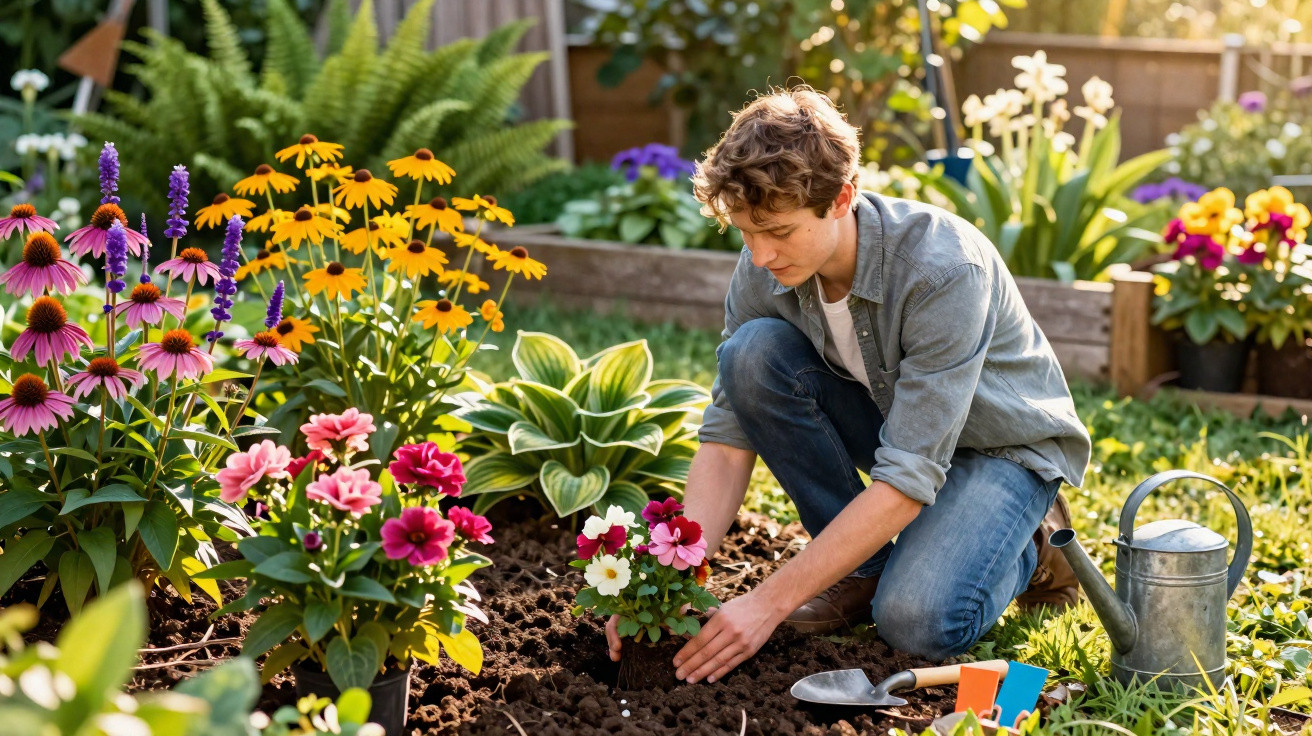
Rather than creating beds from scratch, more and more home gardeners are choosing perennial plants that return year after year. Chosen carefully, they provide colour, form and fragrance without creating a constant stream of new jobs. Many of these perennials can be planted now, transforming the feel of your garden in the very first year.
Why perennials are the best choice now
Perennials stay in one position for several years, gradually form larger clumps and naturally fill bare spaces in the border. Once they are properly established, they generally need less water than many annual summer flowers and can be kept under control with only a few simple tasks.
With just a few well-chosen perennials, an empty spring garden can become a full, vibrant planting scheme – without having to start again every year.
Spring is an ideal planting window. The ground is no longer frozen but still holds plenty of moisture, allowing plants to establish roots calmly before the first spell of heat arrives. Across many parts of the UK, the best period is between March and May, depending on location and altitude.
Preparing the soil properly
Before visiting the garden centre, take a close look at your garden. Every area has its own conditions: full sun, airy partial shade or north-facing spots that remain shaded for almost the whole day. Understanding these zones makes it far easier to select suitable plants.
- Remove weeds thoroughly, including perennial weeds such as ground elder and couch grass.
- Loosen the soil with a garden fork rather than simply digging it over.
- Work in compost or well-rotted manure to improve the soil.
- Water thoroughly after planting, then apply a layer of mulch.
Mulch made from bark chippings, shredded prunings or leaves helps the soil retain moisture and suppresses fresh weed growth. Newly planted perennials especially reward this treatment with strong growth.
A blaze of colour in sun: perennials for bright sites
Sunny borders receiving at least five to six hours of sunlight daily are particularly well suited to tough flowering perennials. They enjoy warmth and can also cope with somewhat drier summers.
Classic perennials for spectacular sunny borders
These varieties bring colour and structure from spring through to autumn:
| Plant | Characteristic | Particular advantage |
|---|---|---|
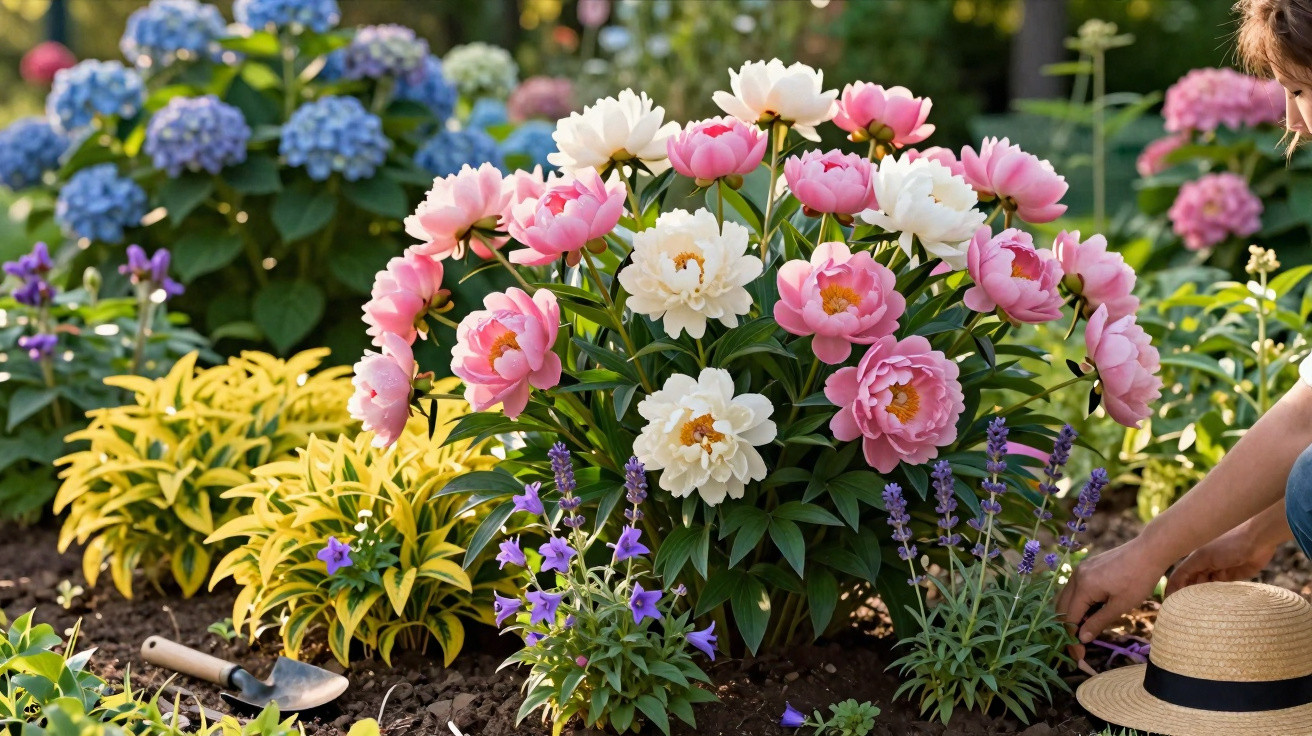
| Peony | Large, fragrant flowers in late spring | Long-lived and an impressive specimen plant |
| Lupin | Upright flower spikes in bold colours | Adds height and movement to the border |
| Achillea (yarrow) | Flat, colourful flower heads | Highly drought-tolerant and ideal for poor soils |
| Crocosmia | Arching stems carrying vivid red to orange flowers | Exceptionally striking in summer borders |
| Delphinium | Tall flower spires in shades of blue and violet | Perfect at the back of a border |
| Aster | Delicate, star-shaped flowers in late summer and autumn | Fills the gap at the end of the season |
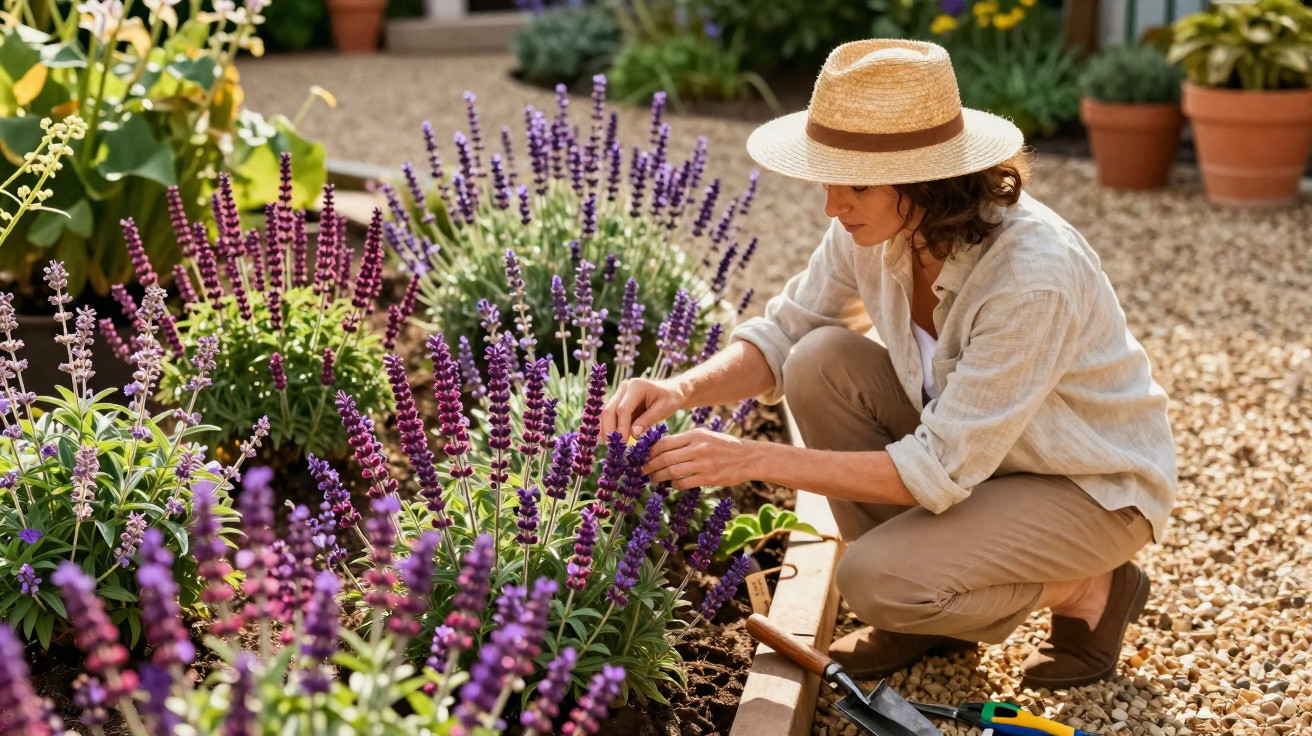
| Lavender | Fragrant blue-violet flower spikes and silvery foliage | Attracts bees and creates a holiday feeling |
By combining plants thoughtfully, you can keep something flowering from May into October: peonies and lupins get the display underway early, crocosmia and achillea take over at the height of summer, while asters and lavender accompany late summer.
Perennials for shade and partial shade
Shaded corners do not have to be dull. Foliage perennials and early-flowering plants are especially effective in these areas. A humus-rich soil that does not dry out too much is important.
Perennials that bring dark garden corners to life
The following perennials are particularly suitable for cool, airy positions beneath trees or beside house walls:
- Helleborus (Christmas rose): Flowers from late winter into spring, precisely when very little else is showing colour.
- Hosta: Offers large, decorative leaves ranging from green to blue, often edged in white or yellow.
- Heuchera (coral bells): Provides colourful foliage throughout the year, from lime green to deep red, and works well along border edges.
- Bergenia: Produces thick, glossy leaves and pink to purple flowers in spring.
- Astilbe: Enjoys moist, nutrient-rich soil and carries fine, feathery plumes of flowers.
- Bleeding heart: Displays graceful, heart-shaped flowers in spring, hanging among the foliage.
A mix of hostas, heucheras and bergenias soon creates the impression of a small woodland garden. Bleeding heart adds romantic touches in spring, with astilbes taking centre stage later on.
Gap-fillers and long-flowering plants for the whole garden
Small open patches often remain between larger perennials. Instead of filling them every year with short-lived plants, opt for ground-covering varieties or plants with a long flowering season.
Hardy geraniums, also known as perennial geraniums, start flowering in spring and, with brief breaks, continue into autumn. They form loose carpets that suppress weeds and sit comfortably alongside other plants. Penstemon contributes long stems of trumpet-shaped blooms throughout summer and suits both contemporary and romantic border designs.
The better perennials cover the ground, the less work you will have later with watering and weeding – the planting plan determines how low-maintenance your garden will be.
How to plant perennials correctly
Many perennials arrive from the garden centre in pots. Before planting, immerse the root ball in a bucket of water until no more air bubbles rise to the surface. The planting hole should be roughly twice as wide as the root ball, and the perennial should be planted at the same depth as it was in the pot.
Firm the soil around it well so that no air pockets remain. Water regularly during the first few weeks, even when the sky looks overcast. Newly planted specimens need consistent moisture to develop fresh roots.
First-year care: little effort, great results
During the planting year, it is worth occasionally checking whether weeds are appearing or the soil is becoming very dry. A thin mulch layer retains moisture and prevents the sun from overheating the ground. You can cut back spent stems to encourage a second flush of flowers – this often works remarkably well with achillea, asters and delphiniums.
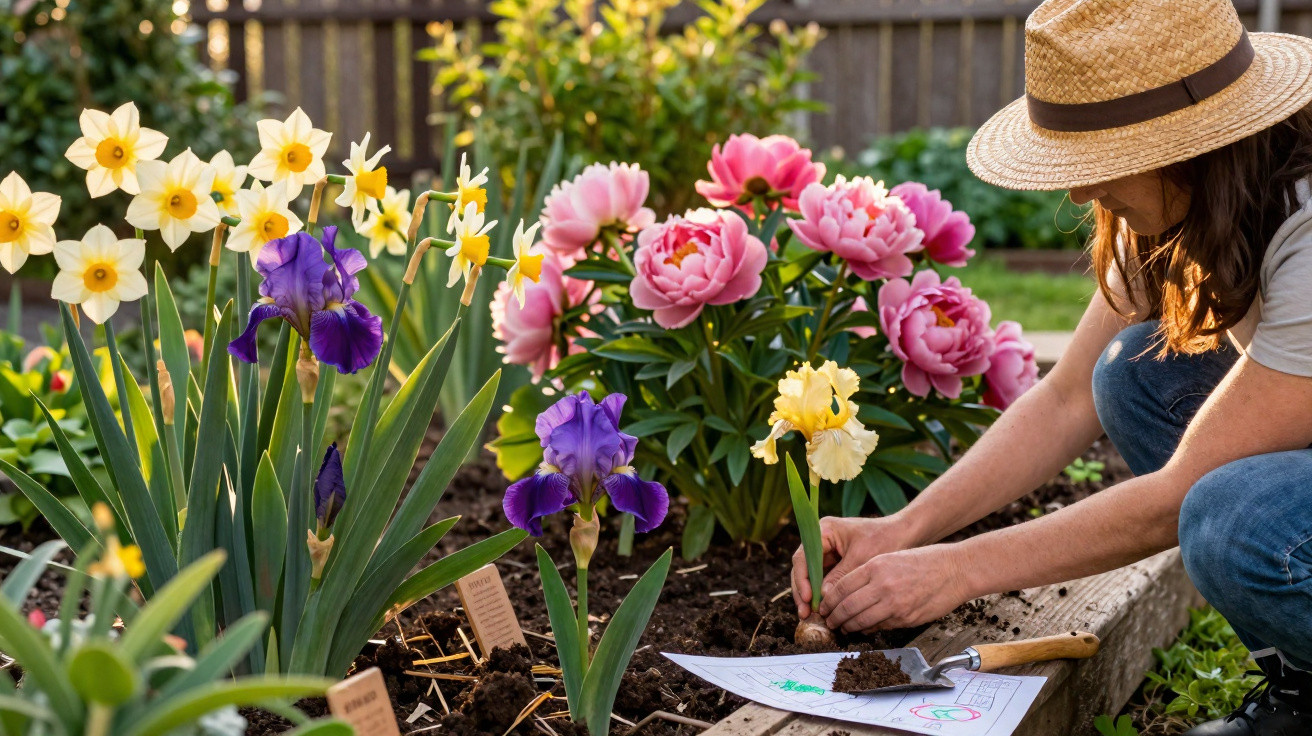
From the second or third year, many perennials become so vigorous that they can be divided. Lift the root clump, split it with a spade and replant the sections elsewhere. This rejuvenates the plant and gradually increases your floral display without spending money on new plants.
What beginners should pay particular attention to
People new to gardening often tend to mix too many different varieties into a small space. The result can quickly look busy. A better approach is to plant several examples of one variety: groups of three to five identical perennials create calm and look much more professional.
Another common mistake is combining plants with very different light requirements. Sun-lovers such as lavender do not like sitting in wet soil and are out of place beside shade perennials that need plenty of moisture. Grouping plants with similar needs means far less adjustment later.
How to create a year-round dream garden with 15 perennials
The selection above is already enough to create a complete and varied garden. The season begins early with Christmas rose and bergenia, followed by peony, lupin and bleeding heart. In summer, achillea, delphinium, crocosmia, penstemon and lavender take over. Asters and late geraniums provide the final flourish.
Paying attention to varying heights creates a clearly structured arrangement: place tall perennials at the back, medium-sized ones in the middle and low-growing plants at the front. Combined with the colourful foliage of heucheras and the large leaves of hostas, this produces a garden scene that changes continually throughout the year while still remaining harmonious.

Comments
No comments yet. Be the first to comment!
Leave a Comment