
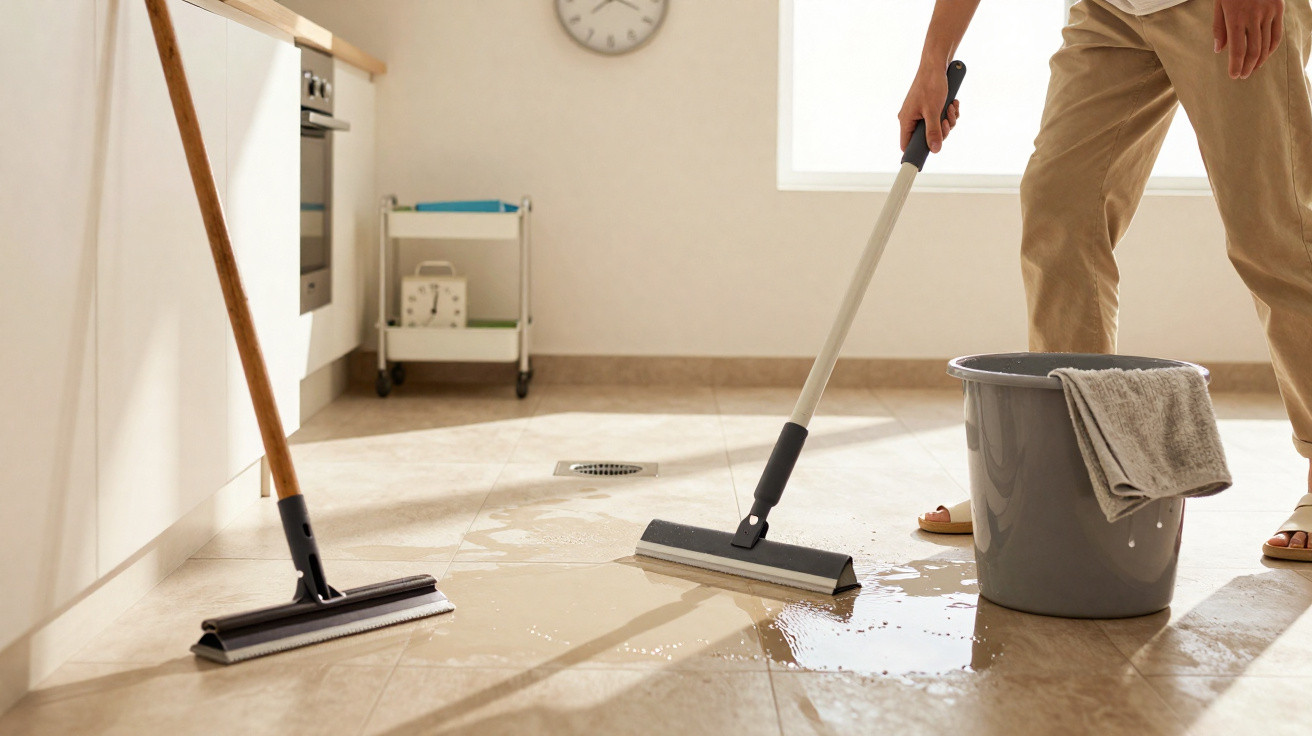
In many households, the traditional squeegee still has its place, but domestic cleaning specialists have identified a clear shift in this pattern. Busier routines, the growing use of delicate flooring and the drive to save water have encouraged families to choose more up-to-date solutions, such as the improved squeegee, which can clean and dry in a single pass while adapting to newer flooring materials and ways of living.
What is the improved squeegee, and why has it become so popular?
The improved squeegee brings together the roles of a squeegee, mop and scrubber in one tool, making it possible to wash and dry at the same time. Rather than simply pushing water across the floor, it uses a microfibre refill and an articulated mechanism to manage the amount of moisture applied more effectively.
Some versions come with a bucket featuring separate rinsing and automatic wringing sections, so users do not have to touch the dirt directly. In small flats, many people have already replaced a broom, floor cloth and basic squeegee with one kit, saving storage space and speeding up cleaning.
What ergonomic and practical benefits does the modern squeegee offer?
Ergonomics have become a priority in current models, which feature height-adjustable handles and heads that rotate through 180 or 360 degrees. This limits the need to bend down and reduces repetitive motions, helping to prevent back and shoulder discomfort while cleaning.
Lighter handles, comfortable grips and easily replaceable refills also make the task less tiring. Microfibre reaches grout lines, corners and spaces beneath furniture more accurately, lifting fine dust, pet hair and everyday grease splashes.
Why is the traditional squeegee seen as outdated in many settings?
The classic squeegee was designed to draw away large amounts of water, making it well suited to yards and outdoor spaces. On laminate, vinyl or glossy porcelain tile floors, however, too much water can leave marks, loosen the flooring and increase drying time.
As a result, it has become associated with a slower cleaning routine requiring a broom, floor cloth and several buckets. The following points help show why the traditional squeegee often loses ground when used indoors:
- Greater water use: the floor usually needs to be soaked for it to work properly.
- More cleaning stages: sweeping, wetting, scrubbing, pulling away water and then drying afterwards.
- Limited effectiveness on fine dirt: dust particles and hair tend to be spread around.
- Physical discomfort: it requires more effort and repeated movements with its fixed handle.
How does the modern squeegee save water and time without replacing the old squeegee?
The improved squeegee uses controlled moisture: its refill is only damp enough to remove dust, light marks and hair, while the microfibre absorbs any excess. As a result, a quick pass after light sweeping is often enough to leave the floor clean and allow it to dry much faster.
In homes with children, pets or people with reduced mobility, a less wet floor means a lower risk of slipping and fewer disruptions to the daily routine. The traditional squeegee remains useful in garages, balconies and outdoor areas, where it is still effective at removing large volumes of water after heavy washing or strong rain. It can therefore coexist with the modern squeegee, with each serving a different purpose in the same home.
Comments
No comments yet. Be the first to comment!
Leave a Comment