
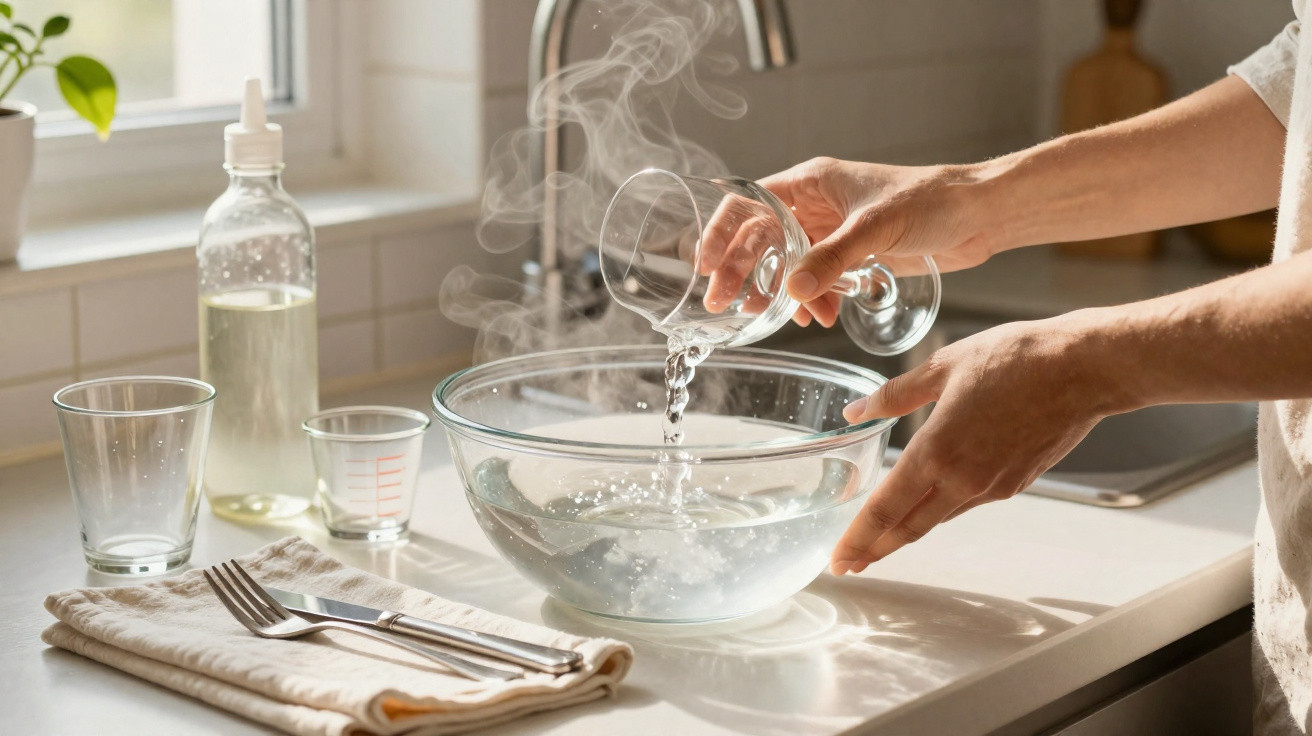
Mixing white vinegar with warm water for the final rinse can help glasses and cutlery look cleaner. The product’s acidity can assist in removing attached residue, while the water helps the solution spread and rinse away.
Why does vinegar help remove marks from crockery?
Vinegar contains acetic acid diluted in water, a substance with a strong smell and acidic properties. When it comes into contact with crockery, this solution may help loosen soap traces and deposits that make glass look cloudy.
Warm water helps distribute the mixture over glasses, plates and cutlery without requiring a large amount of product. It is not intended to replace washing with washing-up liquid, but to provide a final finish that minimises marks and improves clarity.
The main expected effects of this rinse are:
- Glasses: it can reduce a cloudy appearance after drying.
- Cutlery: it can promote a visually brighter finish.
- Marks: it can help remove marks left by water.
- Soap: it can help lift the residual film left after washing.
- Shine: it can improve the clarity of ordinary glass items.
How should you prepare a vinegar rinse correctly?
Once you have washed the items and rinsed away the washing-up liquid as usual, prepare a separate bowl with warm water and a small amount of white vinegar. Briefly dip the items, allow the liquid to drain off, then place everything on the draining rack, avoiding tea towels that shed lint.
A moderate ratio is enough, as household vinegar already contains acetic acid in an aqueous solution. Starting with around one tablespoon per litre of water lets you assess the result without producing a strong smell or wasting product.
Which items can be rinsed with vinegar?
Clear glasses, stainless-steel cutlery and everyday crockery can be given this rinse, provided they are in good condition. The mixture is most useful when marks appear after drying, when there is a soap film, or when items have lost their shine.
A final rinse without overdoing it
A small amount is enough
Crockery should be clean and free from foam before it is placed in the diluted vinegar solution.
After a quick dip, allow the items to drain naturally to reduce marks caused by a tea towel.
The acetic acid in vinegar is completely miscible with water and is classed as a weak acid. These properties explain why it dilutes easily in a rinse and can act on certain residues, although care is needed with sensitive materials.
Some items are generally more suitable for this method:
- Clear glassware without delicate detailing;
- Standard stainless-steel cutlery;
- Plates and bowls with a durable finish;
- Glass jugs showing water marks;
- Crockery washed by hand and thoroughly rinsed.
Which materials should be kept away from vinegar?
This method should not be used on cutlery with wooden handles, as moisture and acidity may affect the finish. It should also be kept away from marble, granite and other natural stones, which may lose their shine or suffer wear.
Vinegar must never be mixed with bleach. Cleaning products should be used separately and according to their labels, as improvised mixtures can release irritating fumes. The best approach is to prioritise ventilation, thorough rinsing and safe storage.
To avoid damage and hazardous combinations, follow these precautions:
- Do not immerse wooden handles in the solution;
- Do not use vinegar on marble or granite;
- Never mix vinegar with bleach;
- Use only a small proportion in the water;
- Keep products labelled and stored separately.
Does this rinse replace washing with washing-up liquid?
People who use vinegar for other household jobs may also know this tip for making a shower screen shine. In every use, it is important to consider whether the material is compatible and to use a small amount, enough to complement cleaning without excess.
A final rinse with vinegar and warm water works best as an occasional option for marked glasses and cutlery. When used properly, it can improve the finish of crockery, but it does not replace washing-up liquid, scrubbing and proper hygiene throughout the washing process.


Comments
No comments yet. Be the first to comment!
Leave a Comment