
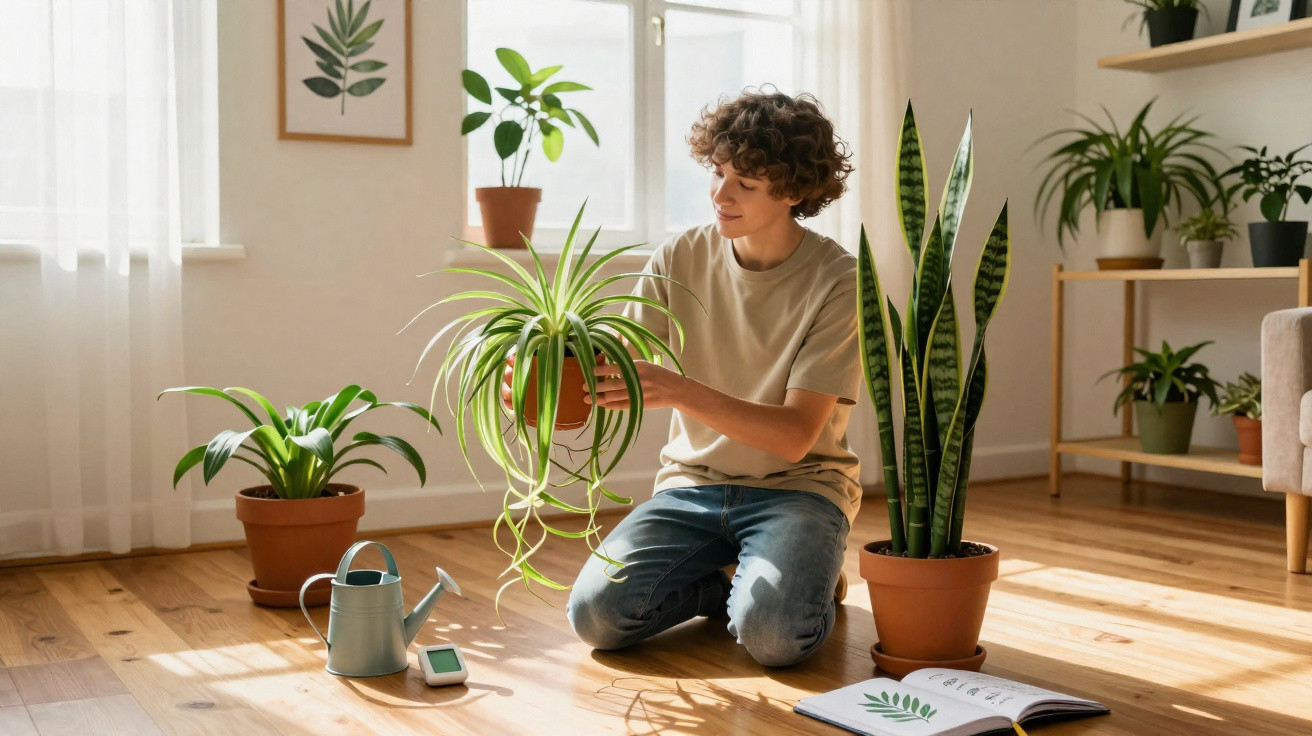
Spider plants and snake plants rank among the most popular houseplants. Both are considered hardy, air-purifying choices and are well suited to people without green fingers. Yet their appearance, care requirements and role in the home could scarcely be more different. Understanding those details can prevent yellow leaves, waterlogged compost and the occasional unsuitable purchase.
Spider plant and snake plant: same family, different “personalities”
Botanically, the two sit within the same broad plant family, but they behave more like distant relatives. The spider plant is scientifically known as Chlorophytum comosum and originally comes from tropical and southern parts of Africa. There, it grows in generally warm areas with humid air.
The snake plant – often called mother-in-law’s tongue – is now officially named Dracaena trifasciata (formerly Sansevieria trifasciata) and originates in West Africa. In drier regions, including parts of Nigeria and the Congo, it has adapted to coping with limited water and enduring heat.
“Both plants belong to the same botanical family, but they have developed completely different strategies for survival – and that is exactly what shows in the home.”
Their contrasting development explains why their preferences for watering, light and position differ, even though they are often displayed close together on a retailer’s shelf.
How to tell the difference at a glance
Visually, these plants are almost opposites. A spider plant spreads outward from a rosette-like centre. Its leaves are long, narrow and soft, falling elegantly over the edge of the pot. They are often green with whitish or yellow stripes, creating a light, tropical and playful effect.
By contrast, the snake plant has a more formal, linear presence. Its leaves rise stiffly, almost like swords, straight from the soil or an underground rhizome. Many varieties have a dark-green base colour with lighter horizontal bands. Compact miniature types are available, as are tall varieties that can easily grow to 1 metre or more.
| Feature | Spider plant | Snake plant |
|---|---|---|
| Leaf shape | Long, trailing, grass-like leaves | Rigid, upright, sword-shaped leaves |
| Growth habit | Cascading rosette with the look of a green waterfall | Vertical, architectural clump growing from rhizomes |
| Leaf texture | Soft and flexible | Thick, succulent-like and water-storing |
| Propagation | Plantlets on long shoots, easy to root | Division of rhizomes or leaf cuttings |
| Flowers | Small white flowers on long stems | Rare greenish-white flowers, often only on mature plants |
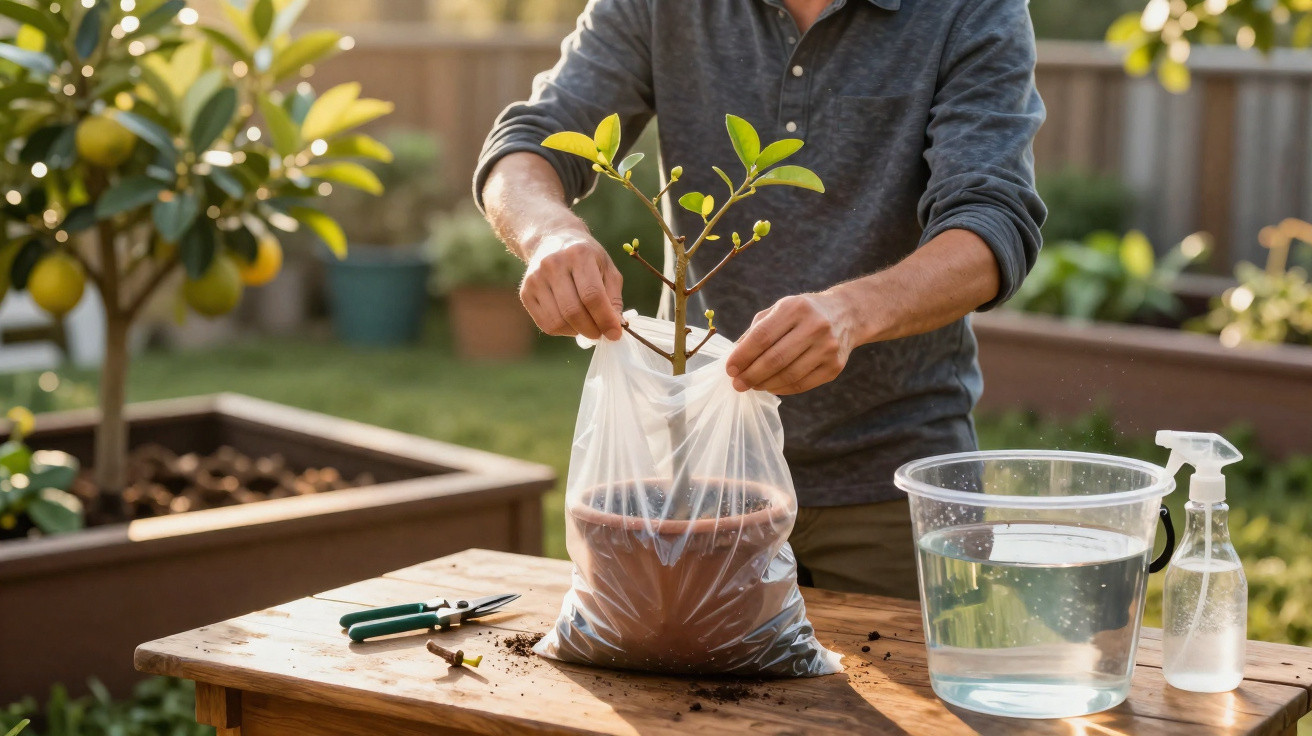
The difference also extends to propagation. Spider plants naturally produce small “babies” that dangle from thin, arching stems. Simply cut them off and place them in water or compost to root. Snake plants, meanwhile, are usually propagated by dividing the rootstock or taking leaf cuttings. With variegated varieties, leaf cuttings can even lose their patterning.
Care: what each plant needs and how often
Watering is where the two plants diverge completely. The spider plant prefers compost that remains evenly, lightly moist. Its root ball should not dry out entirely, otherwise it may develop brown tips or a limp appearance. Bright but indirect light from a window is ideal. In dry homes, it appreciates an occasional misting, particularly during winter.
The snake plant works differently: it is a classic “please do not keep watering me” plant. Its thick leaves store water, so it copes very well with dry spells. Only water it again once the compost has dried out completely. Waterlogging can be disastrous, with root rot developing quickly. It tolerates anything from very low light to bright conditions, provided it is not exposed to hours of harsh direct sun.
The main differences in spider plant and snake plant care
- Watering: Water a spider plant roughly once a week; depending on its location, a snake plant needs water every two to six weeks.
- Light: Snake plants manage better in low light, while spider plants reward a bright position with vigorous growth.
- Humidity: Spider plants benefit from slightly increased humidity; snake plants prefer drier air.
- Fertiliser: Feed spider plants about monthly in spring and summer, whereas a snake plant needs only one feed per quarter.
- Repotting: Spider plants grow quickly and usually need a larger pot each year; snake plants are often content in the same container for years.
Both species can react sensitively to certain substances in tap water, especially fluoride. Brown leaf tips may indicate this issue. If it repeatedly affects a spider plant, switch to filtered water or tap water that has been left to stand.
Which plant suits which home?
Anyone who likes hanging planters or wants to brighten a shelf with a green “waterfall” will find the spider plant an excellent choice. It has an airy, soft appearance and introduces movement into a room. It works particularly well in bright hallways, living rooms and children’s bedrooms. It is also likely to appeal to anyone who enjoys giving away cuttings or filling their home and office with plants they have propagated themselves.
Snake plants excel wherever there is simply little time for involved plant care. They are ideal for frequent travellers, students, office workers and anyone who occasionally forgets to water. Their upright form fits neatly into narrow corners, beside sideboards, in window recesses or in minimalist interiors. Pairing tall snake plant varieties with simple concrete or metal pots creates an especially modern look.
“The spider plant is the green ‘housemate’ for people who enjoy looking after plants – the snake plant is the quiet companion that forgives almost anything.”
Both can help improve indoor air. Older studies described snake plants as highly effective against certain pollutants, including formaldehyde and benzene. In an ordinary home, however, they do not replace ventilation, although they can support air quality.
Safety, risks and small pitfalls
Households with children or pets should note one point: neither spider plants nor snake plants are regarded as highly toxic, but both contain substances that may cause nausea or digestive problems if consumed in larger quantities. Choose a spot where a dog, cat or young child cannot keep chewing the leaves.
Common mistakes when getting started include:
- Placing a spider plant in intense midday sun: its leaves fade and develop scorch marks.
- Keeping a snake plant in permanently wet compost: the roots rot and the leaves start to collapse.
- Choosing an excessively large pot when repotting: compost stays wet for too long, particularly for a snake plant.
- Leaving a spider plant in dry central-heating air without compensation: the tips turn brown and the plant looks stressed.
Practical tips for living with both plants
Spider plants make useful “indicator plants”. If their leaves droop noticeably, it is usually time to water them – a quite practical warning sign. Anyone who is away regularly can grow one hydroponically or use a watering cone to maintain more consistent moisture.
A snake plant is particularly effective as a structural feature. Several varieties at different heights can resemble a small green sculpture. Many people choose snake plants for bedrooms because they remain stable in darker corners and demand very little care.
Combining both plants can be especially effective: place a spider plant in a hanging planter by the window and a snake plant at floor level, and you have a small vertical planting scheme with two contrasting forms that do not compete with one another.
There is another benefit for keen amateur gardeners. Spider plants and snake plants offer a clear way to observe how different adaptation strategies can be, even though both officially belong to the same family. One stores water around its base and in its rhizomes, while the other relies on rapid leaf growth and plentiful plantlets.
The final question is whether you need to choose at all. Once you understand how differently the two species behave, you can place them strategically around the home – the thirstier spider plant near the sink or in the bathroom, and the undemanding snake plant in a hallway, office or guest room. In this way, they complement each other perfectly rather than being confused for one another.
Comments
No comments yet. Be the first to comment!
Leave a Comment