
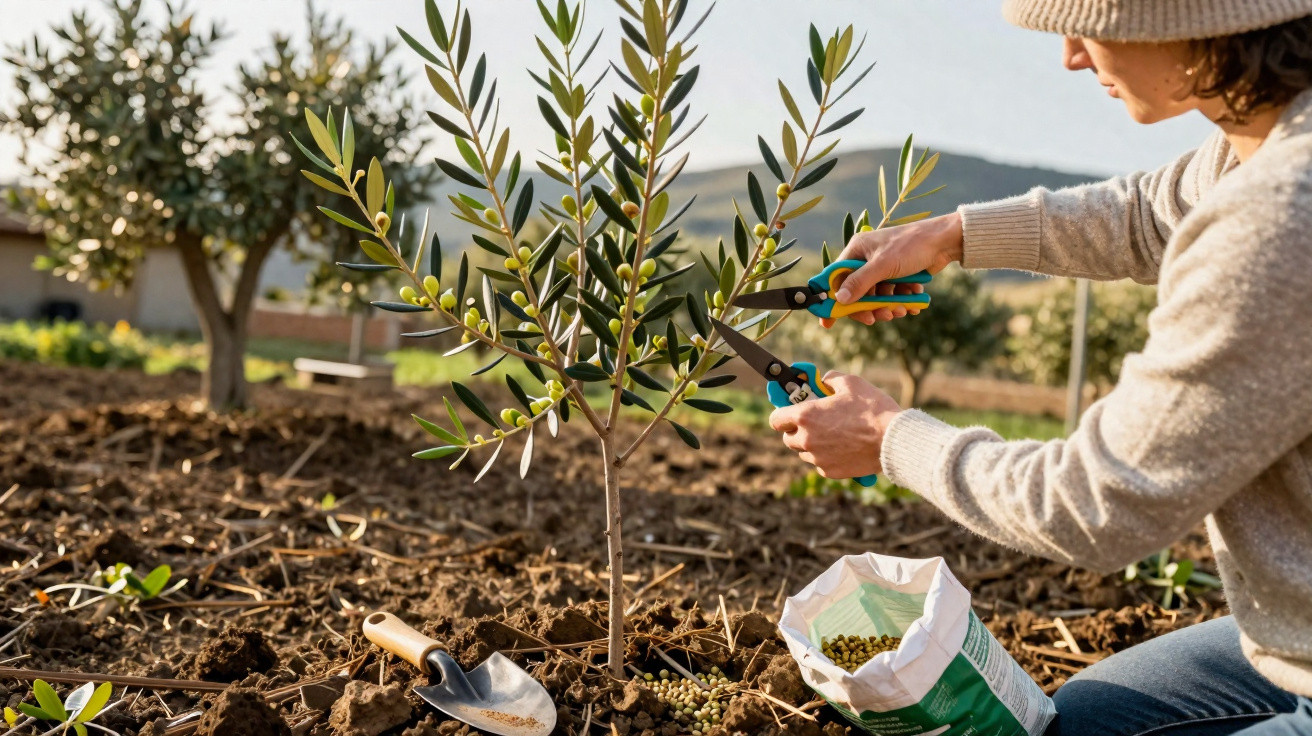
The sun is returning, the olive tree is quietly putting out new growth – and this is precisely when amateur gardeners can ruin the entire flowering season with one wrong move.
Anyone who loves olive trees welcomes the first silvery shimmer of their leaves in late winter. Yet many people do not realise that these few weeks determine whether the tree flowers abundantly or struggles for months. One widespread care habit is pure poison for flower formation at this stage, while another fairly simple measure can significantly increase the yield.
Why late winter is such a delicate time for olive trees
As the days grow longer and night-time temperatures no longer remain below freezing, sap starts moving within the olive tree. Although its botanical name, Olea europaea, is associated with resilience, the tree is highly sensitive to intervention at this particular moment.
Depending on the region, the best window for pruning and care is roughly from mid-March to the end of April. In warmer areas, this period begins earlier; in cooler locations, it shifts back by one or two weeks.
During this short period, the olive tree directs its energy into its buds – every wrong action directly affects future flowering.
Pruning too late in spring coincides with rising temperatures and greater water requirements. If young shoots or buds are also removed at that point, the tree can quickly become stressed. The result is fewer flowers, fewer fruits and a weakened tree.
Pruning immediately after a severe frost night is equally risky. The newly active vascular tissues are then vulnerable, so cutting places a double burden on the tree and encourages frost damage and disease.
The most common mistake: poor timing combined with the wrong fertiliser
Many gardeners want to “do something good” for their olive trees in spring, reaching for both pruning shears and a high-nitrogen fertiliser. This combination is exactly what deprives the tree of its flowers.
If both are used in May, or even during the first hot spell, they create a dangerous mix:
- The tree has to seal fresh wounds while moisture loss is high.
- Strongly nitrogen-based fertiliser encourages long, soft shoots.
- Energy is diverted into leaf growth instead of flower production.
- Soft wood is more vulnerable to pests and fungal diseases.
The outcome is fast-growing but unstable shoots, alongside a noticeably sparse flowering display or no flowers at all. This mistaken approach ruins countless olive harvests every year in home gardens, as well as on balconies and terraces.
Pruning olive trees correctly: how to shape a healthy tree
Many amateur gardeners are reluctant to prune olive trees. However, the tree does not require an artful technique, only a few straightforward rules. The aim is the so-called goblet form, also known as an open-centre or vase-shaped prune.
Step by step towards an airy crown structure
Work through the following order:
- Remove dead wood – take out every completely dry, grey branch.
- Cut back diseased or damaged branches – remove anything that is split, affected by fungus or hollow.
- Thin out crossing shoots – where branches rub against one another or grow towards the centre, retain only the better-positioned one.
- Select the main framework – three to five strong main branches, evenly spaced around the trunk, should form the crown.
- Open up the centre – keep the middle of the tree clear enough for light and air to pass through freely.
A useful test: if you can clearly see the sky through the crown, the pruning is usually well judged.
Very upright, thin shoots often appear on the lower trunk and thicker branches. These so-called water shoots, or “gourmands”, use up energy but produce very little fruit. Remove them consistently right at their base.
Do not overlook the root area
A common mistake is to work only on the crown. However, the area around the trunk is just as important:
- Clear away old leaves and plant debris so fungi cannot establish themselves.
- Loosen the top layer of soil gently, without damaging roots.
- Keep the base of the trunk visible – it must not sink into the soil or disappear beneath a thick layer of mulch.
This keeps the root collar dry and well ventilated, which is exactly what an olive tree prefers.
Fertilising correctly: less is often more for olive trees
Once pruning is complete, the tree needs renewed strength. This is where many people are tempted to apply plenty of nitrogen in pursuit of “lush green” foliage. For olive trees, that is the wrong approach.
Better choices include:
- Mature compost or well-rotted farmyard manure, spread thinly around the root area.
- Special fertiliser for Mediterranean trees with a higher potassium and phosphorus content.
This combination supports root development, flower formation and fruit ripening without forcing the tree into uncontrolled leafy growth. Application rates should remain moderate. Olive trees grow slowly and react to over-fertilising with stress responses, reduced flowering and increased susceptibility to disease.
Watch for diseases and cold-weather traps
While pruning, it is worth examining leaves and young shoots closely. Common issues include:
- Peacock spot disease (“peacock eye”): dark, round spots on leaves that later fall off.
- Mealybugs and scale insects: small, firmly attached spots on leaves and branches, often accompanied by a sticky coating.
- Sooty mould: a black coating on leaves, usually encouraged by the honeydew produced by aphids.
For fungal diseases, many gardeners use traditional copper-based treatments, such as the well-known Bordeaux mixture, at low doses. Oil-based products or black soap cleaner can help against aphids by suffocating the pests without placing too much stress on the tree.
If one final cold snap is still expected, young olive trees or those grown in containers need light winter protection. A breathable fleece cover over the crown and pot is usually enough to protect the fresh shoots.
Container-grown olive trees: special rules for balconies and terraces
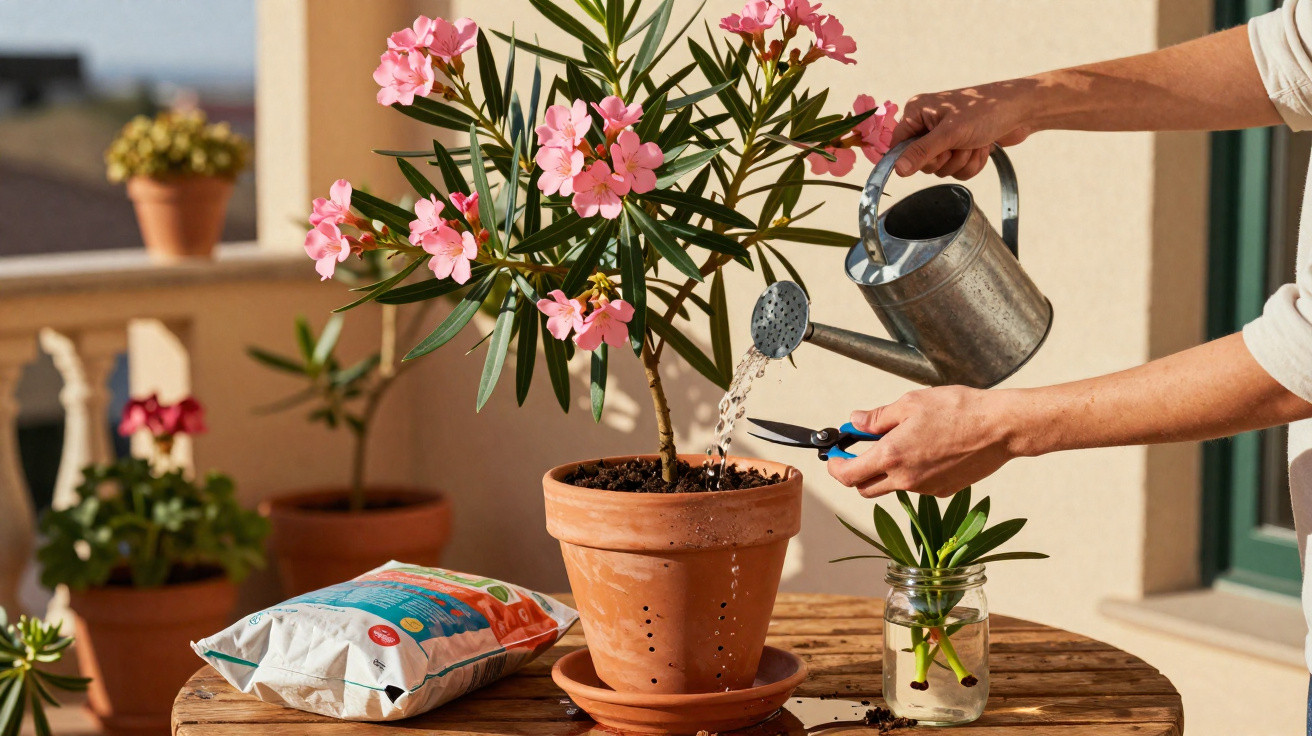
Anyone keeping olive trees in pots must also consider several additional factors. Root space is limited, water and nutrients are used up more quickly, and cold has a stronger effect.
| Area | Special requirement in a container |
|---|---|
| Water | Water regularly, but avoid waterlogging – the pot must drain well. |
| Fertiliser | Give several small applications rather than one large dose; organic-mineral fertilisers are ideal. |
| Cold | Insulate the pot, move it against a sheltered house wall and add fleece protection during late frosts. |
| Pruning | Prune more cautiously and maintain a stable crown so the tree does not topple in the wind. |
How olive trees flower – and what holds flowering back
Many garden owners wonder why their olive tree remains leafy for years but produces few flowers. The reason is straightforward: olive trees flower mainly on two-year-old wood. If fresh shoots are cut back hard every year, those productive sections are removed.
The balance between leaves and wood matters too. When the tree receives too many nutrients, it prefers to produce foliage rather than flowers. Slightly nutrient-poor, well-drained soils, by contrast, are more likely to encourage flowering.
Anyone who treats olive trees like roses will have to live with lots of greenery and little yield – the tree needs a different strategy.
Practical examples: common problems and quick solutions
A typical situation in a home garden is this: an olive tree is cut back radically in May because it has become “too large”. It is then given a hefty dose of general-purpose fertiliser. The tree produces masses of new growth in summer, but flowers fail to appear the following spring. A better approach would have been to prune early in the year and then use compost only sparingly.
Another scenario involves a tree in a container on a windy balcony. It receives plenty of water but fertiliser only rarely. Its leaves look pale, its shoots are short and flowering is weak. In this case, a combination of high-quality free-draining compost, regular but restrained fertilising and a more sheltered position will help.
Those who understand the particular needs of the olive tree can avoid expensive specialist advice. The plant responds very clearly: the right timing, moderate pruning, restrained fertilising and good ventilation are almost all it requires. It is during the final weeks of winter that the decision is made as to whether these conditions are met or whether one careless action costs the entire flowering season.

Comments
No comments yet. Be the first to comment!
Leave a Comment