
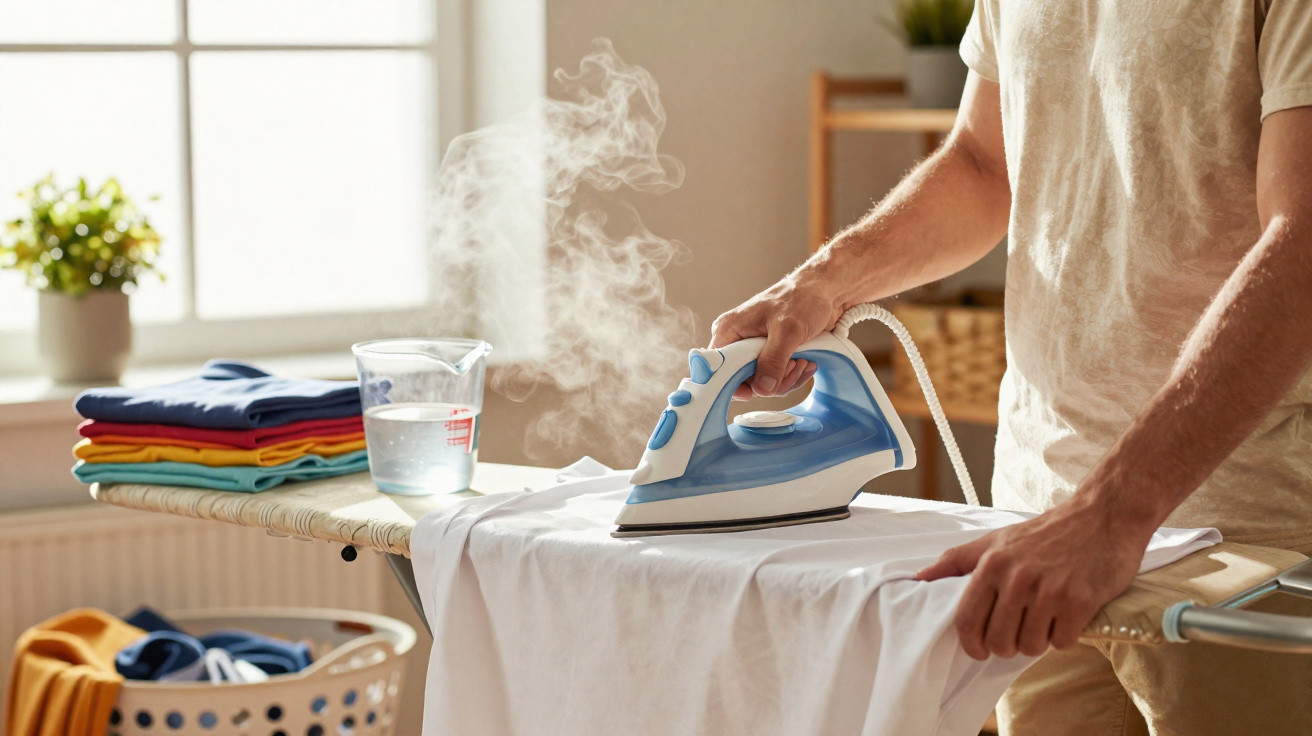
Faster, more powerful and well suited to large loads of laundry, steam generator irons still have a place in many homes. Find out how they work, who they suit best and which care measures can help extend their service life.
As household appliances have evolved, solutions such as upright steamers and crease-reduction programmes on washing machines and tumble dryers may make ironing seem increasingly unnecessary. Even so, an iron remains essential for many households and for people who value well-maintained clothing.
Among the options available, steam generator irons stand out for their ability to deliver continuous steam, their longer operating time and the speed with which they can handle large volumes of laundry. Although they are bulkier and generally costlier than conventional irons, they can be worthwhile for people who iron regularly or want results closer to a professional standard.
The key difference lies in the steam-generation system. In a conventional iron, the water tank is built into the appliance itself. With a steam generator iron, however, the water is held in a separate base unit connected to the iron by a hose.
This design accommodates a larger tank and produces steam more consistently and intensely. The steam reaches into the fabric fibres, helping to loosen them and making creases easier to remove, so there is less need to go over the same area repeatedly. “A steam generator iron is distinguished by the power of its continuous steam, which makes it possible to remove creases more quickly and effectively, even from thicker fabrics or when there is a large amount of laundry waiting to be ironed,” explains João Manaia, marketing and key account manager at Ufesa Portugal.
Speed is one of its clearest benefits. Where there is a substantial amount of laundry to iron, the constant steam output can help finish the job more quickly, particularly with shirts, trousers, towels, bed linen or heavier fabrics.
Tank capacity is another important consideration. As it is larger than that of a conventional iron, it allows longer ironing sessions without frequent pauses to top up the water.
“Compared with a traditional iron, it makes the experience more comfortable and efficient, as the large tank capacity allows you to work for much longer without having to refill it,” says João Manaia.
What is more, because the water is stored in the base unit, the iron held in the hand can be lighter than a conventional model with a full tank. This may make it more comfortable to use during longer sessions.
Are steam generator irons still used?
Yes. Despite the availability of more compact options for refreshing or smoothing garments, steam generator irons remain useful for people who iron large quantities of laundry or use the appliance several times a week. They will not necessarily be the most suitable choice for someone who only occasionally irons one or two items. In those circumstances, a conventional iron may be enough, as it takes up less space, is easier to store and is usually less expensive.
For families, frequent users or those who regularly deal with more demanding fabrics, however, the longer operating time and uninterrupted steam production may justify the investment. “The Ufesa Smart Digital Pro is particularly suited to families, users who iron frequently and for longer periods, or those looking for more professional results at home,” says the brand representative.
According to João Manaia, this type of appliance can also make the household routine easier. “Thanks to its high performance, it is also an excellent option for anyone who wants to simplify a routine task, saving time without compromising the quality of the ironing.”
Who are steam generator irons worth buying for?
A steam generator iron can be especially worthwhile for those who build up lots of laundry, iron garments several times a week or often need to tackle stubborn creases. Before buying one, it is important to assess factors including tank capacity, continuous steam output, pressure, heat-up time, the iron's weight, the dimensions of the base unit, and whether cleaning and descaling systems are included.
Available space should also be taken into account. Since it is larger than a conventional iron, this appliance requires more room while in use as well as a suitable place for storage. Maintenance is vital to protect the performance of a steam generator iron. Limescale build-up can interfere with water flow, reduce steam output and lower the appliance's efficiency. “To ensure the best performance over time, it is important to use water in line with the manufacturer's recommendations, regularly carry out cleaning and descaling cycles, and empty the tank when the appliance will not be used for an extended period,” advises João Manaia.
How often it needs cleaning will vary according to the model, how intensively it is used and the properties of the water. For this reason, the instructions in the appliance manual should be followed. “Simple, regular maintenance helps preserve the appliance's features, particularly its steam output, and extends its useful life,” he adds.
Ultimately, the choice depends mainly on how often it will be used, the amount of laundry involved and the space available. A conventional iron remains practical for occasional use, small amounts of laundry and homes with limited space. A steam generator iron is better suited to those seeking speed, greater autonomy and the ability to deal with difficult fabrics or large volumes of laundry.
Far from being outdated appliances, steam generator irons continue to meet a specific need: making ironing faster, more efficient and more comfortable.



Comments
No comments yet. Be the first to comment!
Leave a Comment