
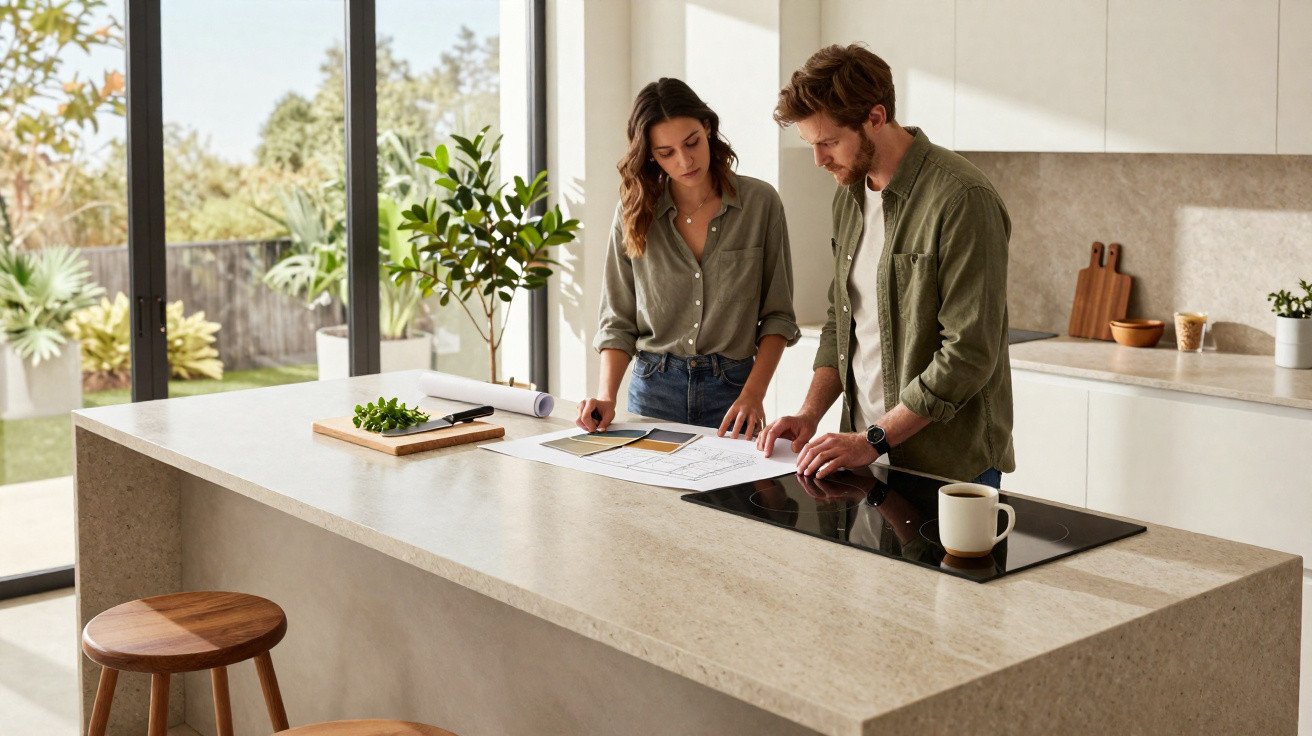
In recent years, granite kitchen worktops have stopped being an almost essential feature in residential designs. Lighter, more practical alternatives are taking their place, including ultracompact cladding, which promises straightforward installation, a contemporary appearance and a significant shift in interior finishing standards from 2026.
Is granite on a kitchen worktop still a good choice today?
For decades, granite was synonymous with durability and affordability, making it the dominant choice for kitchen worktops. Today, however, many projects weigh up this natural stone against technological surfaces, which provide a wider range of patterns, textures and thicknesses.
The main issue is not granite's performance, but the design flexibility and ease of installation offered by newer materials. Because natural stone requires precise measurements, cutting at a stone workshop and specialist transport, some consumers are reconsidering it, particularly for compact kitchens or fast refurbishments.
Watch a video on architect Duda Senna's YouTube channel discussing the evolution of kitchen worktops and the benefits of high-resistance stones and ultracompact surfaces:
https://www.youtube.com/watch?v=L2Gj3pP_L1Y
What is the ultracompact cladding emerging as a trend?
Ultracompact cladding is a high-density surface made from a blend of natural minerals exposed to intense heat and pressure. The resulting slab is rigid, durable and low-porosity, making it suitable for worktops, islands, splashbacks and even covered outdoor spaces.
By replicating marble, quartzite and even exposed concrete, this material delivers the refined look of stone without the same structural weight. Its slabs are generally thinner than traditional worktops, reducing the load on cabinets, making transport easier and allowing for fewer visible joins, which creates a more seamless finish.
How does the new material change the kitchen worktop installation process?
A notable difference from granite on a kitchen worktop is the installation method. As it is lighter and can be manufactured in standardised dimensions, ultracompact cladding typically arrives on site almost ready to fit, requiring only minor adjustments while producing less noise and mess.
This new way of working directly affects refurbishment schedules and the comfort of people already living in the property, with several important practical benefits:
- Less reliance on stone workshops: cuts and finishes can be completed at machining centres or by fitted furniture manufacturers.
- A cleaner project: there is less stone dust and rubble than with natural stone installation.
- Greater speed: the period between measuring up and delivering the worktop is likely to be shorter.
- Strong compatibility: it works well with modular furniture and more industrialised kitchens.
What can be expected in 2026 when choosing kitchen worktops?
For 2026, architects and manufacturers expect ultracompact cladding to feature more prominently in the catalogues of housebuilders, fitted kitchen retailers and interior design exhibitions. The trend is set to compete directly with granite, quartz surfaces and large-format porcelain tiles.
In gourmet kitchens, integrated balconies and heavily used spaces, demand is expected to focus on worktops that are lightweight, durable and easy to install. Granite on a kitchen worktop remains a familiar benchmark, but market movement points to a gradual transition towards materials that streamline building work, broaden aesthetic possibilities and better suit the pace of quick refurbishments.


Comments
No comments yet. Be the first to comment!
Leave a Comment