
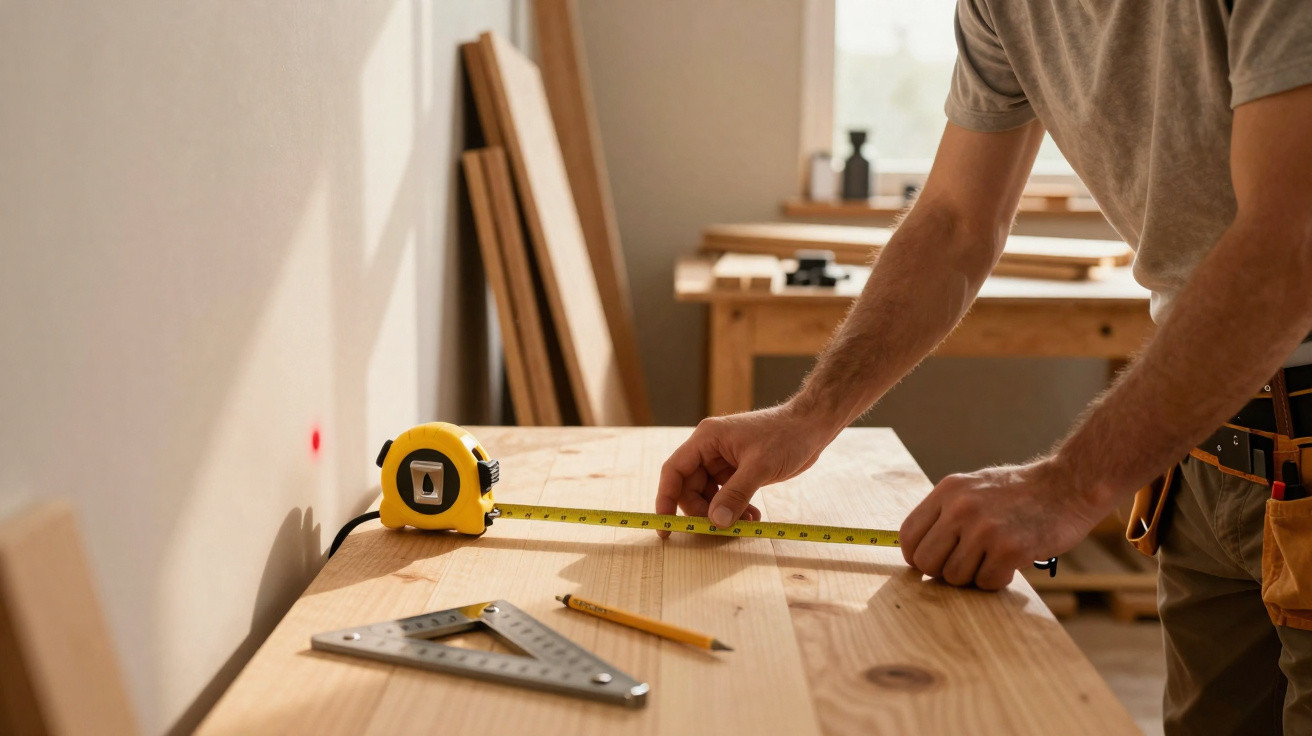
A manual tape measure and a laser tape measure are both used for measuring, but they meet different needs. One is straightforward, affordable and hard-wearing for quick measurements, while the other provides speed and accuracy for renovation and joinery projects.
What is the main difference between a manual tape measure and a laser tape measure?
A tape measure is a measuring tool for working out lengths, widths and heights. With a manual model, the metal tape must be physically extended to the measured point, so it needs direct contact with the surface and across the distance.
A laser tape measure, by contrast, calculates distance with a beam aimed at a wall or object and shows the result on its display. It is generally more convenient for longer distances, empty spaces and measurements that one person needs to take quickly.
The main distinctions include the following:
- Manual: uses a metal tape, does not require batteries and costs less.
- Laser: measures greater distances with less physical effort.
- Rooms: a laser model makes it easier to calculate the dimensions of living rooms, bedrooms and corridors.
- Joinery: accurate measurements help prevent mistakes in fitted furniture.
- Battery: a laser tape measure needs charging or batteries to work.
When is a manual tape measure the best option?
A manual tape measure is well suited to short, quick and straightforward jobs, such as checking the width of furniture, the height of shelves, the size of boxes, the gap between holes or the length of small pieces. It is convenient because it needs neither power nor set-up.
Cost is another advantage. For people carrying out simple repairs at home, a manual tape measure handles most everyday tasks. The tape itself does require attention, as it can bend, slip free or retract sharply without proper care and control.
When is a laser tape measure worth it?
A laser tape measure is more worthwhile over long distances or where using a metal tape alone would be difficult. It is useful for renovations, measuring walls, calculating room dimensions and checking spaces for fitted furniture.
Fast measurement in large spaces
The laser is helpful when there is no second person available.
Rather than stretching a tape from one wall to another, simply position the device, aim it and note the measurement on the display.
Some models also calculate area and volume, making estimates for painting, flooring and joinery easier.
However, it still requires a reference surface and careful operation. Taking measurements in very bright areas, on reflective surfaces or at uneven points can affect the reading, so measurements should be repeated and data checked for projects requiring precision and finishing.
A laser tape measure is commonly useful for tasks such as:
- Measuring walls for fitted furniture.
- Calculating the area of bedrooms, living rooms and utility rooms.
- Checking the distance between walls without another person’s help.
- Taking measurements for flooring, painting and renovation work.
Which is more accurate for renovation and joinery?
When used correctly, a laser tape measure usually delivers greater convenience and accuracy over longer distances. It limits common errors caused by a crooked tape, a poorly positioned end hook or reading the measurement at an angle, particularly in large spaces and detailed projects.
A manual tape measure remains important for small measurements, checking individual pieces, marking timber directly and making final adjustments. In joinery, the two tools often work together: the laser measures the room, while the tape confirms cutting details, clearances and fine joints.
To prevent mistakes, keep the following in mind:
- Always measure from the same reference point.
- Repeat important measurements before cutting or buying materials.
- Check that the laser tape measure is positioned correctly.
- Do not point the laser at anyone’s eyes or at other people.
How do you choose between a manual tape measure and a laser tape measure?
For simple repairs, furniture assembly and short measurements, a manual tape measure is usually enough. However, for projects that require better use of available space, such as planning a compact utility room based on solutions that replace a floor-standing drying rack in the utility room, a laser tape measure can make planning and layout easier.
Ultimately, the best choice depends on how it will be used. Anyone who measures only occasionally can start with the simple, low-cost manual model. Those renovating, working in joinery or calculating dimensions regularly can save time with a laser model, provided its battery is kept charged and the tool is used with care and safety.




Comments
No comments yet. Be the first to comment!
Leave a Comment