
That broken hose tossed into a corner of the garden may hold far more potential than it seems. Before throwing it away, it is worth taking a fresh look: what appears to be rubbish is actually raw material for attractive, practical projects around the home.
The rubber that looks like rubbish contains a valuable material
A broken hose is usually made from rubber or PVC, materials that can take decades to break down in the environment. Disposing of it is a double waste: it removes a hard-wearing item from use while adding to the planet’s waste.
The good news is that the same qualities that make a hose long-lasting also make it ideal for creative recycling projects. With patience and a DIY mindset, it can become sustainable decoration without the need for specialist tools.
- Hard-wearing material: rubber and PVC withstand sunshine, rain and the elements, making them excellent for outdoor use.
- No cost: the material is already at home, so there is no need to buy new raw materials.
- Lower environmental impact: less waste goes into general rubbish and more mindful consumption is encouraged.
- A one-off piece: every project turns out differently, with its own visual identity.
From the veranda to the patio: a durable mat made from a hose
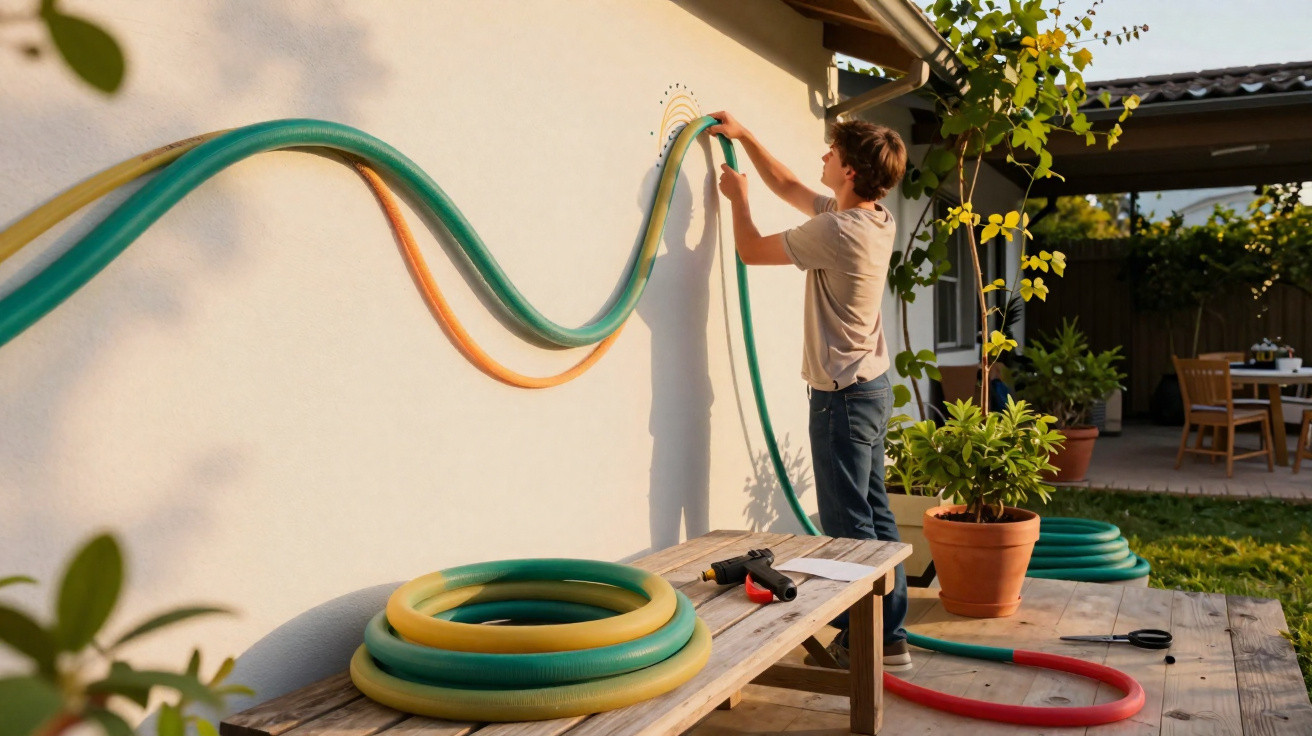
The first idea is to turn the broken hose into a mat for outdoor spaces. Simply remove the metal connectors, coil the hose around itself into a circular or oval shape, and secure each loop with cable ties to keep it firmly in place.
For a larger mat, several hoses can be joined using a short piece of narrow tubing as a connector, then the joins can be strengthened with strong glue. The finished piece is durable, easy to clean with a jet of water, and has a rustic appeal that suits verandas, patios and house entrances.
A wall mural that gets visitors talking
The second idea is more artistic: use the broken hose to make a decorative wall mural, bringing texture and dimension that ordinary materials rarely provide. The hose’s natural curve works well for organic, geometric or nature-inspired shapes.
Step-by-step guide to the mural
From concept to wall, without the fuss
Sketch the design on the wall in pencil, cut the hose into sections of the required size, and paint each piece in neutral shades such as terracotta, sage green or beige so that they complement the room.
Glue the sections in place along the outline, press them firmly until dry, then finish with patches of colour in the background or circular shapes around them to give the piece depth and character.
The key is to begin simply, with only a few sections, and expand the design as confidence grows. Mistakes are easy to put right, and the outcome often surprises those who give the idea a try.
What this type of craft can change in your home
Reusing a broken hose has a direct effect on both your budget and the environment. You save money on decoration, gain objects that withstand moisture and sunshine, and prevent more rubber from ending up in general waste, supporting recycling.
There is an emotional side too. Home-made pieces carry a story, personal choices and the time invested in making them. It is a kind of exclusivity no shop can sell: the mat and mural reflect your style and fit the rhythm of your home.
First DIY steps for people who have never tried it
Anyone new to DIY can start with the mat, as it is the easiest project, using a short hose to test the coiling technique. Getting one loop wrong is not a problem: simply undo it and start again, without wasting any material.
In the end, what seemed like an old item ready for disposal proves to be a material full of possibilities. Looking at a broken hose creatively is also a way to rethink consumption and give a longer life to what is already at home.
Did you like these ideas? Share them with someone who loves getting hands-on and turning what they have at home into something new.
Comments
No comments yet. Be the first to comment!
Leave a Comment