
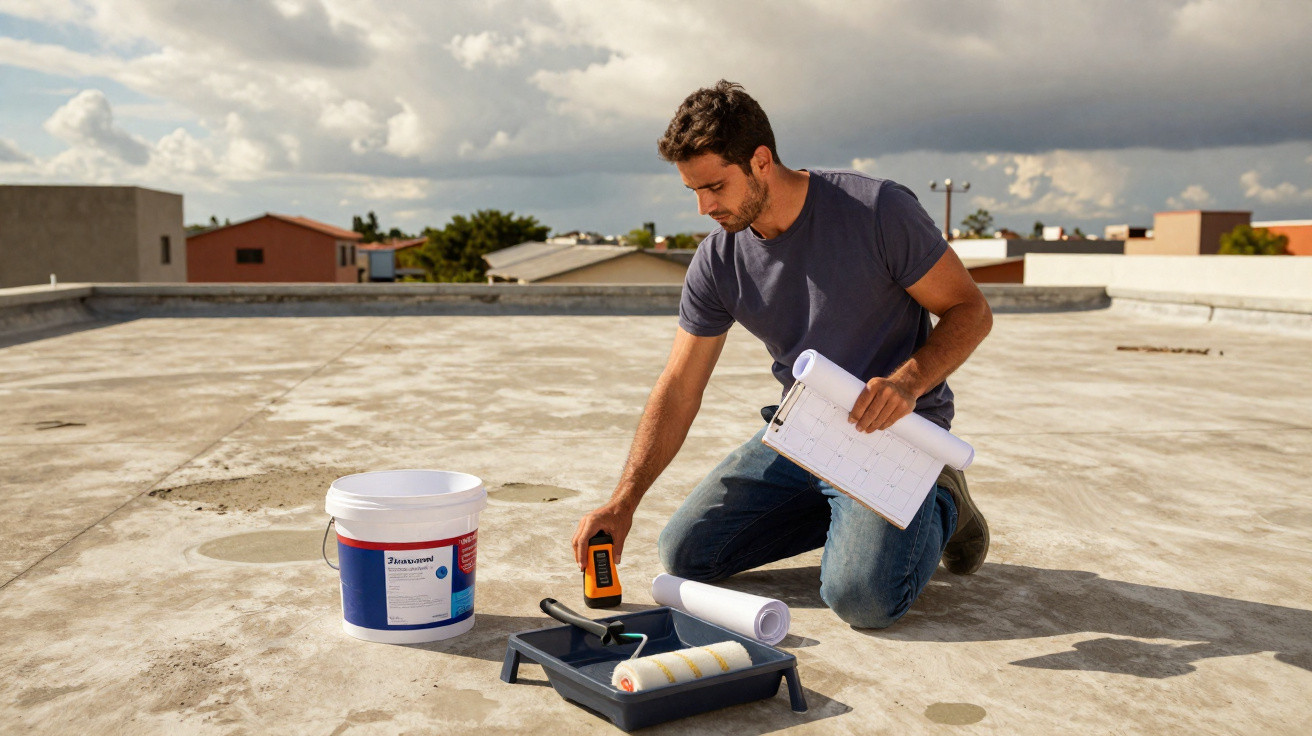
Waterproofing a roof slab is an essential measure for preventing leaks, staining and structural damage over time. Selecting the right time of year has a direct effect on the performance of the materials used and the lifespan of the work, because weather, humidity and temperature affect curing, adhesion and even the overall cost of the project.
What is the best time of year to waterproof a roof slab?
Waterproofing a roof slab generally delivers the best results when carried out during dry weather with moderate temperatures. In many areas, autumn and early spring are the most suitable periods, as rainfall tends to be less frequent and extreme heat has not yet set in.
These balanced conditions support controlled drying of the materials and lower the likelihood of defects in the protective layer. Days with low humidity and good airflow also help keep the roof slab free from standing water, making it easier to clean, level and apply membranes, resins or polymer-modified mortars.
How do rain and humidity affect roof slab waterproofing?
If the roof slab surface is excessively damp, material adhesion is reduced and the waterproof layer may detach over time. With bitumen membrane systems, water trapped beneath the membrane can create vapour pressure, leading to blisters and areas of detachment that may appear months later and require localised repairs or full replacement.
Excess moisture can also compromise stages such as substrate preparation, screed curing and the waiting periods between coats of liquid products. Should it rain shortly after application, the material may be partly washed away, leaving marks on the surface and reducing its thickness; this often means the work must be redone in certain areas.
What should be assessed before choosing the ideal time to waterproof?
Choosing the most appropriate time requires an assessment of both weather patterns and the specific characteristics of the project. This includes how the roof slab is used, how long it can remain closed off, the type of product being applied and the present condition of the structure, including cracks, uneven areas and places where water collects.
Several practical considerations can help organise the work with fewer unexpected issues and greater durability:
- Local rainfall history: identify the driest months and periods when storms are recurrent.
- Weather forecast: check forecasts during the days before work begins.
- Type of system: membranes, liquid coatings and mortars have different curing and moisture requirements.
- Use of the roof slab: leisure areas and water tanks may need to remain closed off for longer.
- Access arrangements: plan alternative routes to prevent foot traffic on the roof slab while it is curing.
Why does the weather affect the adhesion and durability of waterproofing?
The effectiveness of waterproofing relies on physical and chemical reactions that take place as the material cures. Very high temperatures speed up this process excessively, encouraging shrinkage and microcracks, while intense cold slows curing and extends the period during which the surface remains vulnerable to water and impacts.
Where application takes place in highly humid conditions, there is a greater risk of adhesion loss, blistering and a shorter system lifespan. By scheduling the work during more stable weather, with less rain and moderate temperatures, it is possible to create a continuous, even barrier that provides stronger structural protection and reduces the need for early maintenance.
Comments
No comments yet. Be the first to comment!
Leave a Comment