
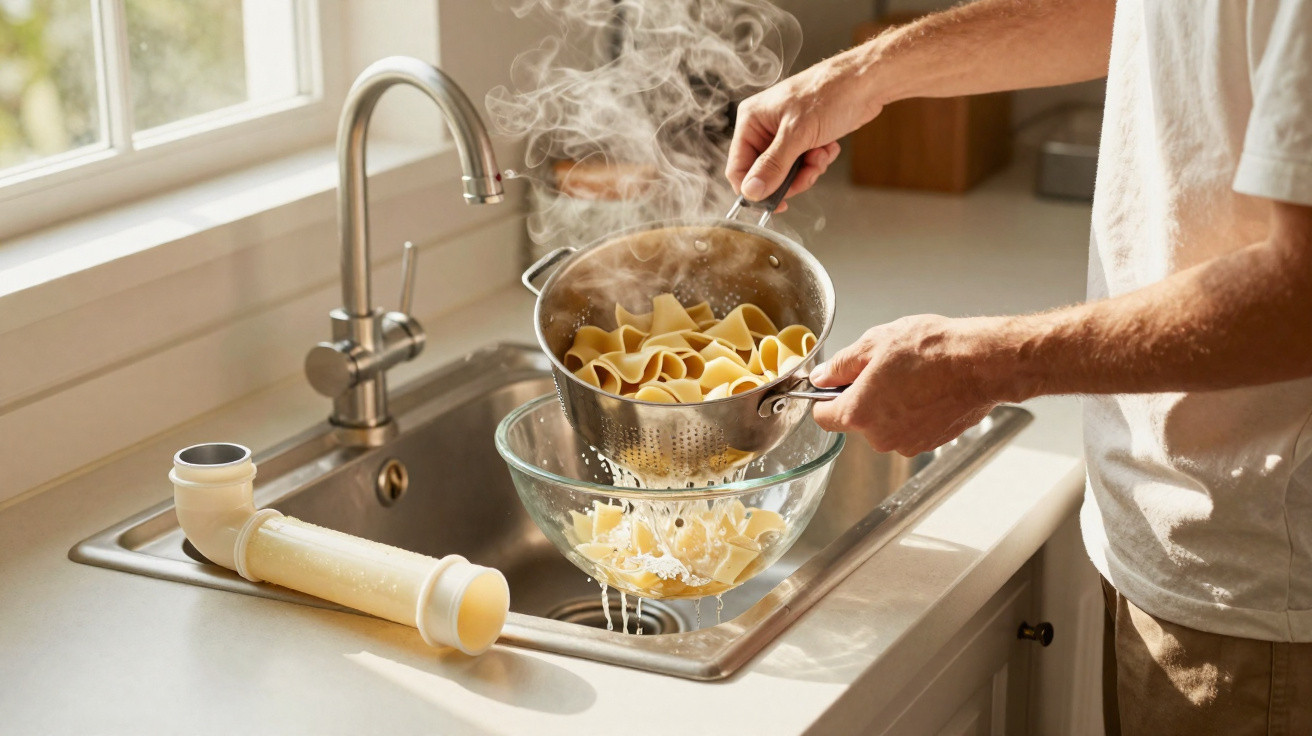
After cooking, tipping pasta into a colander and letting the bubbling water rush straight down the drain is standard practice in countless kitchens. Nothing is visible; there is only a hiss, and the process appears clean and efficient. Yet this exact routine can quietly cause damage in many homes, eventually leaving you facing a plumber and a hefty bill.
Why boiling pasta water puts modern pipes under strain
In many homes, the waste pipes beneath the sink are made from PVC. Although this plastic is considered hard-wearing, it has one weakness: high temperatures. At around 60 to 70 degrees, the material starts to soften. Pasta water taken straight from the hob is often close to boiling point, at roughly 100 degrees.
Repeatedly pouring this liquid directly into the sink without letting it cool puts considerable strain on the pipes. The most vulnerable areas include:
- bends and tight angles where heat builds up
- joints connecting two pipe sections
- the section immediately beyond the trap
Tiny distortions may develop in these places. They cannot be seen from the outside, and the drain may appear to work normally. However, every further batch of hot liquid adds to the stress. Over months or years, this can make the pipework age substantially faster.
Hot pasta water meets cold-sensitive plastic pipes – this temperature shock quietly works its way into the material and seals.
How temperature shocks damage seals and cause damp problems
The pipes are not the only concern: there are also the seals. Beneath sinks, rubber or silicone rings usually seal every connection. These materials cope poorly with continual shifts from icy cold to boiling hot.
In many kitchens, the sequence is the same: cold or lukewarm water sits in the trap, then an entire pan of very hot cooking water is suddenly poured in. This abrupt change creates stress within the material. Over time, the seals lose their flexibility and small cracks and gaps can form.
The consequences usually emerge gradually:
- At first, only a tiny amount drips behind the cupboard or into the wall.
- Later, the wooden panels beneath the sink begin to swell.
- Eventually, mould develops in joints or on the back panel.
Many households notice the issue only when plaster starts crumbling, the kitchen floor swells, or a musty smell appears. At that stage, simply cleaning the trap is no longer enough. Professional drain cleaning can quickly cost between £80 and £200. If there is also a damaged base unit, softened flooring or a saturated wall, the expense can easily rise to several hundred pounds.
The invisible enemy in pasta water: starch that acts like glue in the pipe
Heat accounts for only part of the issue. What the cooking water contains is far more troublesome. Large amounts of starch are released from pasta, rice and potatoes during cooking. This so-called starchy water makes the liquid cloudy and slightly sticky.
When this mixture enters the drain, the starch coats the inner walls of the pipes in a fine film. At first, everything may still flow away without difficulty. Gradually, though, more and more residue gets caught:
- small pieces of pasta or rice
- sauce residue
- meat fibres and breadcrumbs
- fat from frying pans or roasting tins
The starch behaves like an adhesive, allowing these particles to cling to it. The layer thickens with every wash-up. The trap and pipe bends are particularly affected because water moves more slowly there. The inside surface becomes increasingly rough, while the clear internal diameter narrows.
Starchy water from pasta or rice turns into a kind of wallpaper paste in the drain, gradually creating a solid obstruction.
Why the “trick” of using hot water makes matters worse
Many home cooks believe that a forceful rush of boiling water will “flush out” the drain. While that sounds plausible, in reality it often creates more damage than it prevents.
The reason is that fats and oils do briefly dissolve when heated. But once the water travels some distance through the pipe and cools quickly, the fat solidifies again – only a few metres further along. There, it meets the starch layer once more and combines into a genuine blockage.
Professional drain cleaners regularly encounter deposits that feel like dense blocks of concrete inside pipes. This is caused precisely by the combination of fat, food residue and starch. Simple household remedies can rarely remove it; in some cases, mechanical milling is the only solution.
Draining pasta properly: protect your sink, pipes and wallet
The good news is that a few small changes in habit can significantly reduce the risk of pipe damage. The key measure is straightforward: stop pouring a large volume of boiling liquid directly into the drain.
Gentler ways to drain pasta
- Drain the pan into a bowl or second pan: Catch the pasta in a colander and collect the water in a separate container.
- Allow it to cool: Leave the liquid to stand for a while until it is only hand-warm.
- Dispose of it in portions: Then pour the water into the sink in small amounts while running cold water. This keeps the temperature inside the pipe much lower.
Many households benefit simply by following these steps a few times a week rather than doing so every time. The fewer temperature shocks the pipes experience, the longer they are likely to last.
Use pasta water sensibly instead of pouring it down the drain
There is another benefit: the liquid does not necessarily have to end up in the drain. It can still be useful in the kitchen or around the home, provided it has not been heavily salted.
- To thicken sauces: Its starch content gently thickens sauces and gives them a creamy texture.
- For doughs or bread baking: Cooled cooking water can replace some of the liquid in yeast doughs.
- For watering plants: Unsalted, cooled water can be used in moderation to water plants on a balcony or windowsill.
Reusing the liquid in these ways not only reduces the burden on the pipes, but also saves a little water in everyday life.
Gentle pipe care instead of aggressive chemicals
When a drain gurgles or empties more slowly, many people reach for strong drain cleaners. These products may dissolve some material in the short term, but they often attack seals and pipe materials. In kitchens where high temperatures are already wearing down the pipework, this further increases deterioration.
Regular care using simple methods is gentler:
- Once a week, flush through with some hot, but not boiling, water at around 50 to 60 degrees.
- Occasionally scatter coarse salt into the drain and follow it with warm water.
- Use a mixture of bicarbonate of soda or baking powder followed by a splash of vinegar; leave it to work for a few minutes before running warm water through.
These methods can loosen light deposits without placing extreme strain on pipes or seals. They are no substitute for a plumber when the drain is fully blocked, but they may help stop the problem from reaching that point.
What typical signs of an overloaded drain really mean
Anyone aware of the risks posed by hot cooking water can spot potential warning signs sooner. Common indications that more is happening inside the pipe than is immediately obvious include:
- Water drains noticeably more slowly than it used to.
- Gurgling can be clearly heard in the trap or pipe.
- An unpleasant smell rises from the drain.
- Damp patches or swollen wood appear beneath the sink unit.
In these situations, pouring even more hot water down the drain rarely helps. It is more sensible to start with mechanical cleaning, using a plunger or a small drain snake, and to consistently reduce the use of highly heated cooking water in the drain.
Temperature, time and habits: the three factors behind healthy pipes
Ultimately, three factors determine how long a drain remains trouble-free: the temperature of the water, the amount of starch and fat passing through it, and everyday kitchen routines. Draining pasta into the sink once will not destroy a pipe. Doing it almost daily for years, however, significantly speeds up wear.
Even small changes to your cooking routine act like long-term insurance for the sink and pipe system. This is particularly worthwhile in rented homes with lightweight kitchen units and concealed pipework. What remains unseen in daily life usually becomes apparent in two places in the end: at the plumber’s appointment and on the bank statement.



Comments
No comments yet. Be the first to comment!
Leave a Comment