
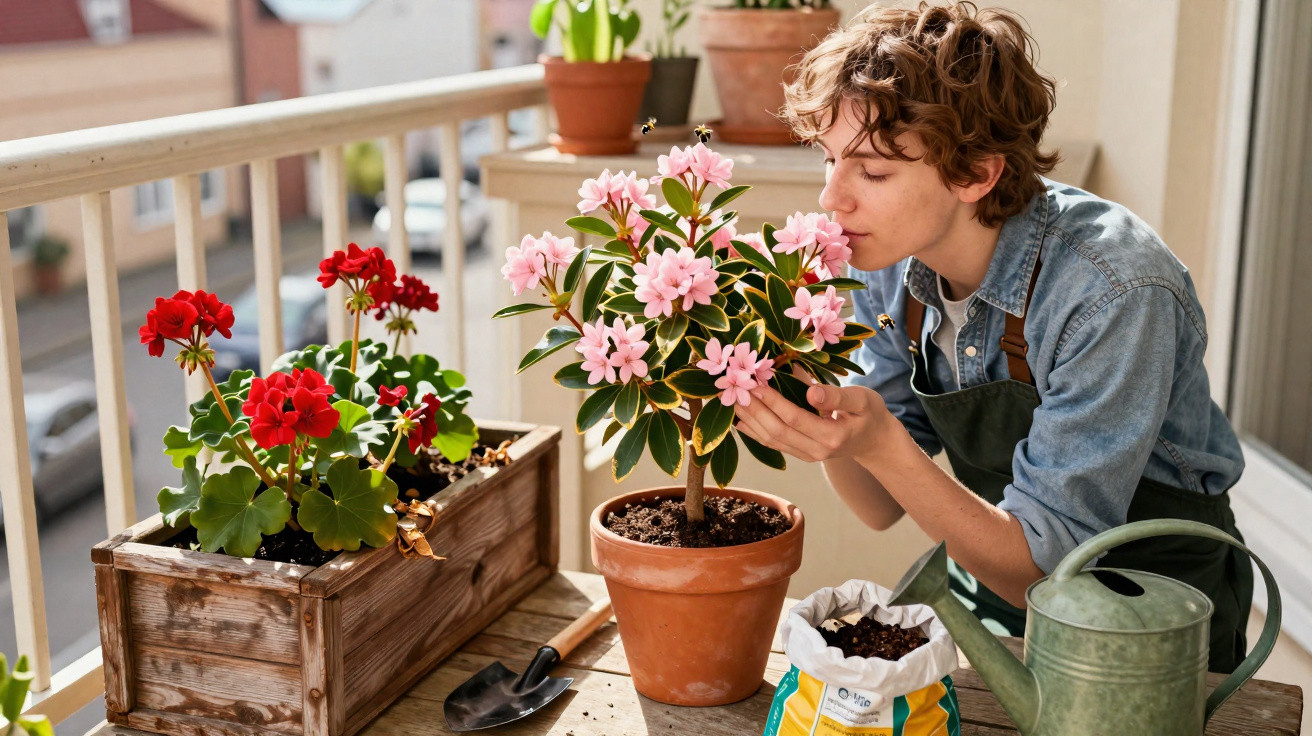
Many amateur gardeners have grown tired of seeing the same geranium window boxes year after year. They want a plant that gets going earlier, has a richer fragrance and brings life to the garden while most other plants are still dormant. One small, rather understated shrub is particularly good at doing exactly that.
Why a fragrant shrub can replace the classic geranium window box
Geraniums are easy to care for, tough and familiar. Yet they have two drawbacks: their flowering season is limited, and they offer virtually no scent. Anyone wanting colour - and, above all, fragrance - in late winter needs a different plant.
The evergreen shrub Daphne odora ‘Aureomarginata’, commonly known in English as fragrant daphne, meets that need. It stays compact, generally reaching 1 to 1.50 metres in both height and spread, and develops a dense, rounded shape. This makes it suitable for small gardens as well as pots on balconies and patios.
Fragrant daphne brings flowers and an intense perfume to the garden when almost nothing else is in bloom - often as early as February.
Its foliage is deep green with delicate yellow margins. These variegated leaves remain on the shrub throughout the year, creating a bright feature in the border even when it is not flowering. That is a particular advantage in winter, when many other plants stand bare.
A burst of fragrance in late winter
The flowers are the real highlight. Depending on the region, they emerge between February and March. At first glance, they are fairly understated: small clusters of pink to whitish flowers held close to the shoots. They cannot compete visually with brightly coloured balcony favourites, but their perfume more than makes up for it.
Gardeners describe the scent of fragrant daphne as:
- very strong without being heavy
- floral, like jasmine
- gently spicy, with a hint of cloves
- fresh, with a touch of lemon
Just a few steps away, an entire corner of the garden can be filled with this fragrant blend. It is especially striking on clear, cool days when little else is flowering.
To experience the fragrance fully, visit the shrub in the late-morning sunshine. By then, the air has warmed slightly and the aromas are at their strongest. Many gardeners adopt a small ritual: gently cup their hands around a cluster of flowers, breathe lightly onto it, then inhale slowly. The lighter notes emerge first, followed by the spicier ones.
The ideal position for Daphne odora: partial shade rather than blazing sun
Daphne odora is not a plant for fierce midday sun on a south-facing balcony. In its natural setting, this shrub grows more readily at the edge of open woodland, and that is the environment worth recreating in the garden.
Suitable locations include:
- a sheltered corner of the house with morning or evening sun
- a partially shaded spot close to the front door
- the edge of a lightly planted shrub border
- an east- or west-facing balcony
The soil needs to be loose, humus-rich and free-draining. Fragrant daphne does not cope well with waterlogging. Slightly acidic to neutral soil is ideal. Avoid heavy clay that remains wet for long periods, or improve it generously with sand and compost.
A well-prepared site that is neither too wet nor too dry matters more than excessive feeding.
When planting, make a hole that is wide rather than overly deep. The top of the rootball should sit level with the surrounding soil. Water thoroughly after planting, then keep the soil evenly moist rather than constantly wet.
On a balcony or patio: replace the geranium window box with fragrant daphne
A garden is not essential for enjoying a fragrant spring display. The shrub also performs very well in a container. A large pot with drainage at the base, or a planter with drainage holes, is all that is needed.
How to plant fragrant daphne in a container
For container growing, fragrant daphne needs a carefully considered growing medium:
- a drainage layer of expanded clay pellets or gravel at the bottom
- a mix based on ericaceous compost or compost for acid-loving plants
- some compost and loose garden soil mixed in
Position the container somewhere sheltered from the wind, ideally near the balcony or patio door. This means you will notice the perfume each time you step outside.
In areas with severe winters, Daphne odora generally tolerates temperatures of around -12 to -15°C. On exceptionally cold nights, move the pot close to a house wall and wrap it with horticultural fleece or a blanket for extra protection. Crucially, the container must not become completely saturated in winter, as this can damage the roots.
Low maintenance, but sensitive to being moved
Fragrant daphne grows fairly slowly and does not want frequent pruning. A light shaping or thinning cut immediately after flowering is enough. It responds badly to hard pruning, just as it does to repeated transplanting.
| Care task | Recommended approach |
|---|---|
| Pruning | Lightly after flowering; avoid severe cutting back |
| Watering | Summer: water regularly; keep soil fresh, never waterlogged |
| Feeding | Spring: apply a small amount of organic fertiliser or compost |
| Changing position | Avoid where possible; the roots are sensitive |
For this shrub, a permanent and carefully chosen position is half the battle. Moving it after several years can lead to losses, as many specimens cope poorly with a “move”.
Toxic, but valuable for insects
As tempting as its perfume may be, every part of the plant is poisonous. The leaves, bark and berries are considered highly toxic. Young children and pets should therefore not touch or taste the shrub.
It is best to wear gloves when pruning or transplanting, as the plant’s milky sap can irritate the skin.
In the garden, the risk can easily be reduced by planting the shrub away from areas where children play. It is, however, an excellent choice for purely ornamental beds, front gardens or quiet patio corners.
For insects, this early-flowering plant is a gift. While many perennials are still dormant, bees and other pollinators can already find nectar and pollen here in late winter. The shrub therefore supports biodiversity without taking up much space.
Make late winter atmospheric with these planting partners
Combined thoughtfully, fragrant daphne can turn a dreary patch of border into a small spring scene long before tulips and similar plants begin. Choose plants that complement the shrub visually without overwhelming its scent.
Reliable companions include:
- Christmas roses and Lenten roses (Helleborus) – adding elegant flowers in white, pink or dark red
- Witch hazel (Hamamelis) – with fine, thread-like flowers on bare branches, also appearing very early
- Fragrant viburnum (Viburnum) – providing additional flower clusters and a different kind of scent
- small spring bulbs such as snowdrops or crocuses at the front
When it comes to fragrance, less is more. One or two strongly scented species in each area are sufficient. Otherwise, the aromas compete with one another and become more tiring than pleasant.
What gardeners should know about Daphne odora
Nurseries regard fragrant daphne as a somewhat demanding but rewarding plant. It does not forgive extreme conditions, but in return produces a cloud of perfume that many householders remember for years.
Anyone new to growing this species should ask before buying whether the plant has developed a good root system in its container. Young plants with weak roots struggle to establish. A firm rootball that is not overcrowded with roots is a positive sign.
For compact city gardens and balconies, it is worth looking at smaller cultivars. Many are naturally low-growing and do not require elaborate shaping. That also makes them suitable for people who enjoy gardening but do not want to be pruning constantly.
Anyone who has automatically bought geraniums every spring can achieve an entirely different effect with just one well-positioned fragrant daphne shrub: the garden comes to life earlier, the air smells of jasmine and spice, and winter loses some of its grey monotony.
Comments
No comments yet. Be the first to comment!
Leave a Comment