
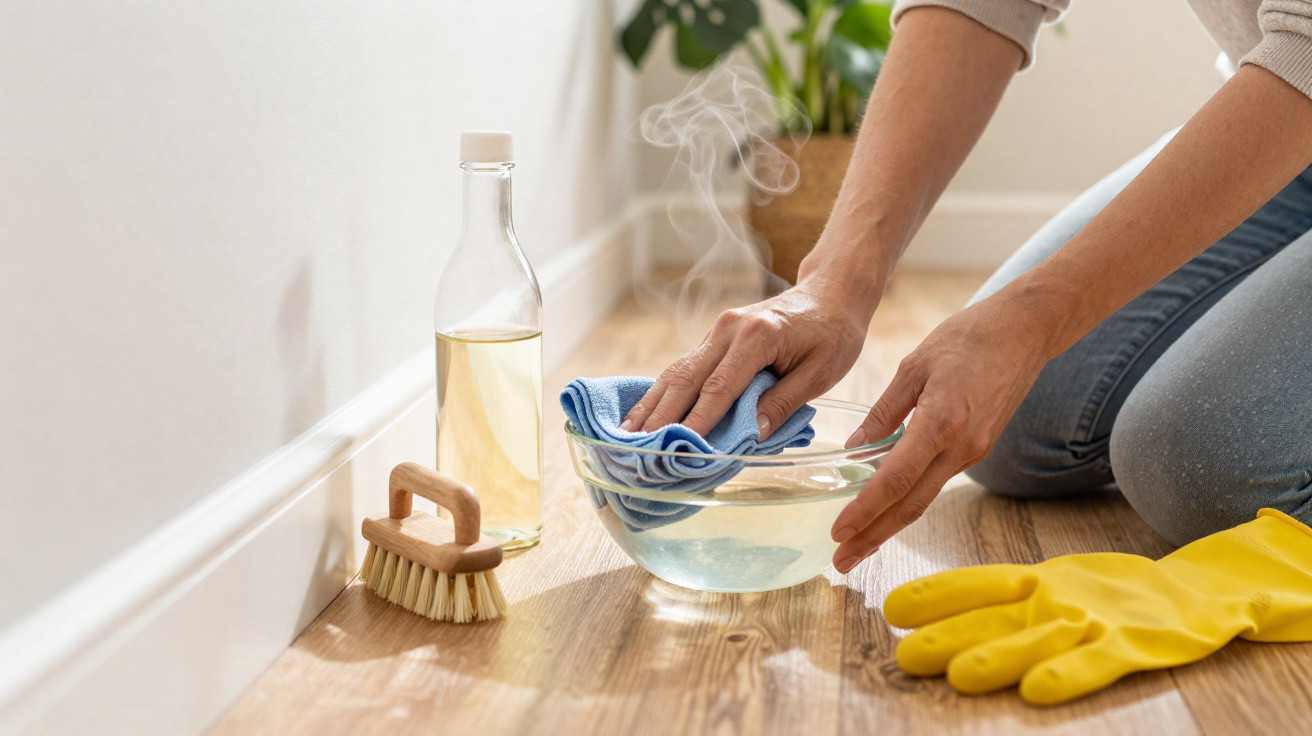
Dust build-up and shoe scuff marks in the corners of the home can make everyday cleaning more laborious. However, a blend of warm water and vinegar is a practical way to restore your skirting boards without harming the paintwork.
Why is white vinegar effective for cleaning skirting boards?
This product contains acetic acid, which can soften and dissolve embedded grease and accumulated dust. As a natural cleaner, it lifts stubborn build-up without the need for corrosive chemical products on the surface.
Using the solution while warm also speeds up the breakdown of older dirt close to the floor. This combination makes it easier to remove grime gently and quickly with a cloth, restoring the finish’s shine and cleanliness.
When is a vinegar and bicarbonate mixture genuinely worthwhile?
Combining these two ingredients is common in household cleaning, but the chemical reaction between them can cancel out the effect… Read more
How should the mixture be applied safely to skirting boards?
Start by mixing equal parts vinegar and warm water in a clean container. Next, dampen a microfibre cloth and wring it out thoroughly to prevent too much moisture reaching the material.
Wipe the cloth gently over the built-up marks, using continuous strokes until all dirt has been removed. Immediately after cleaning, use another dry cloth to ensure the treated area dries quickly.
Below is a video from Talita Cavalcante’s YouTube channel that explores the points discussed in this topic in greater detail:
What care is essential when cleaning skirting boards?
Before using the solution across the entire trim, test it first on an inconspicuous corner. This precaution helps confirm that the liquid will not affect the item’s colour or finish.
Also, avoid soaking the cleaning cloth, as pooled water may seep into floor joints and cause mould. Keep the room well ventilated to speed up evaporation and protect the clean wood structure.
Essential Skirting Board Cleaning Kit
Recommended cleaning materials
Gather the following items to remove marks conveniently:
- Diluted white spirit vinegar;
- Warm water to make removal easier;
- A soft, thoroughly wrung-out microfibre cloth.
Which surfaces should not be cleaned with vinegar?
Although it is a widely used household alternative, this acidic solution is not suitable for every type of finish. Unvarnished wood surfaces or those with severely weakened paint can absorb the liquid and sustain permanent damage.
Likewise, waxed surfaces and those made from porous natural stone react poorly to direct contact with acid. In these particular cases, regular use may dull the material, so a mild detergent followed by quick drying is recommended instead.
The main materials requiring extra care during cleaning are listed below:
- Raw wooden skirting boards with no sealant or protective varnish;
- Surfaces with recently applied wax layers or hand polishing;
- Structures with old paintwork that already shows visible peeling.
How can skirting boards be kept clean for longer as part of your routine?
Making a habit of vacuuming along wall edges each week prevents excessive build-up of loose and embedded dust. This straightforward maintenance stops dirt from becoming fixed in place and requiring vigorous scrubbing during more intensive cleans.
Protecting the bases of furniture and asking household members not to rest shoes against walls also helps preserve the finish. With small daily precautions, rooms remain protected and look refreshed for much longer periods.

Comments
No comments yet. Be the first to comment!
Leave a Comment