
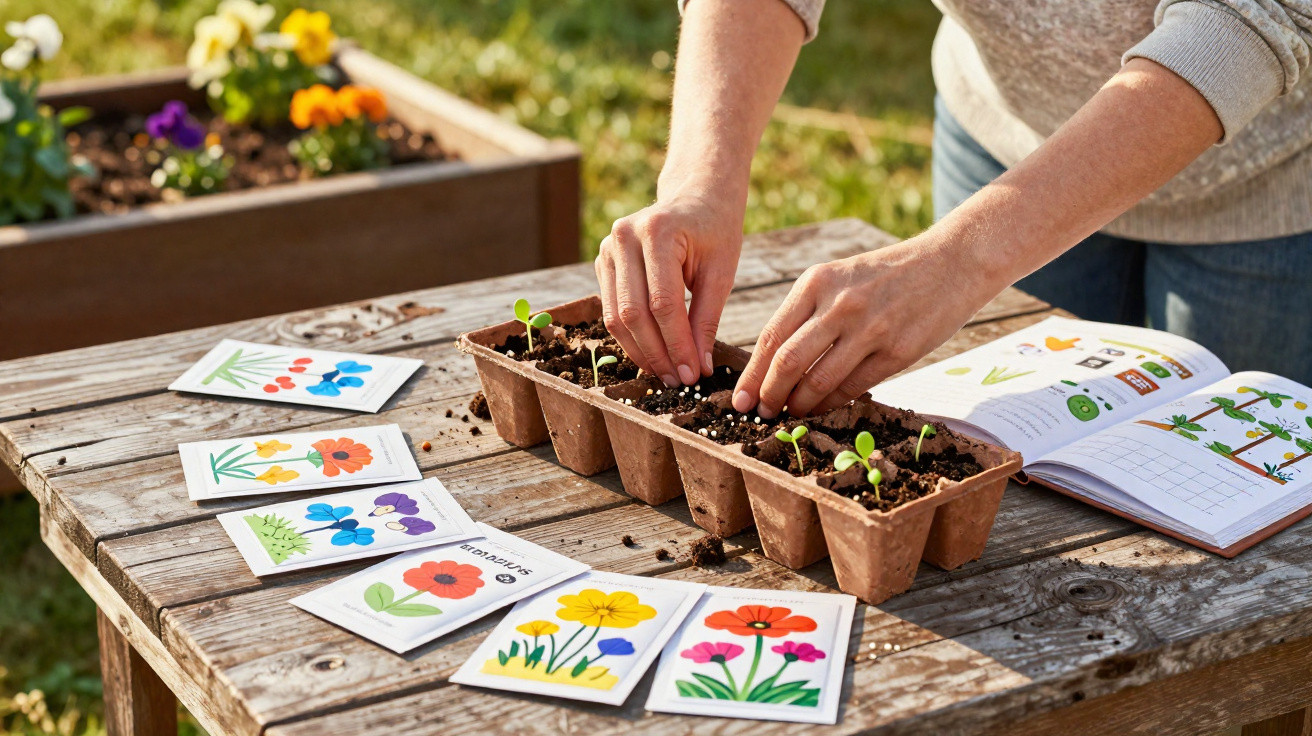
Most amateur gardeners face the same question in spring: when is the ideal time to plan a summer garden? The answer is right now. The transition from winter to spring determines whether beds will later be full of flowers or look rather patchy. By sowing seven straightforward flower types as early as March, you can give your garden a head start and keep it appealing well into autumn.
Why March determines your summer garden
March brings back the light, lengthens the days and makes you want to get outside and garden. Yet the weather remains unpredictable. Overnight frosts can occur in many parts of the UK until April and, in some places, even May. This leaves many amateur gardeners unsure of how to proceed.
This is precisely where March has an advantage: starting early and sensibly allows you to get far more from your garden. Annual summer flowers in particular benefit from being started early in protected conditions.
“Starting with the right flowers in March prevents bare spells and fills so-called ‘flowering gaps’ in summer beds.”
Experienced gardeners therefore often begin sowing indoors, on a bright windowsill, in an unheated greenhouse or in a simple cold frame. This gives young plants several weeks’ head start, allowing them to go into beds strongly once the final frosts have passed.
Choosing the right seeds to avoid disappointment in the bed
Many beginners encounter the same problem: they sow with high hopes, water regularly, and end up with only a few feeble plants in the planter. It is often not a lack of gardening skill, but simply the quality or type of seed being used.
For this reason, more amateur gardeners are deliberately choosing open-pollinated varieties that can be propagated. As well as producing robust plants, these make it possible to save your own seed for the years ahead. Once you have found a reliable packet, you can gradually build a small collection of varieties of your own.
Seed-swapping events, libraries with dedicated seed shelves and neighbourhood initiatives are especially popular. Gardeners can leave surplus seed there and take home different varieties. This helps robust flowers proven in local conditions to spread particularly quickly.
“Many garden enthusiasts report that plants grown from locally collected seed are noticeably stronger the following year and better adapted to their site.”
Seven easy flowers to sow in March
A genuinely colourful summer often requires only a handful of undemanding species. The following seven flowers can be sown in March, grow quickly and provide dependable blooms even with limited gardening experience.
- Zinnias – colourful, densely flowering and ideal for bouquets
- Sweet peas – fragrant climbers for supports
- Nasturtiums – edible, hardy and exceptionally prolific
- Wallflowers – richly scented with nostalgic charm
- Coreopsis – months of flowers in shades of yellow and orange
- Love-in-a-mist (Nigella) – delicate, romantic blooms
- Poppies – a wild meadow look, often self-seeding for future years
Zinnias: bold colour for beds and vases
Zinnias are among the most dependable summer flowers. Tiny seeds develop into sturdy plants with substantial, vividly coloured blooms, ranging from white to pink and red through to rich orange. They are excellent for visually filling out beds and for cutting into colourful summer bouquets.
Sowing: start indoors in pots in March, cover lightly with compost, and place somewhere bright and warm. Plant out after the last frosts. Zinnias prefer a sunny, fertile spot.
Sweet peas: nostalgic climbers with a romantic feel
Sweet peas turn fences, trellis panels and balcony railings into flowering walls. Their blooms are intensely fragrant and evoke traditional cottage gardens. The more often you cut them, the more flowers they produce.
Sowing: start in pots from March, ideally in a cool, bright place. Soak the seeds in water beforehand to speed up germination. Plant out once there is no risk of frost and climbing support is available.
Nasturtiums: edible flowers for low-effort gardeners
Nasturtiums forgive many mistakes and are often recommended when you want a garden to become green and colourful almost by itself. Their flowers glow in yellow, orange and red, and often find their way into salads. The leaves are edible too, with a mildly peppery flavour.
Sowing: sow under glass in March or directly into the bed from around April. The plants rapidly cover larger areas and are also ideal for containers or balconies.
Wallflowers: a scent highlight for cool evenings
Wallflowers, which are often unfairly dismissed as old-fashioned, release a powerful fragrance, especially during the evening. In mixed beds they provide vertical interest and work particularly well alongside tulips and other spring bulbs that fade later.
Sowing: raise them under cover in March, then plant them in a sunny, fairly dry position. Wallflowers tolerate cooler conditions better than many other summer flowers.
Coreopsis: long-flowering plants for gardeners who forget to water
Coreopsis produces fresh yellow or orange flowers over many weeks and months. These plants need comparatively little maintenance and also cope with sandy soil.
Sowing: sow in seed trays or small pots in March, pressing seeds down only lightly because light encourages germination. Prick out later and plant into the bed.
Love-in-a-mist: delicate, playful and surprisingly hardy
Nigella, commonly known as love-in-a-mist, looks almost fragile with its fine foliage and delicate flowers, but it can withstand quite a lot. Decorative seed pods form after flowering and are well suited to dried arrangements.
Sowing: sow directly in the bed in mild areas; elsewhere, sow under cover in trays in March. Plant out later with as little root disturbance as possible, as this species does not particularly like being transplanted.
Poppies: for anyone who loves a meadow-style garden
Poppy seeds are tiny, but their garden impact is enormous. Their vivid flowers suit naturally styled beds perfectly. Many varieties self-seed if you leave a few seed heads in place.
Sowing: although they can be sown very early, March sowing in trays under protection is especially reliable. Scatter the seed over the surface without covering it with compost. Plant later in groups to create the characteristic meadow effect.
Indoors or straight into the bed: how to sow in March
The most suitable sowing method depends largely on where you live. In cooler areas where late frosts are likely, it is worth raising plants indoors or in a greenhouse. This enables strong young plants to develop while frost still lingers outside. In milder areas, some of the flowers listed can be sown fairly directly into beds or large containers.
| Flower | Start indoors | Direct sowing possible |
|---|---|---|
| Zinnias | highly recommended | only in warm areas |
| Sweet peas | ideal in March | later in spring |
| Nasturtiums | possible | suitable from April/May |
| Wallflowers | recommended | depending on the climate |
| Coreopsis | very suitable | in mild areas |
| Nigella | possible | often directly into the bed |
| Poppies | optional | traditional direct sowing |
How to prevent flowering gaps and plan beds cleverly
Many gardens look magnificent in June, only to lose their impact noticeably at the height of summer. The cause is often an overly limited selection of plants. The summer flowers listed here help fill this gap because they continue producing fresh buds over a long period.
A mix of different growth heights works well: position lower plants such as nasturtiums or coreopsis at the front, with zinnias and wallflowers behind them, and tall sweet peas on supports at the back. If you also combine them with perennials and spring bulbs, your garden will offer an interesting display from early spring through to autumn.
Practical tips for successful sowing and everyday care
Impatience and excessive care cause many problems. Seeds can rot easily if the compost remains constantly wet. Keep it evenly moist instead, but never waterlogged. Seed trays need bright conditions, but not blazing sun, otherwise they dry out too quickly or overheat.
Once seedlings have emerged, it is worth carefully pinching out overly long tips early on from zinnias or sweet peas. This encourages branching and results in more flowers later. When the young plants are ready to move outdoors, they need a few days of hardening off: place them outside in a sheltered position during the day and bring them back in at night. They will then cope much better with sun and wind.
If you have children, sowing can become a simple project: larger seeds, such as those of nasturtiums and sweet peas, are easy to hold and count. Along the way, this offers an early understanding of how a small seed becomes a full summer flower.
Many of these annuals also attract bees, bumblebees and butterflies. Zinnias, poppies and coreopsis in particular are heavily visited. Sowing in March therefore benefits not only you but the insect world too - and a few months later, you can sit in a garden that is not merely colourful, but audibly alive.



Comments
No comments yet. Be the first to comment!
Leave a Comment