
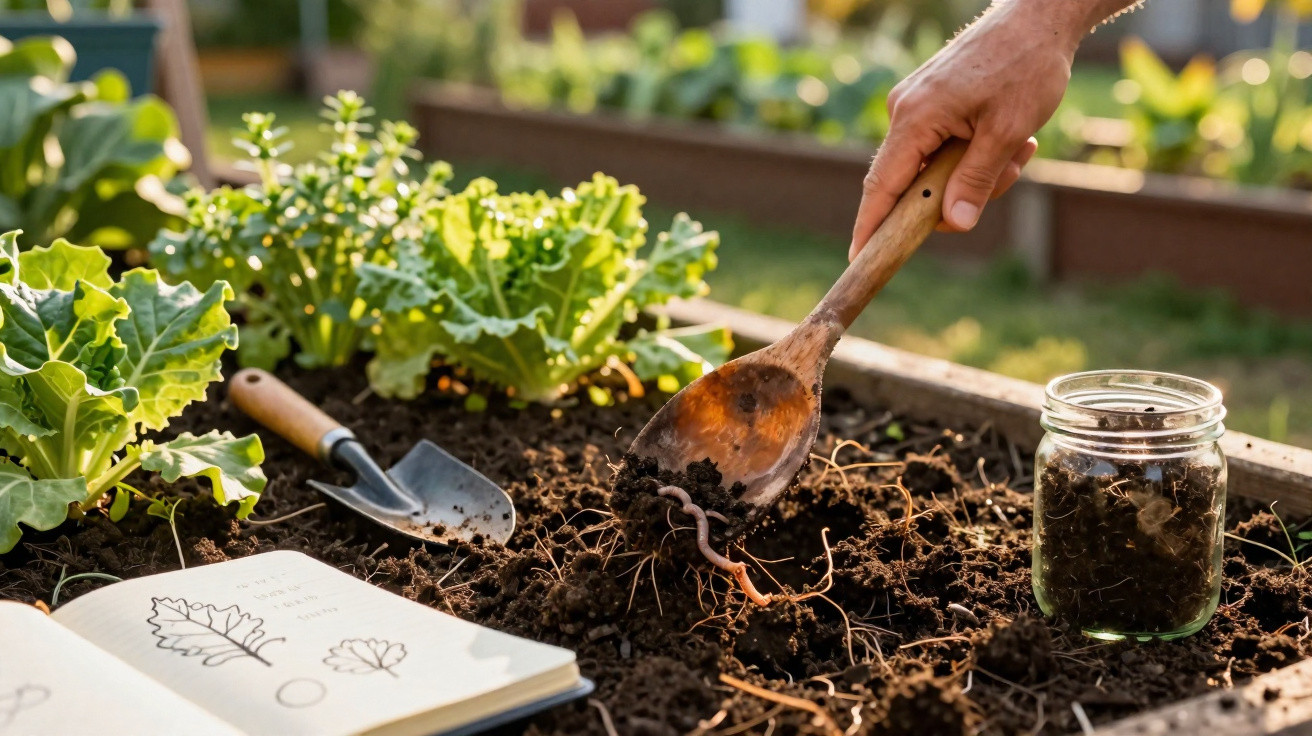
Among the tomatoes, lettuce and courgettes, a wooden handle may suddenly be sticking out of the soil. It is neither a decorative gimmick nor a superstition: this simple yet ingenious trick lets gardeners check how biologically active and moist their garden soil really is. Best of all, it requires no expensive measuring equipment.
A wooden spoon in the vegetable bed: the idea behind it
The principle is straightforward: wood is organic material, which soil bacteria, fungi and earthworms readily feed on. As they break it down, they reveal just how active the soil is.
Bury an untreated wooden spoon 15 to 20 centimetres deep, then dig it up roughly a month later, and it provides a kind of snapshot of life in the soil. If the spoon is damaged, softened or partly nibbled away, plenty of microorganisms are at work beneath the surface.
“A nibbled wooden spoon is a good sign: the soil is alive and can supply plants with nutrients effectively.”
If the wood remains almost as good as new, however, the soil is likely to be sluggish. There may be few tiny organisms, compacted earth, or an area that has been heavily cultivated. In that case, the soil needs support to become active again.
Using a wooden spoon to indicate moisture
The same approach can also be used closer to the surface. In this case, it does not assess soil life but water levels. Push the spoon only around 5 centimetres into the soil near plant roots and inspect it after about a week; it will give a clear indication of moisture conditions.
- Pale, fairly dry wood: the soil is too dry, or water is draining away too quickly.
- Wood that is very wet, dark and perhaps mouldy: the soil is continually too wet, creating a risk of root rot.
- Slightly damp wood with no mould, and a little darker than before: moisture is at an ideal level.
This makes it possible to adjust watering routines without constantly poking a finger into the soil or relying on guesswork.
How to carry out the wooden spoon test in your garden
For a wooden spoon to provide meaningful results, the material, location and testing period all matter. A few basic rules will help prevent mistakes.
Choosing the right wooden spoon
Use a plain spoon made from untreated wood, with no varnish, paint or oil. A relatively soft wood is best, as microorganisms can attack it more easily.
- No varnish, coating or paint
- Use it only in the garden and do not return it to the kitchen
- Ideally, set aside an inexpensive new spoon for this purpose
Testing garden soil for biological activity
To find out how “alive” the soil is, proceed as follows:
- Dig a small hole 15 to 20 centimetres deep in a typical part of the vegetable bed.
- Bury the wooden spoon completely at this depth; the end of the handle may protrude slightly or be fully covered.
- Mark the spot, for example with a plant label or cane.
- Leave the spoon in the ground for 30 to 60 days.
- Carefully dig it up and inspect its condition closely.
The more softened, fibrous, darkened or partly decomposed the wood is, the more tiny organisms are working in the soil. If it breaks easily, hangs in fibres or comes away in pieces, this is usually a positive sign.
When the spoon is almost untouched, smooth, pale and free of cracks, there is usually an underlying problem: too little humus, severe compaction, frequent digging, or very sandy soil lacking organic matter.
Testing moisture near plants
A much shorter period is sufficient when checking moisture:
- Push the wooden spoon around 5 centimetres into the soil beside the plant roots.
- Firm the soil gently to ensure good contact.
- Mark the location and wait 7 days.
- Pull out the spoon and assess it with your eyes and fingers: is it dry, damp, wet or mouldy?
Many gardeners place several spoons in different locations, such as sunny and shaded areas, to understand variations across the garden more clearly.
What the spoon’s condition reveals about the soil
The result can be used to decide on practical action. Simply observing the spoon without changing anything misses the potential of this uncomplicated method.
| Condition of the spoon | What it means | Possible measures |
|---|---|---|
| Heavily decomposed, soft, fibrous | Very active soil life and good biological activity | Maintain fertile conditions, add mature compost and mulch regularly, and keep soil disturbance to a minimum |
| Almost unchanged, dry | Little life; soil is too dry and poor | Adjust watering, mulch, incorporate organic matter and green manure, and use well-rotted farmyard manure if needed |
| Unchanged but damp or slightly mouldy | Plenty of water but little soil life; soil may be compacted | Loosen the soil, improve drainage, add organic matter and reduce waterlogging |
Restoring healthy garden soil
Gardeners who find little life in their soil can take targeted action. Organic matter is crucial because it feeds microorganisms and earthworms.
- Apply mature compost regularly
- Use leaf mulch, grass clippings or straw mulch
- Sow green manure, such as clover, phacelia or lupins
- Avoid deep digging and loosen the soil instead
Soil that remains covered retains moisture more effectively, heats up less in summer and provides shelter for tiny organisms. Over time, it becomes more crumbly, easier to work and better able to supply nutrients for vegetable crops.
Points to remember when interpreting the results
The wooden spoon test can provide surprisingly useful clues, but it is always only a snapshot. Weather, temperature and soil type all have a major influence. Results will differ after a wet spring or during a heatwave compared with those on a mild autumn day.
Clay soil holds water for longer and can make the spoon swell more quickly. Sandy soils dry out rapidly, so the wood may appear dry even after brief showers. Anyone wanting to understand their garden properly should repeat the test in several seasons and at different locations.
“The wooden spoon trick does not replace a laboratory, but it makes gardeners more aware of what is happening below the surface.”
Why simple garden soil tests are becoming increasingly important
Increasingly extreme weather conditions are putting more pressure on amateur gardeners: long dry spells, heavy rain and late frosts. Those who water and feed plants purely by instinct can quickly get it wrong. A wooden spoon in the soil may look unremarkable, but it helps gardeners manage watering schedules and soil care more precisely.
Small mistakes can have major consequences, particularly in the vegetable garden. Tomatoes are sensitive to waterlogging, lettuce to drought stress, and root vegetables to compacted layers. Identifying soil that is too wet, too dry or too “dead” early enough allows action to be taken in time, whether through mulch, organic matter or a better drainage plan.
The spoon trick can also be combined with other simple observations: the colour of the soil, its smell (does it smell earthy or musty?), the number of earthworms found while digging, and its crumb structure. Gradually, this builds a very clear picture of your own garden, without high-tech equipment and using only a simple piece of wood from the kitchen.

Comments
No comments yet. Be the first to comment!
Leave a Comment