
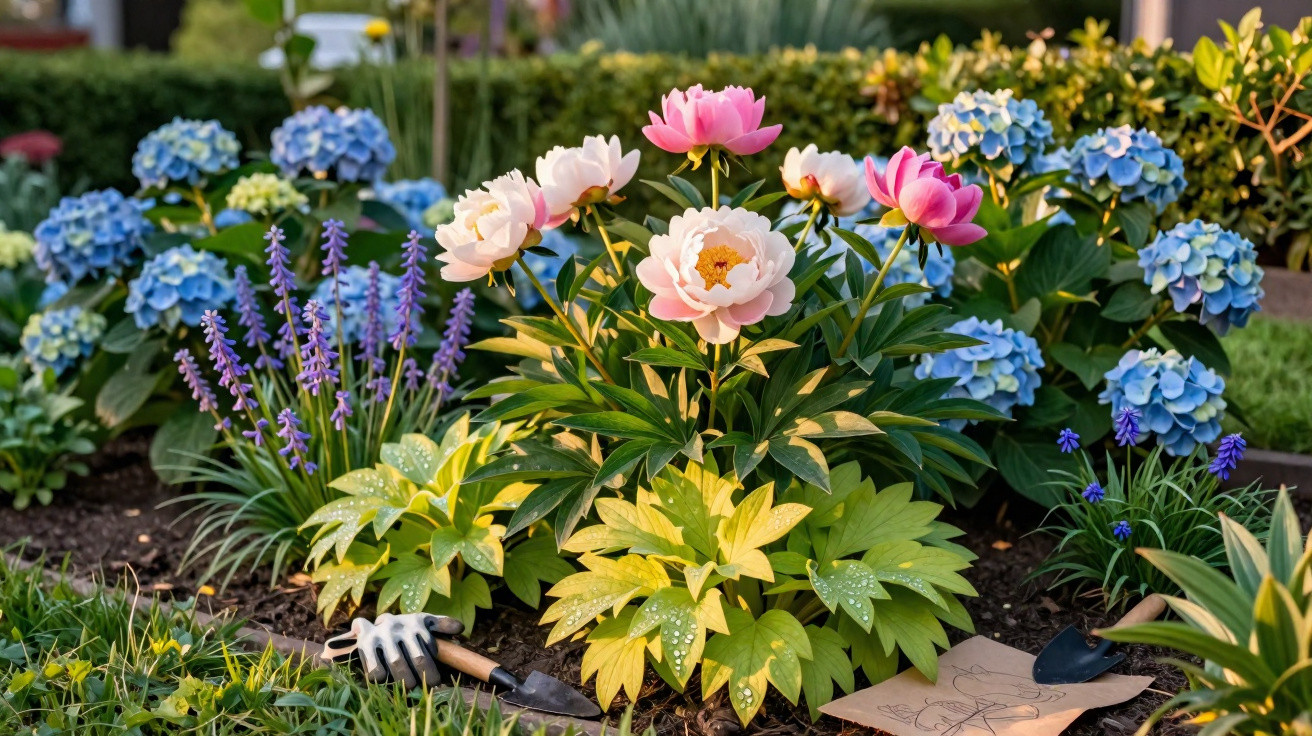
The difference often comes down to the plants growing right beside them.
Peonies are among the favourites of many amateur gardeners: enormous flowers, an intense fragrance and dependable performance for years. Yet many people wonder why their own peony grows well but never looks as impressive in the garden as it does in a glossy picture book. The secret is rarely the variety; it is almost always the planting companions – what is placed beside these perennials and how much room they are truly given.
What peonies need before choosing companion plants
To combine peonies successfully, you first need to understand their basic preferences. Only then will the border remain healthy and work well over the long term.
- Light: Full sun to light partial shade, with at least four to five hours of direct sunlight a day.
- Soil: Deep, nutrient-rich and well-drained; they do not tolerate waterlogging, particularly in winter.
- Root competition: They dislike competition from exceptionally vigorous or shallow-spreading roots.
- Airflow: Leave air and some space around every perennial so foliage can dry quickly after rain.
If the leaves stay damp for too long, the risk of fungal diseases such as grey mould increases, potentially spoiling an entire flowering season. A densely planted perennial border may look lush in its first year, but can easily become a damp problem area later on.
“The airier the surroundings of peonies, the stronger the plants and the more impressive the flowers will be for many years.”
Ground rules for ideal companions in a perennial border
Before selecting companion plants, three straightforward principles can prevent poor choices:
- Check that site conditions match: Neighbouring plants should tolerate sun and soil conditions much like peonies do.
- Consider plant height: Nothing directly in front of or beside the perennials should deprive them of light.
- Keep sufficient spacing: Always leave at least a hand’s width of open space between clumps – preferably more.
This may initially seem rather sparse, but it pays off by the third growing year at the latest, when peonies reach their full spread and can properly develop.
Lady’s mantle, bellflowers and more: making peonies the star
Once the basics are right, the creative stage begins: choosing companion perennials that highlight the colour and form of peonies without crowding them.
Lady’s mantle as a living carpet
Lady’s mantle (Alchemilla) is an especially popular choice. This perennial forms a low carpet of soft, rounded foliage, topped by airy clouds of yellow-green flowers that work beautifully with the delicate pink and white shades of peonies.
- stays low and does not block light from peonies
- enhances pastel shades without becoming overpowering
- makes an excellent addition to cut-flower arrangements
In a border, lady’s mantle acts like a soft plinth on which the large rounded peony blooms seem to sit proudly.
Bellflowers for delicate contrast
Bellflowers (Campanula species) add fine, bell-shaped flowers, often in violet, blue or white. Many varieties stay compact, so they do not obstruct peonies.
They share peonies’ preference for free-draining soil and full sun to partial shade. One point does need attention, however: some bellflowers are more susceptible to pests, including aphids.
“Anyone adding more sensitive perennials to a peony border should pair them with scented ‘bodyguards’ that keep pest insects at bay.”
Hydrangeas as a calm backdrop
Hydrangeas provide structure at the back of the border. Their rounded flowerheads visually complement the weighty blooms of peonies, creating a calm backdrop in white, pink or blue.
For the combination to work:
- plant hydrangeas slightly behind and offset from the peonies
- leave enough room to ensure they do not cast shade over the perennials
- choose a position that reasonably meets the needs of both plants
The shrubs will then offer gentle shade during hot months without reducing peony flowering.
A flowering sequence for colour from spring to late summer
With thoughtful plant selection, a border can be planned to provide colour almost continuously – before peonies flower and after they have finished.
| Stage | Plant | Role in the border |
|---|---|---|
| Early spring | Allium (ornamental onion) | Rounded flowers, vertical accents and the start of the season |
| Spring to early summer | Iris barbata (bearded iris) | Flowers shortly before peonies, with elegant forms |
| Main season | Peonies | The central highlight, with large blooms and fragrance |
| Summer | Hemerocallis (daylily) | Takes over after peonies, extending the period of colour |
This succession makes borders feel less like a brief display and more like a carefully designed programme lasting several months.
Lavender as a protective barrier: fragrance that repels pests
Lavender looks superb alongside peonies and offers a very different benefit: its strong scent deters many unwelcome visitors.
These include:
- mosquitoes
- flies
- fleas and mites
- some leaf-eating animals, such as deer in rural gardens
Like peonies, lavender prefers free-draining soil and a position in full sun. It works best along the front edge of the border, where it forms a kind of scented fence that slows down unwanted insects while clearly defining the border edge.
“Lavender and peonies complement each other perfectly: the same site requirements, bold colours and added protection from pests.”
Ornamental onions (Allium) work in a similar way: many insects dislike their sulphurous scent. Their spherical flowerheads also create striking visual focal points among peonies.
Plants that are poor companions for peonies
Not every attractive perennial automatically makes a good neighbour. Certain types of plants are more likely to put peonies under pressure.
Overbearing grasses and space-hungry plants
Large, vigorous ornamental grasses can look modern, but they are troublesome when planted close to peonies. They:
- take a great deal of light because of their height and density
- compete for water and nutrients with strong root systems
- retain moisture in the border, encouraging fungal diseases
If you do not want to go without grasses, position them well away from peonies, such as along the back edge of the border, and allow plenty of space.
Plants for permanently wet soil
Species that prefer constantly moist or heavy soils are not ideal companions either. They encourage the very conditions peonies dislike: waterlogged patches that take a long time to dry and offer fungi the best possible conditions.
More sensitive bellflowers and other perennials that are quickly affected by pests can still be grown nearby, provided they are well framed by protective scented plants such as lavender and Allium.
Practical tips for planning a harmonious peony border
Anyone redesigning an existing border or creating a new one can follow a simple rule of thumb: place the peony in the front rank of the leading performers, with every other plant in a supporting role around it.
- Assess the site first: Is there enough sun? Does the soil dry out? If not, improve the conditions or choose another position.
- Maintain planting distances: Do not be misled by the first year – peonies become considerably wider.
- Set a colour scheme: Lady’s mantle, white and soft blue shades support pastel colours; strong pink or red tones suit bold contrasts with lavender and darker perennials.
- Use fragrance strategically: Position lavender, Allium and other aromatic plants where pests occur more frequently.
When planting from scratch, patience is essential: peonies often need two to three years to show their full potential. A well-planned setting with suitable neighbours will then ensure that the plants deliver not just plenty of flowers, but truly spectacular borders.
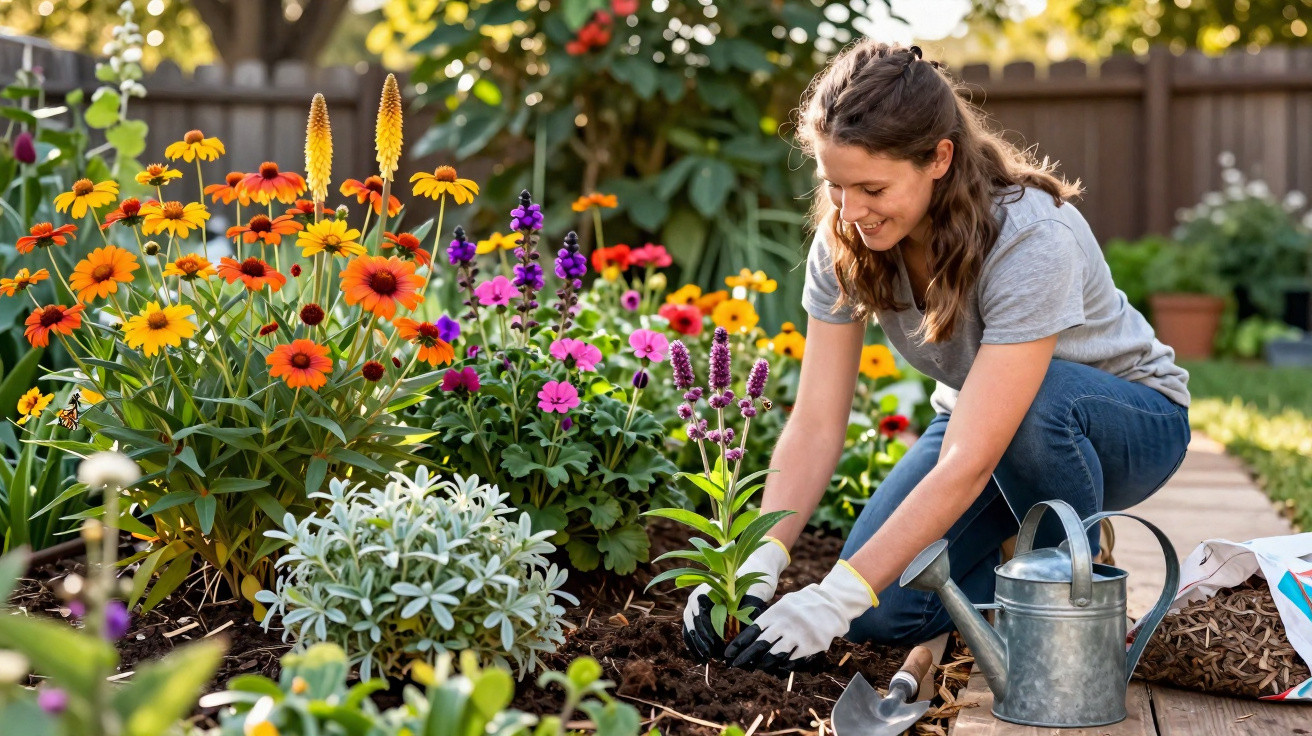
Beginners may find it worthwhile to start with a small trial border: one or two peonies, a strip of lavender in front, lady’s mantle at the sides and several Allium bulbs planted between them. This makes it easy to observe, with little effort, how strongly light, airflow and neighbouring plants can change the effect of these impressive perennials.



Comments
No comments yet. Be the first to comment!
Leave a Comment