
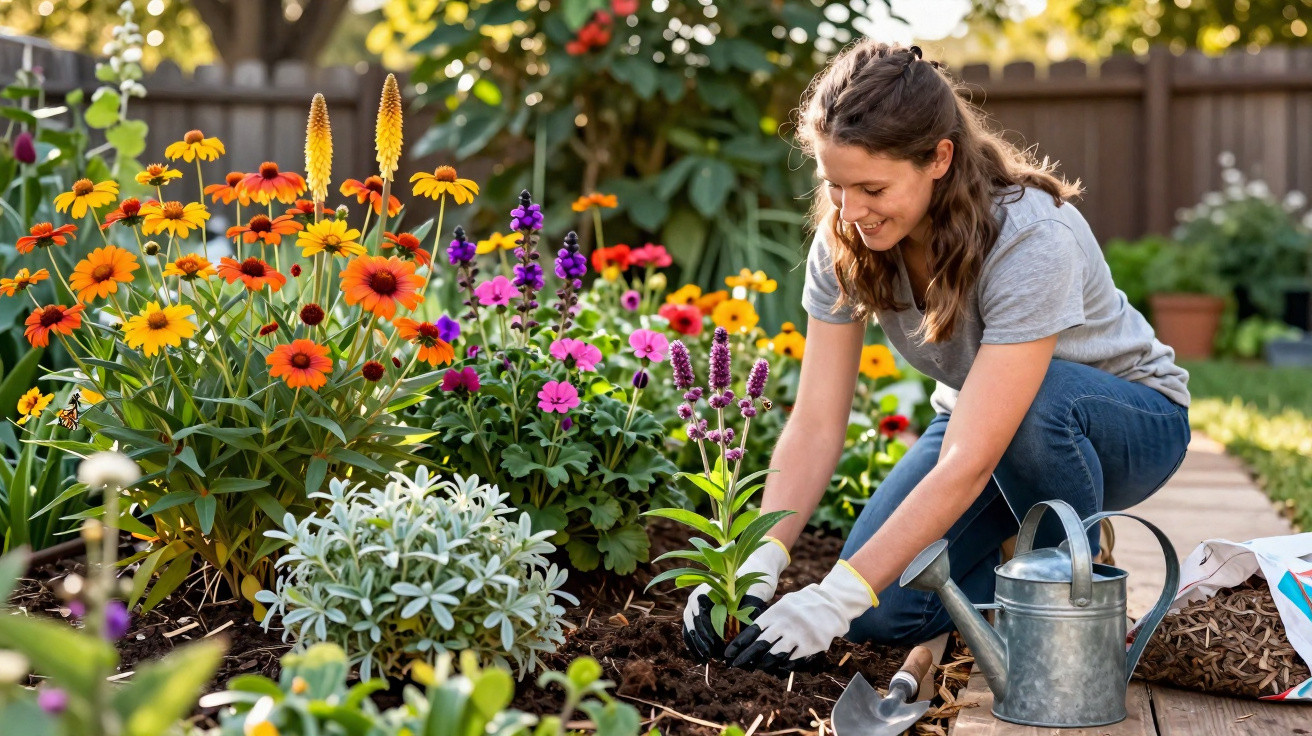
Many keen gardeners know the frustration: the beds have just been created, everything is beautifully planted, yet the garden still looks bare for months. Perennials often need years to spread. Meanwhile, weeds take over the gaps, while enthusiasm for watering and weeding quickly fades. However, there are robust long-flowering perennials that gain real momentum after only one season and form dense clumps. These fast starters are the focus here.
Why fast-growing perennials are so appealing
Unlike annual summer bedding plants, perennials return every year. Choosing species with rapidly developing root systems reduces the need to buy replacements, covers open patches of soil and adds lasting structure to the garden. Many plants in this group are also particularly effective at attracting insects.
“Fast-growing perennials combine three benefits: they fill gaps, provide colour and offer bees and butterflies plenty of food.”
A broad three-year pattern is typical: year one is for settling in, year two for spreading, and year three for taking over the bed. The plants described here speed up this process considerably, particularly when the site and care are reasonably suitable. Understanding their sun and water requirements already puts you halfway there.
Position: full sun, partial shade and what those terms really mean
Many of these vigorous perennials thrive in full sun. In gardening terms, that means around six hours or more of direct sunshine each day. Partial shade means roughly half that amount, such as morning sun followed by light shade from trees or house walls from midday onwards.
- Full sun: at least 6 hours of direct sunlight
- Partial shade: around 3–5 hours of sunshine, with bright but indirect light for the rest of the day
- Shade: only brief periods of sun at most, usually beneath trees or against north-facing walls
Forcing sun-loving plants into shady corners results in long, straggly shoots and few flowers. Conversely, shade lovers can quickly scorch on the south side and remain stunted.
Preparing the soil: the boost begins below ground
Nearly all fast-growing perennials cope better with free-draining, loose soil than with waterlogged, compacted ground. A little preparation before planting is worthwhile.
How to prepare soil for perennials
- Remove weeds thoroughly, especially perennial weeds with roots, such as ground elder or couch grass.
- Loosen the soil using a spade or garden fork to a depth of at least one spade length.
- Work in compost or well-rotted farmyard manure to improve nutrients and soil structure.
- Remove large stones and old roots.
- Mulch after planting, for example with composted bark or shredded prunings.
Plants in well-rooted containers establish themselves more quickly than tiny plugs in very small pots. At the same time, they need regular watering in their first year so that they can root in properly.
Sun-loving perennials with turbo growth
For bright, warm positions, there is a wide selection of perennials that create lush beds after only a short time.
Agastache: fragrant flower spikes for bee lovers
Agastache, commonly known as giant hyssop, produces slender flower spikes in shades of violet, pink or orange. It quickly develops into strong clumps and flowers from high summer into autumn. It tolerates drought surprisingly well, provided the soil does not remain permanently wet. A light trim in spring and a little compost reward gardeners with a genuine insect magnet.
Nepeta: a cat in the flower bed
Nepeta, often sold as catmint, rapidly forms dense, gently arching cushions in blue and purple tones. It starts early in the year and can be cut back after its first flush of flowers. It often then produces a second wave of bloom in late summer. Warm, dry sites suit it especially well.
Coreopsis and Gaillardia: long-flowering plants with a daisy look
Coreopsis and Gaillardia bring summer colour to the bed: yellow, red, orange and every combination in between. Both develop dense stands quickly if the soil is not overly rich. Too much fertiliser produces excessive foliage and fewer flowers. Regularly removing faded stems extends the season considerably.
Gaura and Kniphofia: airy clouds and blazing torches
Gaura lindheimeri has the appearance of a delicate cloud of flowers. Its fine stems, carrying white or pink blooms, dance in the wind and soften formal planting schemes. It requires free-draining soil and loves warm locations.
Kniphofia, often sold as red hot poker, makes a bold statement. Its vivid two-coloured flower heads resemble burning torches. In good soil, it gradually spreads into sturdy clumps that become a focal point in late summer.
Ground cover and gap fillers for the front of the bed
Not every fast-growing perennial wants to grow upwards. Some deliberately spread across the ground, closing bare areas in record time.
Hardy geranium as ground cover
Hardy geranium is ideal as a spreading perennial. Many varieties create broad carpets within a few years, suppressing weeds and flowering generously from late spring into early summer. After flowering, cut them back widely: fresh foliage soon appears and restores a tidy look.
Perennial sage: flower spikes with a lasting effect
Perennial sage stands out with flower spikes in purple, pink or white. It grows quickly into compact clumps and blooms for weeks. A firm cutback after the first flowering peak is worthwhile, often bringing a second, slightly less abundant display. Insects value its nectar, while gardeners appreciate its undemanding nature.
Strong clumps for the middle of the bed
Daylilies: a new flower every day
Daylilies form large clumps of grass-like foliage within a few years. Each individual bloom lasts for just one day, but the large number of buds provides a steady supply over many weeks. They grow reliably even in less-than-perfect soil, as long as the site is not completely shaded. Flowering is most intense in full sun.
Monarda: colour and fragrance for people and wildlife
Monarda, often called bee balm, spreads quickly via short runners and fills bare spaces. Its striking flower heads in red, pink or violet attract bumblebees and butterflies almost irresistibly. It prefers moist soil that does not dry out completely, and responds well to a mulch layer of leaves or grass clippings.
How to curb overly vigorous growth
The most enthusiastic spreaders in particular can eventually become too dominant. A decisive intervention in spring or late autumn helps: lift the perennials and divide them. Return healthy outer sections to the bed, while old central portions go onto the compost heap.
| Plant | Growth habit | Recommended control |
|---|---|---|
| Monarda | Produces runners | Divide regularly and cut back the edges |
| Hardy geranium | Forms broad carpets | Limit its area and give away divided sections |
| Agastache | Loose clumps, self-seeds readily | Remove faded stems and sort through seedlings |
Mulch, water and pruning: small jobs, major results
A mulch layer of bark, wood chips or leaves protects the soil from drying out and maintains more even conditions. This allows perennial roots to grow deeper and become more resilient during hot spells.
During the first few weeks after planting, it is worth keeping a close eye on them: if shoots are drooping, water thoroughly. Later, many of the species mentioned need substantially less irrigation. Once a year, usually in early spring, remove old shoots close to ground level. This encourages fresh young growth and improves sturdiness.
Combining fast starters successfully
A lively flower bed depends on varying heights, colours and flowering periods. Fast-growing perennials provide the framework, with slower species planted between them to take over after a few years and add structure. An ideal mix includes:
- early-flowering plants such as hardy geranium,



Comments
No comments yet. Be the first to comment!
Leave a Comment