
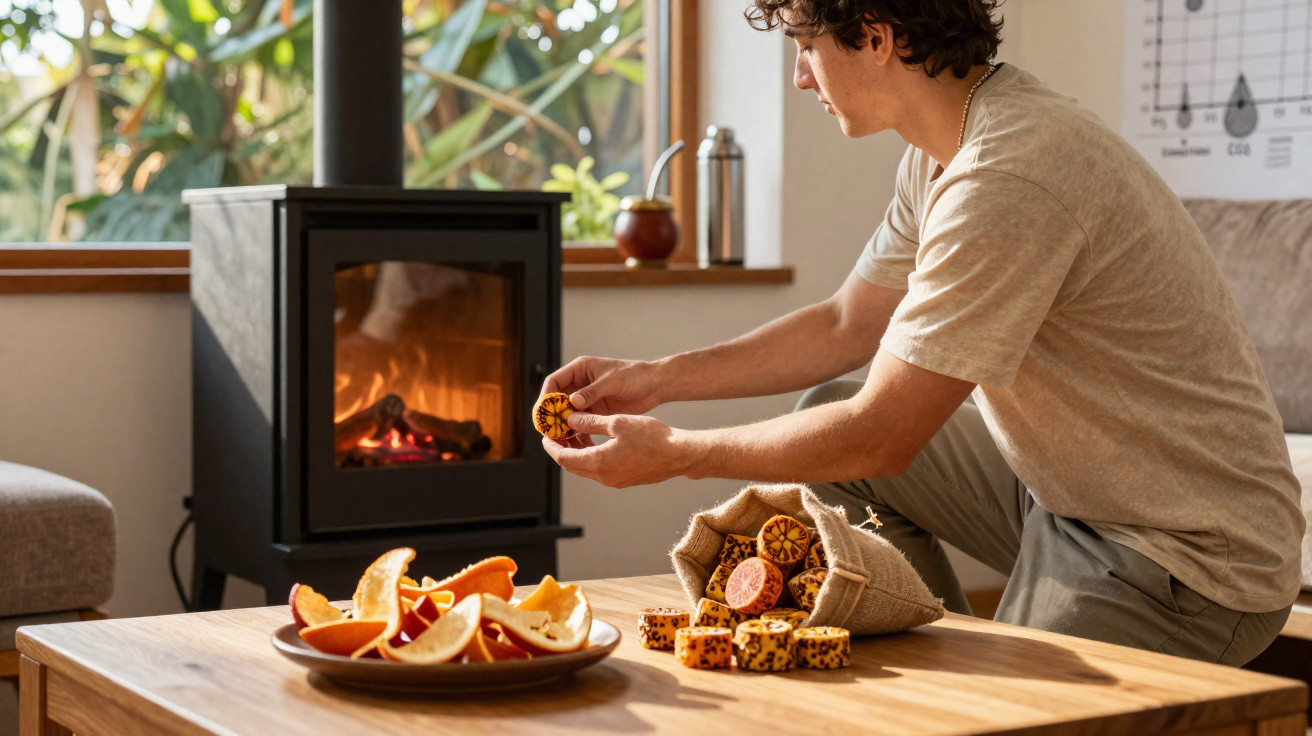
For many households, wood is now seen as the “green” alternative to gas and oil. Yet a closer look quickly shows that logs and pellets also come at a cost – to household budgets, air quality and forests. An Argentine innovator aims to change this by replacing traditional firewood with dried and compressed residues from fruit processing. It may sound unusual, but it could prove to be a genuine model for the future.
Why wood heating is currently so popular
At first glance, the calculation appears compelling: electricity and gas are becoming more expensive, while firewood seems comparatively affordable and is regarded as a renewable resource. Millions of households already use wood-burning stoves, tiled stoves or pellet heating systems because they want to be less dependent on the electricity grid and reduce their energy bills.
Heating with wood offers several perceived benefits:
- Wood comes from renewable sources when forestry is managed sustainably.
- A modern stove does not require a single kilowatt-hour of electricity to generate heat.
- Many families save several hundred euros each year compared with purely electric heating systems.
- The fuel can be stored, providing a sense of having supplies available and being prepared.
There is also an emotional appeal: flickering firelight, visible flames and the familiar scent all create a feeling of comfort, particularly in winter. In reality, however, many users overlook the side effects that burning wood can cause.
The downside of the wood boom
Whenever wood burns, it produces particulate matter, soot and CO₂. Open fireplaces and older stoves in particular release substantial quantities of pollutants, which can remain in the air in towns and valleys. Health authorities have warned for years about particulate matter from wood-burning stoves, as these particles can penetrate deep into the lungs and may contribute to cardiovascular disease.
Wood heating systems are considered climate-friendly, but in reality they make a noticeable contribution to air pollution and the greenhouse effect.
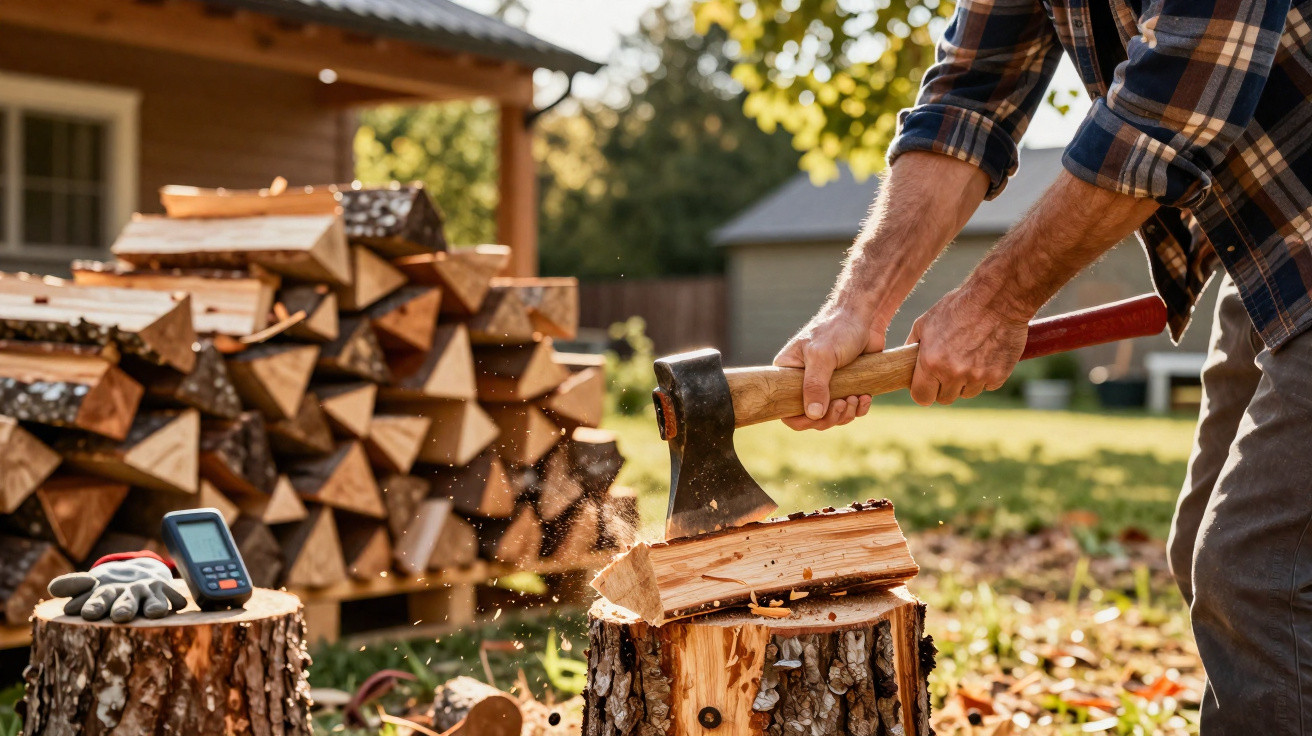
At the same time, pressure on forests is increasing. The more households demand wood and pellets, the greater the volume of timber harvesting becomes. Even where forestry businesses officially operate sustainably, ecosystems can be thrown out of balance if too much deadwood is removed or replanting happens too quickly. Forests are expected to provide fuel, offer habitats and function as CO₂ stores at the same time – and these roles are compatible only to a limited extent.
Wood also follows the rules of supply and demand. Prices for logs and pellets have risen significantly in recent years. Anyone without their own woodland sees the impact directly on their bill. Transport, storage space and drying also bring additional costs and emissions.
A radical idea: heating with fruit waste
An unusual innovation from Argentina is now addressing exactly this gap. Cider producers and other fruit-processing businesses there generate vast amounts of residual material: skins, pips, stalks and pulp. Ordinarily, these materials end up as waste or are used for animal feed. One entrepreneur had the idea of using this large volume of material as an energy source.
The principle is strikingly simple: instead of felling trees, fruit residues are dried, shredded and pressed into briquettes. The resulting “fruit logs” can be used in a stove in much the same way as ordinary firewood or pellets.
What was once regarded as a worthless residual material becomes a usable fuel – without felling a single tree.
How fruit briquettes work
Essentially, the process involves several stages:
- Fruit processors collect skins, pips, pomace and leftover fruit pulp.
- The wet residues are dried using solar energy or waste heat.
- Once dry, the material is shredded and blended into a uniform mixture.
- Hydraulic presses turn it into compact briquettes or elongated “logs”.
- The finished fruit fuels are kept dry and can be transported in the same way as conventional firewood.
According to the developers, both the energy content and burning characteristics come very close to those of conventional wood. Tests show that the briquettes ignite quickly, burn evenly and are suitable for enclosed wood-burning stoves as well as barbecues and fire pits.
Less particulate matter, less CO₂ and less waste
The greatest benefit lies in the emissions profile. Burning fruit briquettes generates significantly fewer particulate emissions than burning wood. This lowers the burden on the respiratory system and cuts air pollution in densely populated areas. Because no additional trees need to be felled, forests can largely remain undisturbed in their role as CO₂ stores.
At the same time, the technology tackles a second issue: agricultural by-products are put to useful use. Waste volumes fall, while fruit businesses gain an additional source of income. What was previously a cost factor – disposing of waste – becomes a product that can be sold.
For climate protection, this creates a double advantage:
- Less energy is required to produce conventional fuels.
- Fewer organic residues rot unused and release methane or CO₂.
- Forests retain their function as natural carbon sinks.
Could fruit briquettes work in Germany too?
The obvious question is whether such a system could also be established in Central Europe. There would be no shortage of raw material. Cider mills, apple juice producers, fruit growers and wine businesses all generate large quantities of pomace, pips and skins. Some of this is already processed into animal feed, fertiliser or biogas, but far from all of it.
A regional model would be particularly interesting. In fruit-growing areas such as Altes Land, around Lake Constance or in parts of Austria, small and medium-sized facilities could turn fruit residues into fuel. The briquettes could then be sold locally, for example to households with wood-burning stoves or to local authority buildings with suitable boilers.
Regional cycles linking waste, energy and income – this is precisely where the appeal of fruit fuels could lie.
From a technical standpoint, stove and boiler manufacturers would need to determine what modifications are required. Combustion chambers, feed mechanisms and control systems are currently designed for wood and pellets. Approved standards, certifications and support schemes would also matter if a new fuel were to make the move into the mass market.
Fruit briquettes: opportunities and risks at a glance
| Aspect | Opportunity | Risk / obstacle |
|---|---|---|
| Environment | Less particulate matter, protection for forests | Emissions must be measured and regulated reliably |
| Economy | New income sources for agriculture and cider mills | Investment costs for presses, drying and logistics |
| Technology | Can be used in existing stoves with minor modifications | Approvals, standards and safety testing required |
| Society | Growing acceptance of recycling and circular-economy ideas | Possible scepticism towards “waste” as a fuel |
What consumers should know about alternative fuels
Anyone hoping to run their stove on alternative briquettes in the future should understand a few basic terms. The most important is calorific value: it indicates how much energy is contained in one kilogram of fuel. Above all, moisture content is decisive. The drier the material, the more efficiently it burns and the cleaner the combustion process is.
Drying therefore plays a central part in fruit briquettes. If it is carried out mainly using solar energy or waste heat, the CO₂ balance remains attractive. If large quantities of fossil energy are used instead, the environmental advantage diminishes. Certifications could provide transparency here, just as they do for sustainable wood or green electricity.
Storage is another practical consideration. Like wood, these briquettes are sensitive to moisture. They need to be stored in a dry, well-ventilated place, otherwise mould and a loss of quality may follow. This remains an issue for households with limited space, even if the briquettes are more compact than conventional logs.
How heating could change in the future
The direction of travel is clearly towards a mix rather than reliance on a single source. Many experts expect households and towns to combine several energy sources in future: heat pumps, solar thermal systems, district heating, biogas – and innovative solid fuels made from residual materials. Wood could gradually shift from being a mass-market fuel to a premium product used selectively and sparingly.
Fruit briquettes are only one example. Similar concepts exist for rice husks, olive stones and nut shells. They all share the idea of making use of available waste instead of cutting down or extracting new raw materials. For consumers, this means that anyone investing in a new stove today should consider flexibility and choose equipment that can handle different fuels.
Whether, or when, fruit briquettes will be available in DIY shops across German-speaking countries remains uncertain. But the Argentine idea demonstrates how much scope for change exists in what seems to be the highly traditional world of wood heating – and how radically our view of “waste” can shift when it suddenly helps to warm living rooms.




Comments
No comments yet. Be the first to comment!
Leave a Comment