
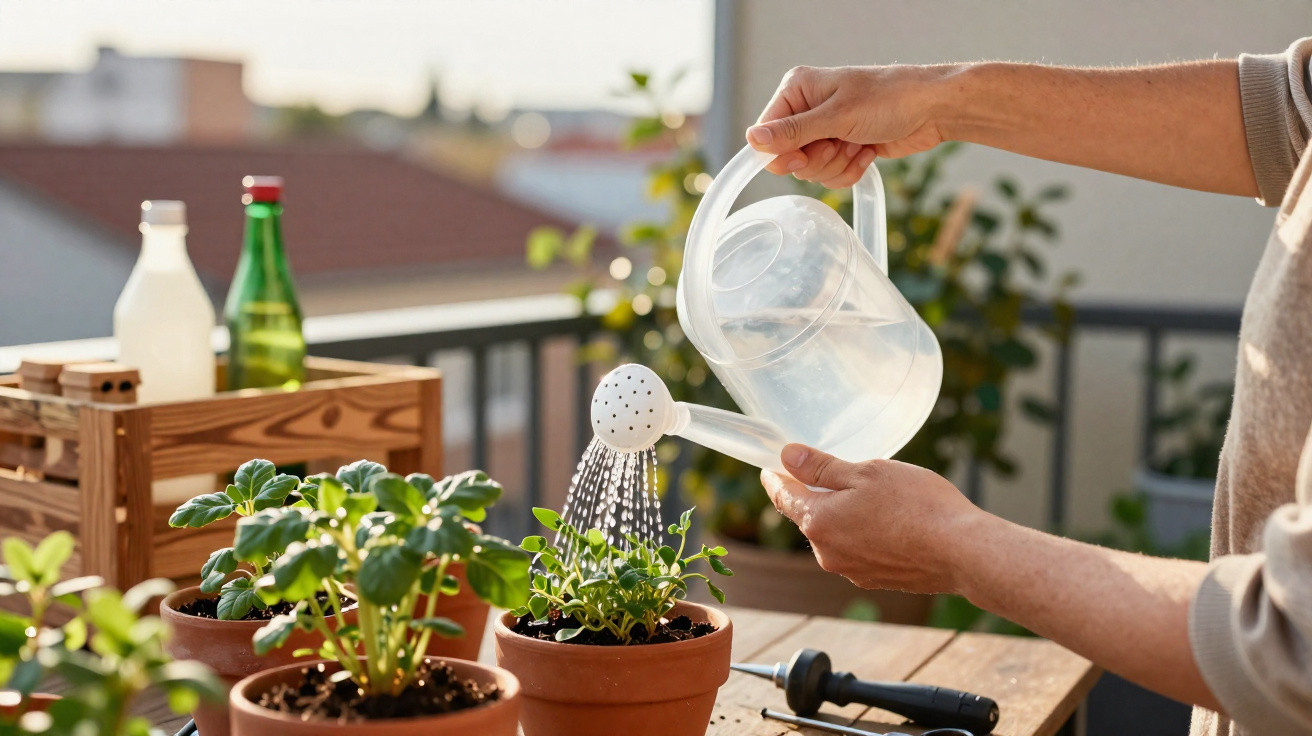
A sturdy container can be given a new role in the garden, becoming a watering can made from recycled packaging for small plants and pots. Reusing one is straightforward, although the type of container, how well it is cleaned and the size of the holes all matter if leaks or an excessively powerful stream are to be avoided.
Why can packaging work as a watering can?
Durable plastic containers can hold water while remaining light enough to make watering small pots easier. Their shape also makes it possible to modify the opening and regulate the water flow, resulting in a practical tool for everyday jobs.
As well as preventing the container from being discarded straight away, this reuse can suit anyone with only a few plants who does not need a large watering can. However, the container must be intact, with no cracks or distortions that could cause leakage while it is being used.
Which detail affects the water flow?
The size and number of holes control how the water is spread. Holes that are too large may create a concentrated flow, whereas several smaller holes generally distribute water more gently across the growing medium.
Where the holes are positioned matters too. They should be made so that water is released in a controlled way, without directly hitting delicate leaves or washing the growing medium from the surface. It is best to test the container with water before using it on plants.
How do you make a simple watering can from packaging?
Select a robust plastic container, wash it thoroughly and remove every trace of its original contents. Next, make small holes in the cap with a suitable tool, ensuring that no sharp edges remain that could cause cuts.
Fill the container with water and test it over a sink or outdoors. If the stream is too strong, make the holes smaller or use a different cap. The watering can made from recycled packaging should provide an easily controlled flow, particularly for small pots.
Who should adapt this project, and in which situations?
The container size should match the number of plants to be watered. Large containers can become heavy when full, making them unsuitable for children or for people who find them difficult to hold. For small pots, a smaller container is usually easier to manage.
It is also important to adjust the flow to the plant’s needs. Newly planted seedlings and species in very light growing medium may be affected by strong streams, while larger plants may cope with a greater volume of water. Before reusing the container, check that it is clean, undamaged and suitable for this purpose.
Comments
No comments yet. Be the first to comment!
Leave a Comment