
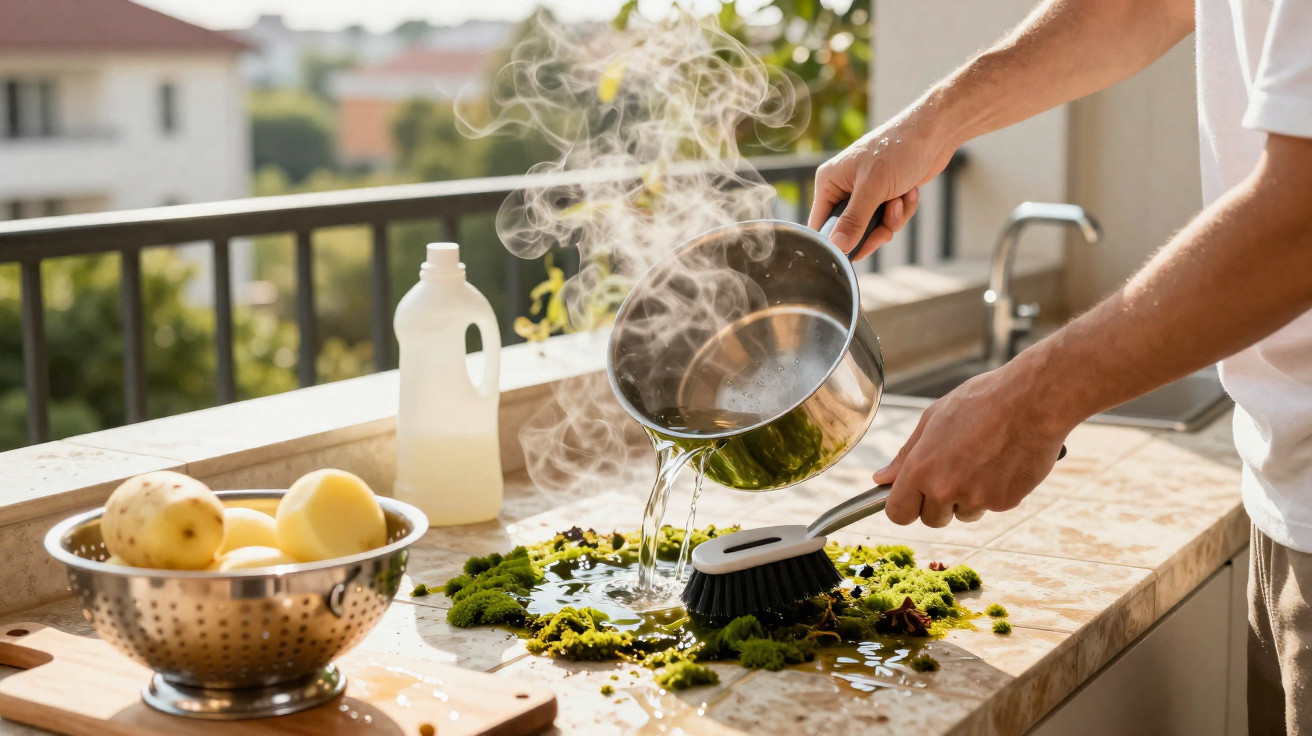
A free kitchen by-product can deal with it - with no scrubbing required.
When spring cleaning begins, many homeowners automatically reach for harsh chemicals if their patio or garden paths are covered in moss and algae. Yet this can harm both the environment and the surfaces themselves. An unremarkable kitchen waste product can do the job far more gently and surprisingly effectively - at no cost at all.
Why moss on the patio becomes a problem so quickly
After a wet winter, a quick look outside is often enough: timber decking, stone patios and tiles develop a greenish coating, along with dark marks and slippery patches. Besides looking neglected, this can become genuinely hazardous.
- Moisture: Porous materials retain water, especially in joints and shallow dips.
- Shade: A lack of sunlight means the surface barely gets a chance to dry.
- A layer of dirt: Soil, dust, pollen and leaves provide nutrients for moss, algae and lichens.
- Slip risk: This biological film can make the patio extremely slippery when wet.
Timber, concrete, natural stone and porcelain paving can all be affected. The more open the surface structure, the more firmly the growth takes hold.
Damp, shaded and slightly dirty: that is all it takes for a patio to turn into a green slip hazard.
Why chlorine cleaner is a poor choice for a patio
Many people instinctively use highly chlorinated cleaners, believing this will make the area “thoroughly clean”. Specialists advise against this for several reasons.
Risks to the environment, materials and health
- Pollution of waterways: Cleaning water usually runs straight into drains or garden soil, allowing it to enter the environment.
- Damage to surfaces: Harsh products can attack jointing material, concrete, timber fibres and natural stone, leaving surfaces faded or brittle.
- Unpleasant fumes: The familiar smell is not merely irritating; at high concentrations, it can aggravate the eyes and airways.
- All or nothing: Biological micro-organisms in the soil around the patio are destroyed as well.
Experts in several European countries therefore recommend avoiding strongly chlorinated products for outdoor cleaning. Many packs now carry warnings, but these are often overlooked.
The zero-cost kitchen solution: potato water
Rather than using hazardous chemicals, you can use a household remedy produced in almost every kitchen: the cooking water from potatoes. This seemingly insignificant leftover has a twofold effect on the patio.
What makes potato cooking water so useful
As potatoes cook, some of their starch is released into the water. This starch consists primarily of amylose and amylopectin - two components that can be useful on a patio.
- Thermal shock: Boiling water hits the cold, dry surface, and the plant cells of moss and lichens burst because of the sudden change in temperature.
- Starch film: As it cools and dries, a thin layer forms over the remaining plant structures, blocking their tiny openings for gas exchange.
- Gentle drying-out: The growth can no longer properly “breathe” and gradually dries out.
Waste becomes an active treatment: potato water provides heat and starch in one - precisely the combination that moss on the patio cannot tolerate.
How to use this household remedy correctly
To get the full benefit of potato water, it helps to work methodically. The process is straightforward, although it needs a little planning.
Step 1: Remove loose dirt
Before using any water, clear the patio and get rid of loose debris:
- Move garden furniture, plant pots and decorations out of the way.
- Brush away leaves, soil and dust with a stiff broom or brush.
- Expose particularly algae-covered or mossy areas and scrape out the joints.
This preparation ensures that the potato water reaches the growth directly instead of first having to penetrate a thick layer of dirt.
Step 2: Prepare the potato water
Cook a large batch of potatoes as usual in unsalted water. Salt could place unnecessary strain on plants and soil, making it counterproductive here. Once the potatoes are cooked, carefully pour the water into a heat-resistant bucket or watering can.
Important: the water should remain as hot as possible, ideally close to boiling point. This temperature creates the intended shock effect on the growth.
Step 3: Apply it hot to a dry patio
The patio needs to be dry before treatment. Moisture would dilute the starch film and reduce its effect.
- Pour the boiling potato water slowly and evenly across the affected areas.
- Treat heavily affected sections again in a targeted way.
- Keep pets and children away from the area during application to prevent scalding.
Afterwards, leave the surface undisturbed. Do not rinse it off or scrub straight away; allow it to work.
Step 4: Wait for it to work, then remove the growth
Within 24 to 48 hours, the moss will change from green to brown or black. This is a positive sign: the plant structures have died and will come away much more easily.
- Sweep off the dried growth with a stiff brush or outdoor broom.
- Rinse away loose remnants with water.
- Clean out the joints further if needed.
For stubborn areas, it is worth applying potato water a second time a few days later.
Gentle alternative cleaners for the patio
If you are not cooking potatoes at the moment, other mild household aids can be used. They do not work in exactly the same way, but can support the cleaning process effectively.
- Bicarbonate of soda or baking powder: Applied as a paste, it loosens organic residue and is especially suitable for isolated marks.
- Household soap or black soap cleaner: These help lift grease and dirt, and are a gentle choice particularly for timber.
- Household vinegar, heavily diluted: Its acidity can help with algae and light limescale marks, but it should not be used on calcareous natural stones such as marble.
Anyone who relies on mild household remedies protects not only their patio, but also plants, soil life and groundwater.
How to delay new moss growth considerably
Once the patio is clean, the aim is to keep it that way for as long as possible. A few regular habits can make a substantial difference.
Regular care rather than one major effort
- Briefly sweep away leaves, blossom and soil every week.
- Position planters so water can drain away and does not collect.
- Keep channels and drains clear so rainwater can run off quickly.
- Brighten permanently damp, shady corners where possible, for example by pruning back shrubs.
For highly absorbent mineral surfaces, a suitable clear water-repellent treatment may be worthwhile. It reduces water absorption without leaving a visible plastic-like finish. The patio then stays dry for longer, making it much harder for moss to establish itself.
What moss, algae and lichens actually are
Moss, algae and lichens are often grouped together in everyday conversation, even though they are different organisms:
- Mosses: Small, cushion-like plants that favour joints and rough surfaces.
- Algae: Often visible as a thin green film, particularly in persistently damp areas.
- Lichens: Partnerships between a fungus and an alga that attach firmly to stone surfaces.
They rarely cause immediate damage to the building structure, but they can turn usable areas into potential trip hazards. Older people and children in particular can easily slip when the surface is wet.
When a pressure washer is better - and its limitations
Many people use a pressure washer because the result is visible immediately. However, this approach has drawbacks:
- Excessive pressure can wash out jointing material or roughen timber fibres.
- Porous stone gradually loses its surface through repeated “sandblasting”.
- Pale slabs can develop uneven light and dark areas if they are not cleaned consistently across the whole surface.
Used alongside potato water, moderate water pressure can be useful: apply the natural treatment first, then work on specific areas with adjusted pressure - always keeping sufficient distance from the surface.
Anyone who wants to use their patio over the long term benefits from a change of approach: rather than maximum force when cleaning, use targeted strategies that are kind to the material. A leftover from the cooking pot of all things shows just how simple this can be - without expensive specialist products or harsh chemicals.
Comments
No comments yet. Be the first to comment!
Leave a Comment