
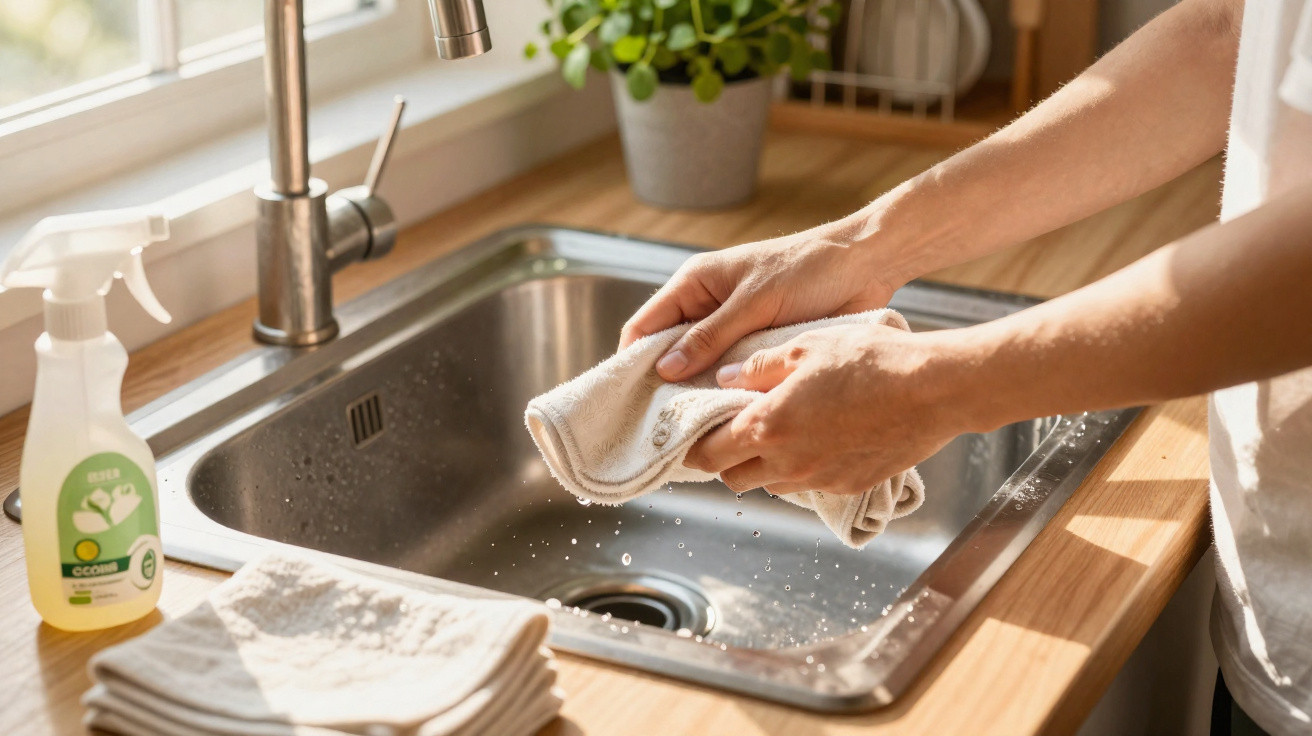
At the end of the day, many people make a habit of tidying the kitchen, putting the dishes away and getting everything ready for the following morning. Among the most usual jobs, the sink often receives particular attention, whether that means washing the basin or disposing of waste properly. Yet one seemingly minor step is frequently overlooked, and it can affect both the appearance and longevity of this work area: drying the sink basin after cleaning.
Why does drying the sink basin every day make a difference?
Drying the basin at the end of the day helps prevent water marks, residue build-up and whitish deposits. If the surface is left wet, the water evaporates slowly, leaving minerals such as calcium and magnesium behind, which adhere to stainless steel and other materials.
Over time, these deposits create stains that are difficult to remove and may even encourage corrosion spots, particularly on stainless-steel sinks. Frequent splashes of washing-up liquid and grease can also form a dull film that reduces the basin’s natural shine.
How does drying the sink basin help prevent stains?
Drying the basin involves more than removing visible water: it also means ensuring that droplets do not remain in corners, around the drain or near the tap. This everyday measure limits the need for intensive cleaning and stops marks from becoming permanent, including in heavily used kitchens.
To make this care straightforward, it is worth establishing a quick routine after using the sink, combining rinsing, residue removal and drying. In this way, stain prevention becomes an ongoing practice without relying on harsh products or excessive effort.
After rinsing the basin thoroughly, a few simple actions help deliver a better, longer-lasting result:
- Use a dry microfibre cloth or soft polishing cloth to remove excess water.
- Pay close attention to the edges, inner corners and drain area, where water tends to collect.
- Avoid leaving damp sponges, steel wool or metal utensils in contact with the surface.
- Clean more carefully after preparing particularly greasy food or meals that leave a lot of residue.
Which sink materials require greater care when drying?
For stainless-steel basins, drying is vital to retain an even, smooth appearance, as standing water encourages stains and even oxidation spots near the drain. On granite sinks or comparable stone surfaces, marks may be less obvious, but moisture can emphasise differences in colour and promote mould in the grout.
With ceramic basins or synthetic materials, the main concerns are scratches, ingrained dirt and dried splashes that take more effort to remove. For every type of sink, combining gentle cleaning, thorough rinsing and daily drying protects its appearance while also helping to keep the kitchen more hygienic.
How can drying the sink basin become a practical daily habit?
Making basin drying part of the evening routine is easier when it is considered the final kitchen-organising task. Keeping a cloth solely for the sink within easy reach speeds up the process and makes the job less likely to be forgotten during daily routines.
In time, this measure becomes automatic and naturally joins the cleaning sequence, alongside washing the dishes and tidying the worktop. The result is a sink with fewer marks, more shine and a visually more pleasant space, ready to use the following morning.


Comments
No comments yet. Be the first to comment!
Leave a Comment