
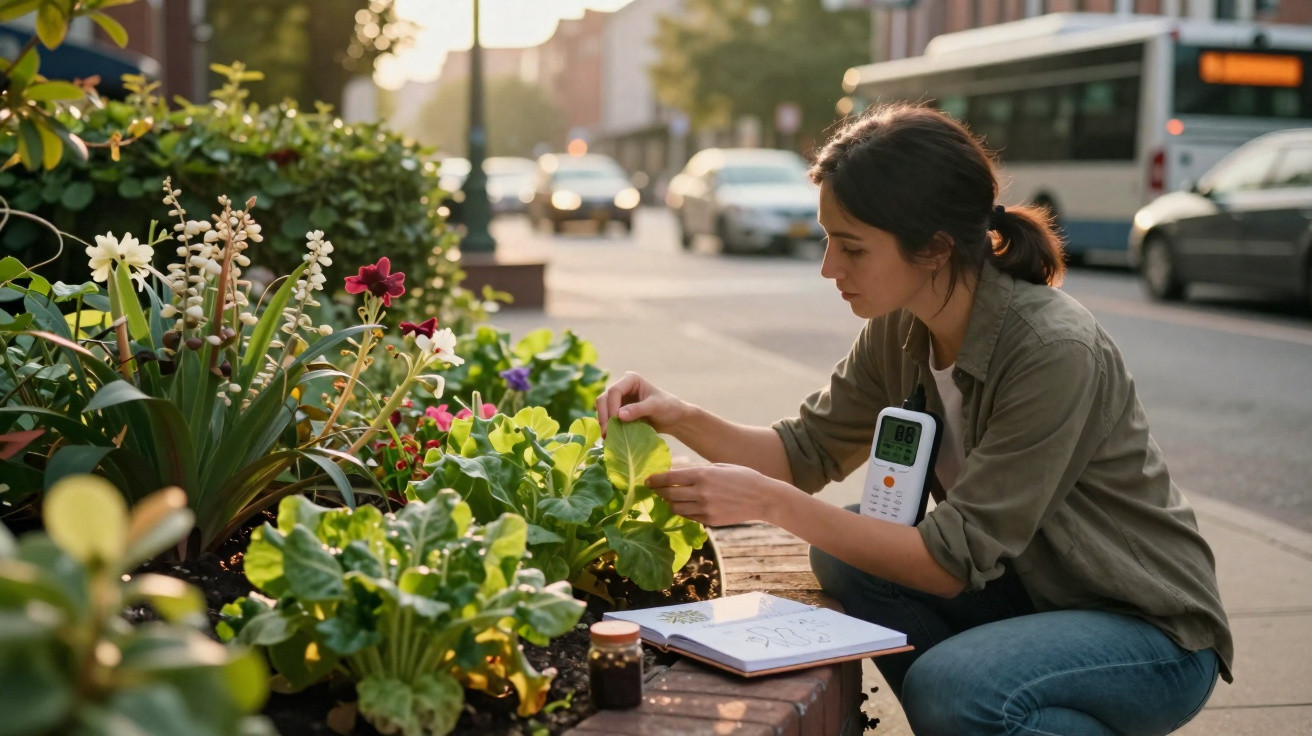
Air pollution is one of the world’s most lethal environmental hazards. Approximately 99% of people globally live with air that does not meet safe standards.
Latest estimates associate polluted air with about one in eight deaths worldwide, putting its impact alongside established health risks such as smoking and an unhealthy diet.
Gardens may seem like an obvious weapon in this battle. They are green, full of foliage and planted with species widely believed to remove pollutants from the atmosphere.
While that assumption appears logical, a major new review suggests that there is almost no research to support it.
Researchers led by the University of East London (UEL) looked for robust evidence that domestic gardens purify the air around homes, but found remarkably little.
The finding is not that gardens do not help; rather, it is that the question has scarcely been investigated properly.
Gardens occupy more space than expected
Domestic gardens are not an insignificant part of urban land. The United Kingdom alone has an estimated 25.8 million gardens covering about 959,800 hectares.
Their proportion of urban land differs greatly by location. In London, gardens account for around 41% of the city’s overall area, compared with roughly a fifth in cities including Leeds.
Their extent makes this lack of knowledge particularly important. Every day, millions of people use these spaces to unwind, grow vegetables and step out from their homes.
Given so much vegetation, there ought already to be substantial evidence about its effects on nearby air quality. Instead, the available research is extremely limited.
No direct evidence on domestic gardens and air pollution
The review involved an extensive search. The researchers examined more than 34,000 studies and identified only 43 that considered gardens alongside air pollution.
Despite decades of interest in urban greenery, none of those 43 studies directly tested whether a domestic garden reduces pollution or cleans the air breathed by people at home. The total was zero.
“Most of us think of gardens as healthy green spaces, and they absolutely provide many important benefits. But when it comes to air quality, we simply don’t yet know enough,” said Dr. Karina Corada-Pérez.
“Plants can capture pollutants, but a garden is much more than a collection of individual plants. Its layout, boundaries, proximity to roads and buildings, and the way air moves through the space may all influence whether vegetation helps reduce pollution or allows it to accumulate.”
Why gardens are unlike parks
The review makes an important distinction between domestic gardens and larger green settings. Most evidence that trees, hedges and green walls can capture air pollution comes from parks, street canyons and other sizeable green spaces, not private gardens.
In these environments, tree cover has lowered concentrations of coarse particles by between 7 and 24 percent.
Home gardens, however, operate differently. Buildings, fences, sheds, parked vehicles and varied planting can all alter airflow, producing conditions not found in more open green areas.
In some cases, dense vegetation could even hinder air quality. Although thick planting can collect particles on leaves, it may also hold stagnant air in the area behind it.
Some findings from the wider research remain encouraging. Certain studies found that roadside hedges and green walls cut nearby particle pollution by more than 70 percent.
However, outcomes differed considerably according to factors including vegetation height and spacing, along with weather conditions.
Growing food close to traffic
The review also considers people who cultivate food at home.
Fruit, vegetables and herbs grown near heavily used roads can absorb pollutants released by passing traffic, potentially transferring them to food.
Metals are the principal concern. Previous research identified lead accumulating in crops grown within around 10 metres of heavy traffic, sometimes at levels exceeding European safety limits.
The form of the leaves appears to affect exposure. Parsley and mint generally collected more contamination than root vegetables and legumes, which was linked to their broad, uncovered leaves.
This does not mean that vegetable beds should be removed. The researchers emphasise that growing food at home remains worthwhile, while calling for more precise advice on suitable planting locations and methods.
Plant selection is not straightforward
Choosing the “right” species is much less simple than it may appear. Leaves with rough, hairy or waxy surfaces are often effective at capturing particles.
Thick conifers may be particularly good at holding fine particles because of their needle-like foliage and evergreen growth. Nevertheless, the same plants can bring less obvious drawbacks.
Certain species emit natural compounds which react in sunlight and contribute to secondary pollution in warmer periods. Others produce highly allergenic pollen that can cause problems for people with hay fever.
Routine garden maintenance also has an impact. Cutting grass, pruning and using petrol-powered equipment can all generate emissions or trigger the release of plant compounds.
Building evidence from real domestic gardens
Instead of offering set planting recommendations, the paper calls for evidence gathered from actual homes.
It argues that guidance based on parks cannot simply be assumed to apply within back-garden boundaries, where airflow follows its own complex patterns.
“Because millions of people spend time in their gardens, grow food in them and open their homes onto them, we urgently need research in real domestic gardens,” Dr. Corada-Pérez said.
“Only then can we give homeowners, planners and policymakers reliable advice about which planting choices are most likely to support cleaner air.”
“Domestic gardens already support biodiversity, help cool our cities, reduce flood risk, provide space for growing food and improve our wellbeing.
“Understanding how air quality fits alongside those benefits could help us make better use of one of the most widespread – but least studied – forms of green infrastructure in our cities.”



Comments
No comments yet. Be the first to comment!
Leave a Comment