
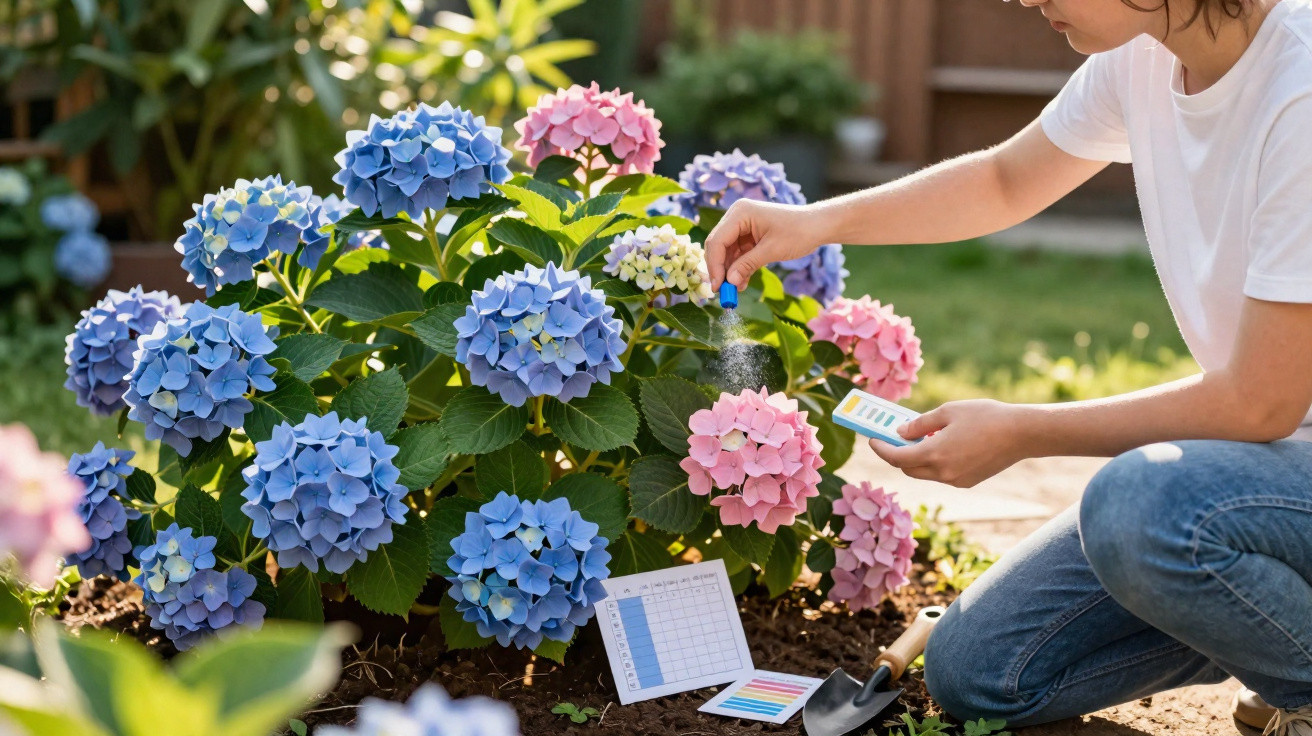
Hydrangeas can change colour when the soil alters the amount of aluminium available to their roots, particularly in Hydrangea macrophylla varieties. In acidic soil, blooms usually turn blue, while more alkaline conditions produce pink shades. The gardener’s method is not to dye the plant, but to adjust pH patiently through appropriate watering and carefully measured products.
Why do hydrangeas change colour?
Hydrangeas with blue or pink flowers act rather like living soil indicators. At a lower pH, aluminium becomes more readily available; the plant takes up this element and its petals may develop blue tones.
As the soil becomes less acidic, aluminium is harder for the roots to access. Under these conditions, the same plant may produce pink, lilac or purple flowers, depending on the variety, the age of the blooms and the conditions in the bed.
How can you make hydrangea flowers bluer?
To encourage blue flowers, the soil must be acidic and contain available aluminium. Gardeners generally use aluminium sulphate or acidifying products made specifically for hydrangeas, always diluted and applied to moist soil rather than to leaves or blooms.
A cautious approach is to make changes gradually:
- Test the soil pH before using any product.
- Aim for an acidic range of around pH 5.0 to 5.5.
- Apply aluminium sulphate at the label dosage, avoiding a concentrated application close to the stem.
- Use an organic mulch of leaves, pine bark or well-rotted compost to keep soil conditions more stable.
- Avoid very hard water, as it can gradually raise the pH.
How do you make a hydrangea turn pink?
To shift the colour towards pink, the aim is to limit aluminium uptake. This is commonly done by raising soil pH with garden lime, applied in small quantities and lightly worked into the surface around the plant.
The change will not occur within a week. The hydrangea needs to go through further growth and flowering cycles before showing its new response. Control is easier in pots because the smaller volume of growing medium means watering has less influence on the entire bed.
Which care measures prevent damage to the plant?
The most frequent mistake is trying to alter the colour too quickly. Excess aluminium sulphate can harm the roots, while too much lime can lock up important nutrients and cause yellow leaves. Hydrangeas prefer fertile soil that is moist but not waterlogged, and rich in organic matter.
Keep the plant healthy before attempting to adjust its colour:
- Water consistently, particularly on hot days.
- Do not apply soil amendments to dry soil.
- Do not use aluminium sulphate and lime during the same treatment stage.
- Make gradual adjustments while watching the leaves, new shoots and buds.
- Remember that white hydrangeas do not usually change to blue or pink in response to pH.
When does the colour change begin to show?
The difference normally appears in the following flowering seasons, rather than in blooms that are already open. Older flowers may alter slightly in shade as they mature, but the true result comes from buds that form after the soil has been adjusted.
The best outcome occurs when pH, aluminium, watering and organic matter work together. In acidic soil, hydrangeas tend towards blue; in more alkaline soil, they move towards pink; and between these conditions, they can display lilac or purple hues that reveal the chemical transition taking place around the roots.



Comments
No comments yet. Be the first to comment!
Leave a Comment