
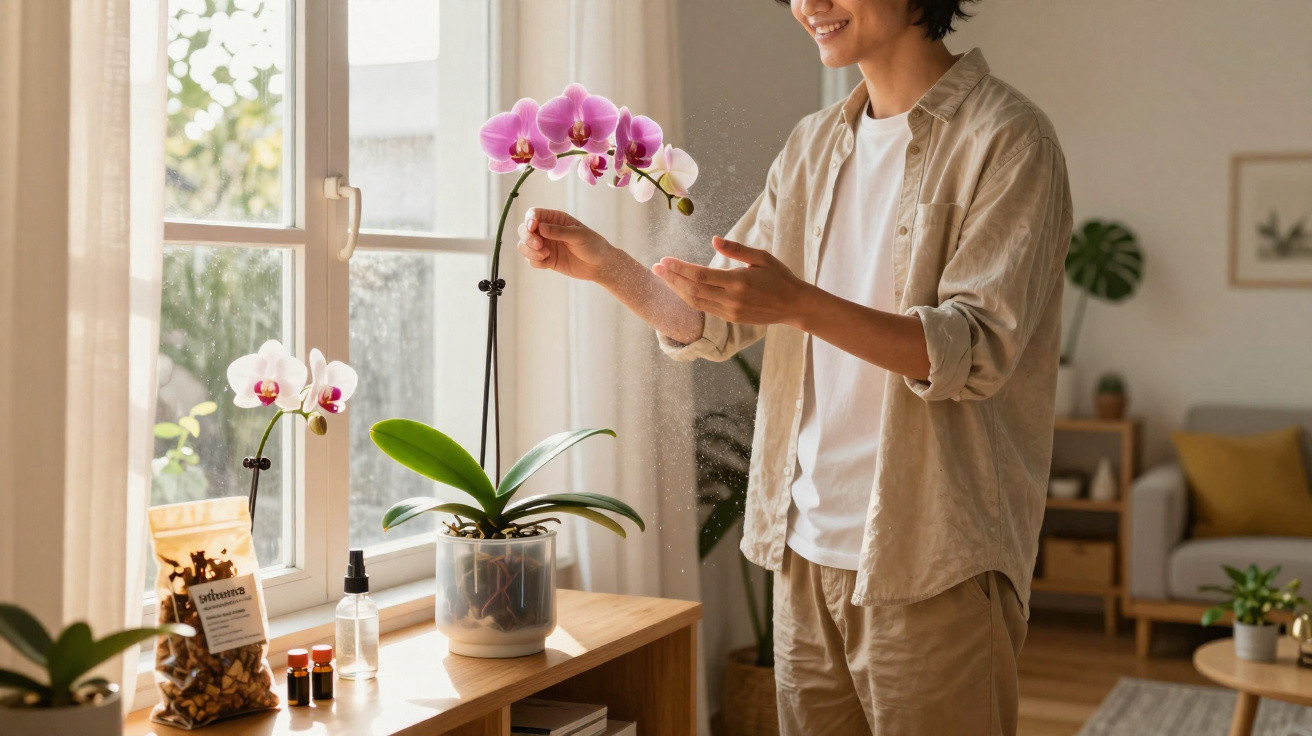
Growing an orchid in a pot indoors often raises questions for beginners, yet this plant responds extremely well to simple, consistent care. A few adjustments to the routine can keep it healthy, with firm leaves and active roots, even in flats and smaller homes. Monitor the light, watering, ventilation and signs of stress to refine its care over time.
How do you choose the best orchid species to grow in a pot?
For successful results, begin by choosing species that are better suited to indoor conditions, as they cope more easily with changes in light and temperature. This lowers the chance of losing plants during the first few months and makes learning easier for new growers.
Several species are well known for adapting to interiors and are particularly helpful for beginners:
- Phalaenopsis (moth orchid): enjoys filtered light and adapts well to bright living rooms and bedrooms;
- Cattleya: requires brighter conditions and can be placed near well-lit windows;
- Dendrobium: performs well in glazed balconies or very bright spaces.
How should you position the pot and manage light and ventilation?
Where the pot is placed is crucial: the plant needs plenty of bright light, but should not receive strong, direct sunshine for many hours. Bright windows with a sheer curtain generally work well, helping to prevent leaf scorch and root dehydration.
Gentle air circulation is equally important, provided there are no direct cold draughts. Bright rooms and enclosed balconies can be suitable when the pot is kept away from air conditioning and intense heat sources, creating a more stable microclimate around the orchid.
How do you water, feed and select substrate for an orchid at home?
Watering should leave the substrate slightly moist while allowing air to circulate freely around the roots, without making it waterlogged. In many urban homes, watering may be needed one to three times weekly, although it is best to check the substrate, the pot’s weight and the appearance of the roots before watering again.
Orchids favour airy substrates, such as pine bark, horticultural charcoal and washed coconut fibre, in pots with good drainage. Orchid-specific liquid or soluble fertilisers can be applied at a moderate rate, alternating feeds with plain watering. Suitable organic fertilisers may also be used as a supplement, as long as they do not touch the delicate roots directly.
How can you spot problems, repot an orchid and encourage flowering?
Leaf spots, dark roots, an unpleasant smell from the substrate and no flowers for years are signs that something needs attention. Altering the watering routine, improving ventilation and, where needed, replacing the substrate after removing damaged roots with sterilised scissors can help the plant recover and prevent losses.
Over time, the substrate breaks down and the pot becomes too small, so repotting is needed to refresh the root environment. When an orchid receives suitable light, balanced fertiliser and slight temperature differences between day and night, it is more likely to flower regularly. This turns growing into an enjoyable habit, with each new flower spike showing that the care routine is on the right track.


Comments
No comments yet. Be the first to comment!
Leave a Comment