
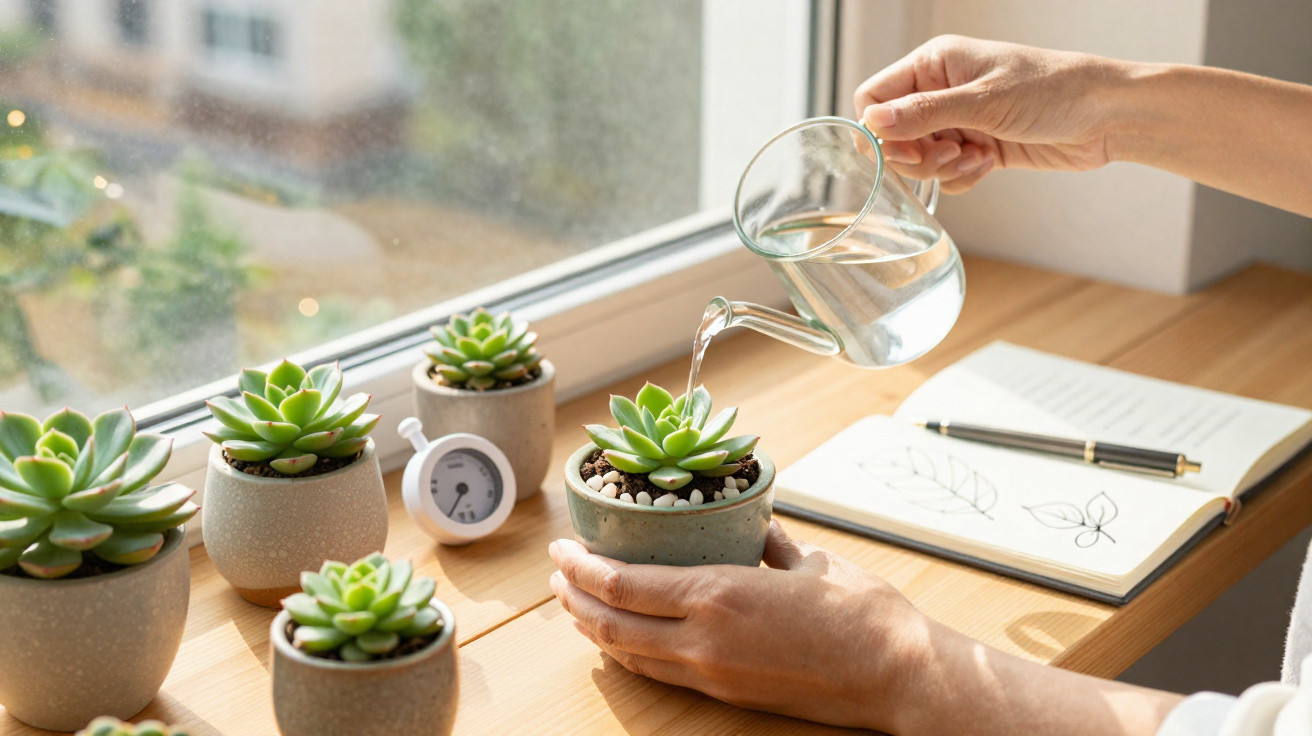
Keeping a succulent in a small pot has become an almost addictive hobby, especially for people living in flats, with tiny balconies or simply wanting some greenery on their desk. They are hardy, certainly, but they are not as “indestructible” as many people assume: too much watering, insufficient light or an unsuitable growing medium can quickly affect the plant. Learning these basic care steps is what separates a succulent that lasts a few months from one that stays with you for years.
Why does a succulent in a small pot need regular attention?
A succulent in a small pot has far less soil to retain water and nutrients, so overwatering or routinely leaving the pot waterlogged can cause problems very quickly. Its roots may start to rot unnoticed, and you will often spot the issue only once the plant is already weak, even if its leaves still look firm on the outside.
The smaller size also affects temperature: the pot heats up and cools down rapidly, meaning the growing medium can dry out in no time during hot weather and remain overly damp in cold or rainy spells. Making a habit of checking the soil, touching it with a finger and looking at the colour and texture of the leaves is almost like a quick “check-up” that prevents unpleasant surprises.
How to prepare the ideal pot for a small succulent
To keep a succulent healthy in a small pot, start with the essentials: choose a container with drainage holes, use a light, free-draining mix and, where possible, place a layer of stones at the bottom. These straightforward measures lower the risk of waterlogging and support steadier root growth.
In practical terms, you can follow a simple process and reuse plenty of items already available at home, as long as you ensure that water can drain away properly and that the growing medium does not turn muddy. A well-prepared pot includes:
- A pot with at least one central drainage hole and, ideally, more than one to let excess water escape.
- A drainage layer of gravel, expanded clay or broken ceramic pieces at the base of the pot.
- A light growing medium combining ordinary soil with coarse sand, perlite or fine gravel for faster drying.
- A saucer beneath the pot only if you remember to empty any collected water after watering.
How to water and light a succulent in a small pot
Rather than adding a little water every day “just in case”, a succulent benefits from thorough but infrequent watering, only once the growing medium is completely dry. Water until it runs out through the drainage holes, always using your finger or a wooden stick to check that the soil deeper down is no longer damp.
Light is just as important: the plant needs plenty of brightness, either strong indirect light or a few hours of gentle sunshine, while avoiding intense midday sun in warm areas. If it starts stretching out, producing elongated stems and losing its plump shape, that is a clear sign it needs a brighter position.
How to recognise warning signs and establish a simple care routine
The leaves act as a “warning panel” for a succulent in a small pot, helping you adapt its routine before its condition worsens. Wilted, wrinkled leaves usually suggest too little water, whereas translucent, very soft leaves or leaves that detach easily indicate excess moisture and the possible beginning of rot.
A useful approach is to set aside two moments each week for an overall inspection: feel the growing medium, make sure the pot drains properly, turn it occasionally so it receives even light, and look for unusual marks or scorched leaves. With these few minutes of consistent attention, small changes to watering, light or the growing medium are enough to keep the succulent compact, firm and attractive for many years, even when it occupies the smallest corner.

Comments
No comments yet. Be the first to comment!
Leave a Comment