
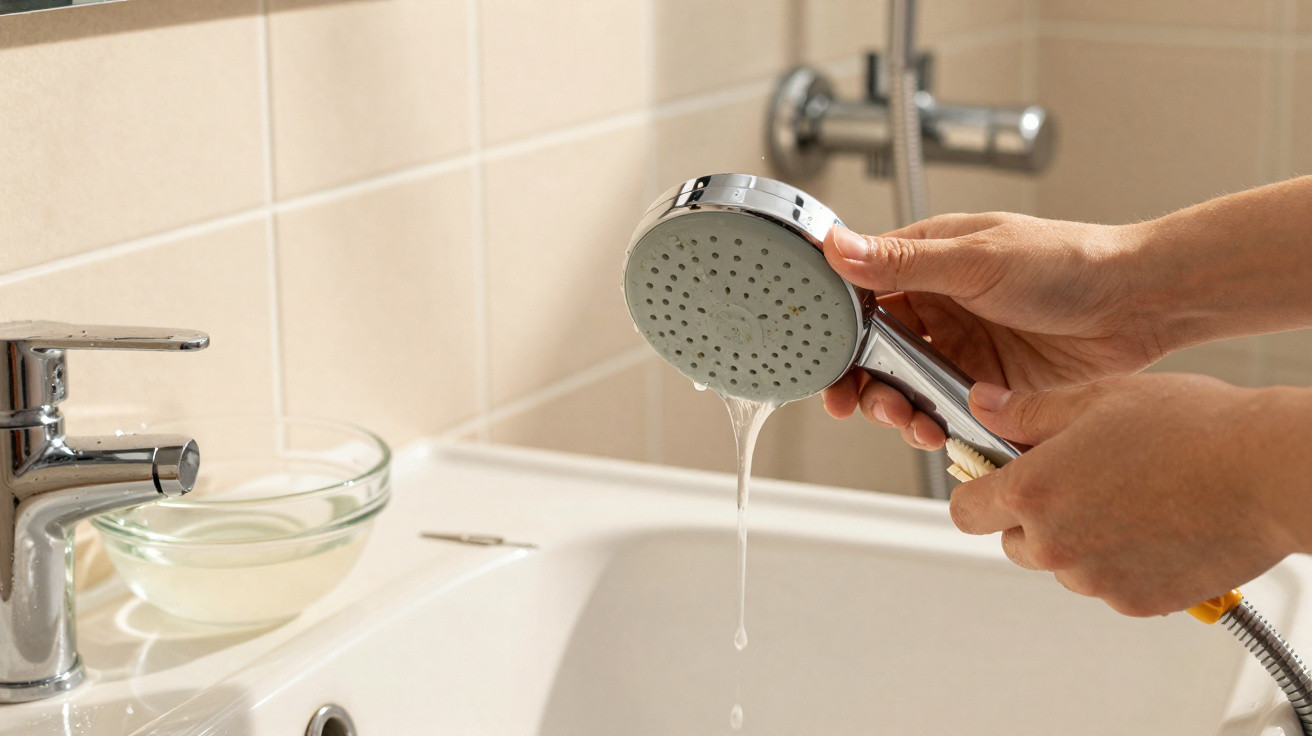
Low shower pressure usually becomes noticeable when washing is no longer effective. In many homes, the issue is not the water tank or internal pipework, but the shower head itself: its small holes can become blocked over time, reducing water flow and causing waste and everyday discomfort.
What causes low pressure in the shower?
In most homes, low pressure is linked to a blocked shower head. In areas with harder water, which contains higher levels of calcium and magnesium, limescale commonly builds up inside the nozzles, gradually narrowing the space through which water can flow.
Minerals are not the only cause. Fine sand, rust from pipework and debris from the public water supply can also collect inside the shower head. The problem is more common with older showers or those that are cleaned infrequently, resulting in longer showers and increased water and energy use.
Watch a video on the Engehall Cursos YouTube channel explaining a simple cleaning method for unblocking the shower’s small holes and fully restoring water pressure:
https://www.youtube.com/watch?v=y3n9E94oI1M
How to unblock a shower head simply
If you want to unblock the shower holes without spending much, cleaning with a mild acidic solution is often highly effective. A common household option is a kitchen product that helps dissolve mineral deposits without harming most metals and plastics used in the fitting.
The basic process for clearing the shower head can be broken down into straightforward steps that may restore the flow without professional assistance:
- Switch off the shower at the main switch or circuit breaker to avoid any electrical risk.
- Check whether the model allows the shower head to be removed easily; if it does, unscrew the part.
- Prepare a container or sturdy plastic bag containing a mild cleaning solution.
- Submerge the shower head, ensuring the mixture reaches every hole.
- Leave it for several hours so that the mineral deposits can soften.
- Rinse it thoroughly under running water to remove loosened residue.
- Refit the shower head and turn on the water supply to test the new water pressure.
What should you do if some holes remain blocked?
Even after thorough soaking in a cleaning solution, some holes in a blocked shower head may still be partly obstructed. In these areas, the limescale is usually more compact and needs more detailed attention before normal flow can return.
In this situation, gentle mechanical removal can loosen stubborn deposits and complement the chemical cleaning, provided it is done carefully to avoid damaging the material:
- Old toothbrush: helps scrub the surface of the shower head and dislodge visible residue.
- Pin, needle or thin wire: can be used delicately to clear one particular hole.
- Soft cloth: helps remove external dirt and dry the shower at the end.
How can you prevent new blockages in the shower head?
Once you have unblocked the shower head and restored the flow, regular maintenance is the best way to prevent further blockages. In areas with very hard water, it is worth taking extra care and even considering additional solutions to reduce mineral build-up.
Simple measures, such as quick monthly cleaning and fitting filters or anti-limescale devices, extend the shower’s working life and keep the pressure stable for longer. If the pressure remains low even with a clean shower head, there may be an issue with valves, pipework or the supply itself, requiring a professional assessment of the entire plumbing system.



Comments
No comments yet. Be the first to comment!
Leave a Comment