
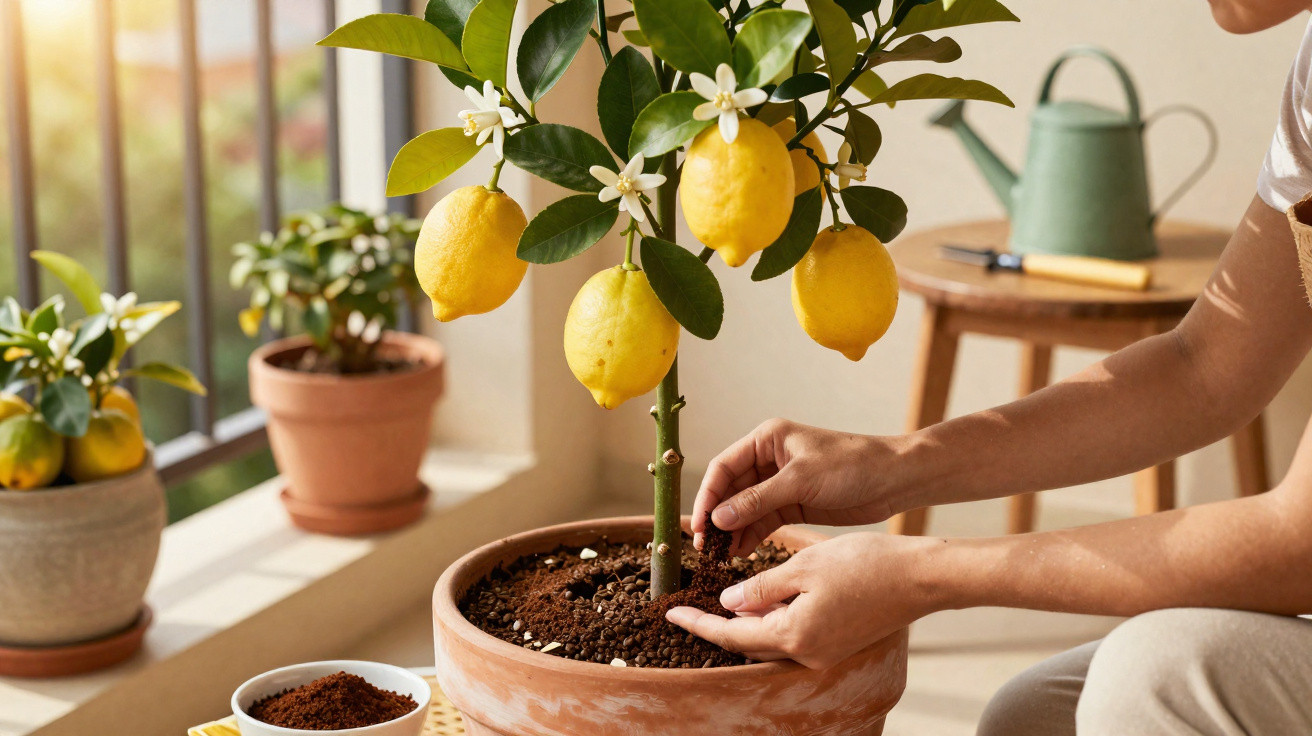
From mid-March, it becomes clear whether your lemon tree will remain stunted or suddenly take off – a frequently discarded kitchen by-product can make all the difference.
In spring, many amateur gardeners wonder why their lemon tree has yellow leaves, drops its blossoms and produces barely any fruit. The good news is that this is often not down to having a “black thumb”; the tree is simply hungry after winter. Right now, around 15 March, a straightforward kitchen trick can give its development a substantial boost.
Why mid-March matters so much for lemon trees
Following the dark, cool winter months, a lemon tree is in something of a dormant phase. It has grown very little, while its roots and canopy have been operating at minimal capacity. Once the days lengthen and temperatures rise, the plant begins growing again – provided it receives nutrients in good time.
Typical signs of a weakened lemon tree after winter include:
- Leaves turning yellow or looking dull
- Blossoms dropping before they can develop into fruit
- Small fruits staying tiny and drying out
- A canopy that appears generally sparse and thin
This is precisely the point, from around mid-March onwards, when targeted care pays off. The nutrients supplied now are converted directly into fresh shoots, new foliage and robust fruit set. Miss this window and you may later be disappointed by a poor harvest.
“The period around 15 March is the starting signal: this is when it is decided whether your lemon tree merely survives – or visibly takes off.”
Coffee grounds: the overlooked wonder product rather than rubbish
The quiet star among kitchen waste is used coffee grounds. What many households thoughtlessly throw away is a valuable source of nutrients for lemon trees.
Coffee grounds contain nitrogen in particular, along with organic matter and mild acids. This combination suits citrus plants well, as they prefer soil that is slightly acidic and loose. Nitrogen encourages fresh, deep-green foliage, while the organic material improves soil structure.
Benefits of coffee grounds for a lemon tree include:
- Stronger, greener foliage
- More new shoots and a denser canopy
- More active soil organisms and better-aerated compost
- Slight acidification of the soil – ideal for citrus plants
Those who regularly give a tired lemon tree small amounts of coffee grounds from March onwards will often notice initial changes within a few weeks: new shoot tips, a fresh sheen on the leaves and less yellowing.
How to use coffee grounds without harming your lemon tree
The biggest mistake is using too much. An excess of coffee grounds suffocates the compost and reduces aeration. Used correctly, however, they work as a gentle, natural fertiliser.
Step-by-step guide to using coffee grounds on a lemon tree
- Allow the coffee grounds to cool thoroughly after brewing.
- Leave them to dry in the air for 1–2 days to prevent mould.
- Carefully loosen the top 2–3 cm of compost around the root area.
- Sprinkle on a very thin layer of coffee grounds, without pressing it against the trunk.
- Work it in lightly, then water thoroughly.
Take particular care with potted trees: the growing medium is limited, and waterlogging and compaction occur more quickly. It is better to begin with a small amount and watch how the tree responds. In a garden bed, spread the coffee grounds as a loose ring 20–30 cm away from the trunk.
“Less is more: it is better to apply very thin doses more often than to seal the soil with a compact layer of coffee grounds.”
A powerful pairing: coffee grounds and banana peel together
To enhance the effect further, combine coffee grounds with another kitchen staple: banana peels. They are rich in potassium, a nutrient that is extremely important for flowering, fruit size and plant strength.
Their roles are clear:
- Coffee grounds – encourage foliage growth, development and overall vigour
- Banana peel – supports flowers, fruit set and flavour
This combination works particularly well in spring and throughout summer: the tree first produces strong foliage and new shoots, then directs energy into flowers and fruit.
Simple recipe for a liquid nutrient mix
A mild liquid fertiliser can be made from these two ingredients in just a few steps:
- 2 banana peels
- 1 litre of water
- 2 tablespoons of previously used coffee grounds
Here is how to make it:
- Roughly chop the banana peels and simmer them gently in 1 litre of water for 15 minutes.
- Turn off the heat, stir in the coffee grounds and allow the mixture to cool completely.
- Strain the liquid, adding the solids to the compost heap, and dilute it in 5 litres of water.
- From spring until late summer, water the lemon tree once a month with this solution, applying it to already slightly moist compost.
The mixture is gentle and will not overwhelm the roots. It is also suitable for other potted citrus plants, such as small orange or mandarin trees.
Common mistakes that slow your lemon tree’s growth
Nutrients alone are not enough if the essential aspects of care are wrong. Many issues can be traced back to recurring mistakes.
| Mistake | Effect on the lemon tree |
|---|---|
| Waterlogging in a pot or garden bed | Rotting roots, leaf drop and growth stopping |
| Heavy, compacted soil | Too little oxygen and weak root development |
| An overly thick layer of coffee grounds | Crusting, with water and air unable to penetrate properly |
| Fertilising in autumn and winter | Soft growth that is more vulnerable to cold and disease |
| Permanent shade or a draughty position | Hardly any flowers, slow growth and leaf loss |
The basic rule is this: the soil must be loose and free-draining; the pot needs a large drainage hole plus a drainage layer, for example made from expanded clay. During the colder months, keep the lemon tree protected in a bright, fairly cool place, rather than in warm central-heating air.
Watering, pruning and position: getting the most from the trick
Coffee grounds and banana peels can only work at their best when the remaining conditions are right. Three factors are especially important.
Water correctly
Lemon trees like evenly moist compost, but never soil that is soaking wet. Allow the upper layer to dry before watering again. In summer, this may be necessary every few days depending on the temperature, while in winter it will be considerably less frequent. If you are unsure, check 3–4 cm down into the growing medium with your finger.
Prune gently
Hard pruning weakens the tree. Instead, remove only dead or inward-growing branches in late winter or very early spring. Thin the canopy lightly rather than cutting it back completely. This leaves sufficient leaf area to process the additional nutrients.
Choose the ideal spot
Outdoors, a lemon tree needs a warm, full-sun position sheltered from cold winds. In areas where frost occurs, it should be moved to a bright winter location at 5–10 degrees. The more light it receives there, the faster it will begin growing again in March.
What can realistically change after 15 March
If you use coffee grounds consistently from mid-March and apply the banana mix when needed, your lemon tree may recover visibly. Its canopy can look fuller, the new leaves fresher and fresh shoot tips will emerge. Visually, it can often seem as though the tree has almost doubled in volume – particularly if it was fairly bare beforehand.
There are no overnight miracles. It generally takes three to six weeks to see whether the tree is responding well. Those who then continue fertilising moderately and pay attention to water, light and air will create the basis for reliable flowering and a respectable lemon harvest later in the year.
Practical extra advice for beginners in citrus care
Many people underestimate how strongly potted citrus plants depend on pot size. A pot that is too small and completely filled with roots noticeably restricts development. As soon as roots are growing out of the bottom or hardly any compost is visible, it is worth moving the plant into a slightly larger container with a fresh, free-draining citrus compost mix.
If you do not have a coffee machine, you can easily ask your favourite local café for coffee grounds – many businesses are pleased not to have to dispose of the material. The key points remain the same in every case: dry the grounds before use, apply them sparingly and watch your own tree’s response. This turns simple kitchen waste into a remarkably effective tool for strong lemon trees on a balcony, patio or in the garden.





Comments
No comments yet. Be the first to comment!
Leave a Comment