
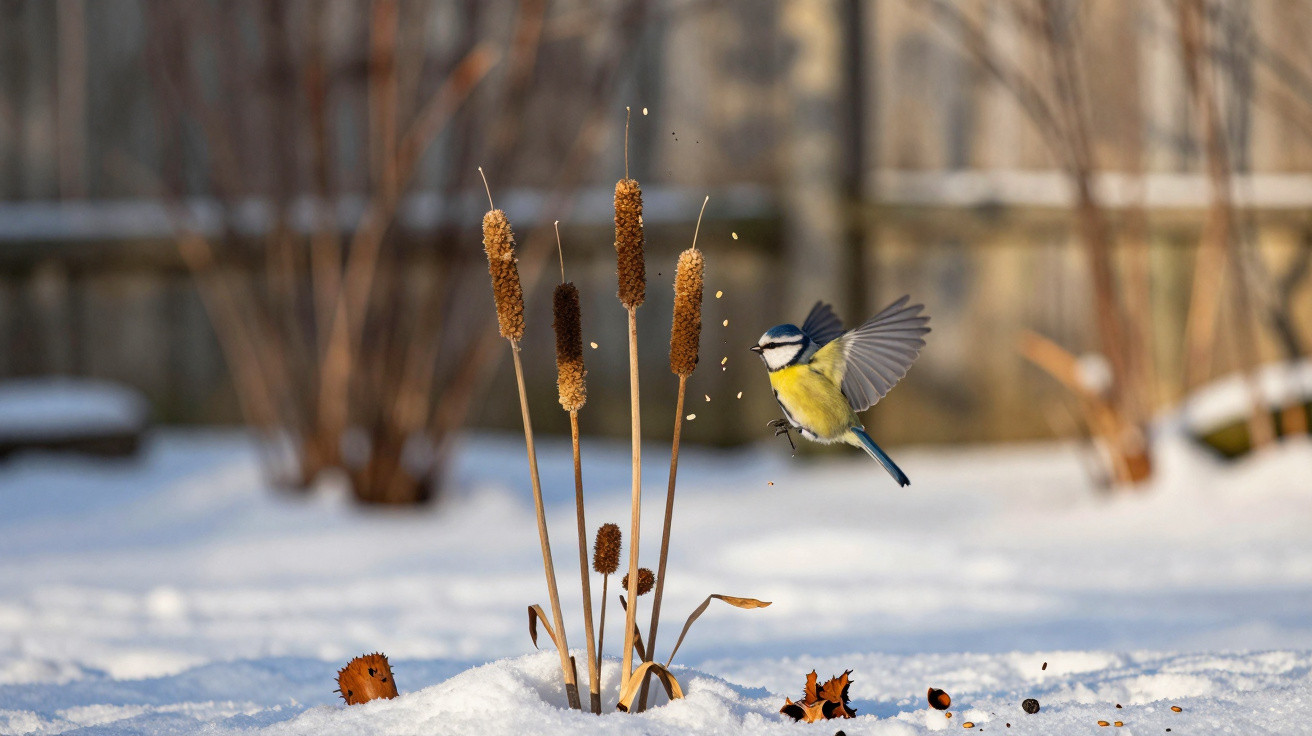
Plant between March and April and, with very little effort, you can lay the groundwork for a lively winter garden. Rather than continually topping up bird feeders, one perennial provides a dependable seed source at eye level. Better still, it is tough, flowers spectacularly in summer and feeds birds in winter. It is time to refresh the garden.
Why this perennial attracts tits in winter
At the centre of its flowers, the plant produces countless tiny nutlets known as achenes. These contain oil-rich seeds: exactly the energy boost small songbirds need during the coldest months. Tits, goldfinches and greenfinches find lipids and proteins here to help maintain their body temperature when little else is available.
It also offers food in an ideal position. Its sturdy stems hold the seed heads at a safe height, keeping them away from mice and saving birds from having to forage on the ground. For birds weighing just 15 to 20 grams, these stable “feeding stems” provide a secure perch and a generously stocked table.
“Leaving the dried flower heads in place provides free winter food – with no refilling, no feeder and no stress.”
The plant behind the winter bird food
The plant is purple coneflower (Echinacea purpurea). This hardy perennial, a member of the daisy family, tolerates severe frosts down to around –20 °C. It remains in the same spot for many years, forming strong clumps and making it a long-term investment among garden plants. In summer, it produces striking ray-like flowers around its characteristic spiny cone. Once flowering has finished, every flower head becomes a natural seed dispenser – something tits readily appreciate.
One plant performs two jobs. First, it adds colour and structure to the summer border; afterwards, it feeds winter birds. One scene, with benefits in two seasons.
How to plant purple coneflower in spring
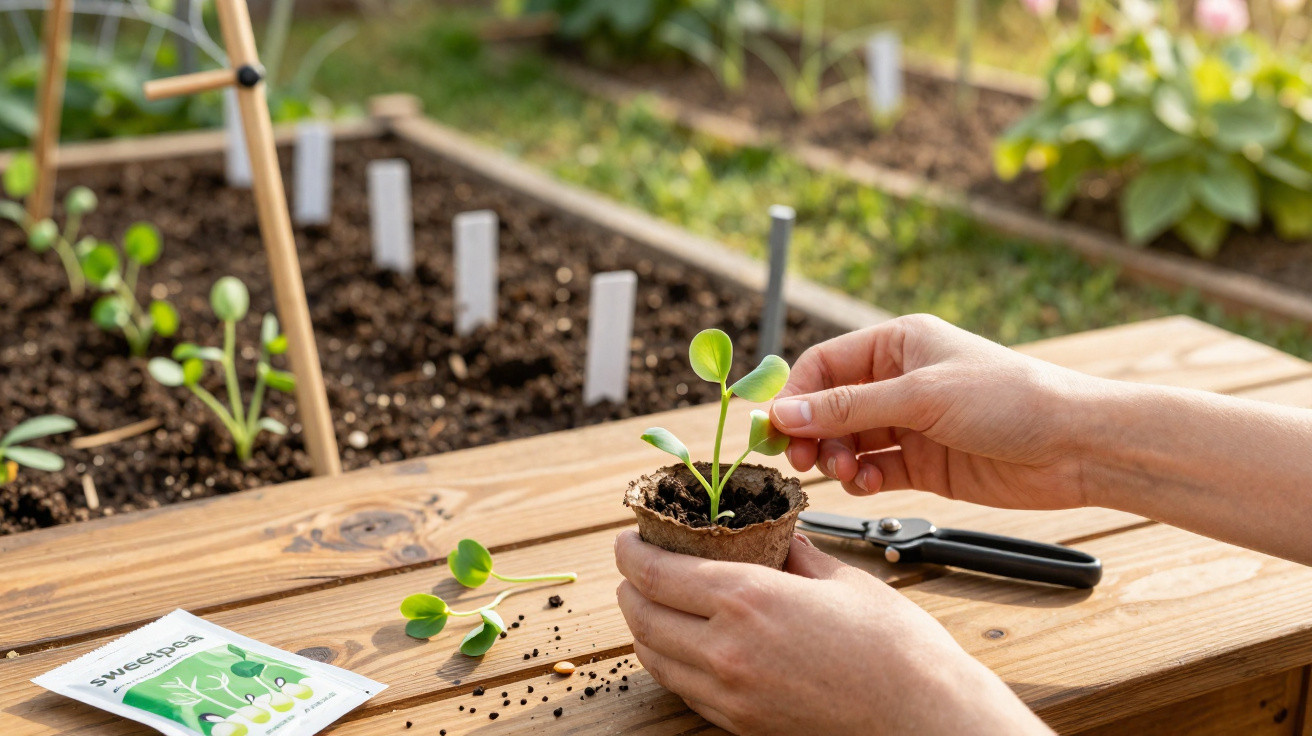
The ideal planting period runs from mid-March to the end of April. The soil is still moist, allowing roots to establish deeply before summer heat arrives. Give this perennial a sunny site and it will reward you with strong stems and plentiful seed heads in its very first winter.
- Position: Full sun, with at least 6 hours of direct sunlight each day.
- Soil: Free-draining and nutrient-rich; work in sand and some gravel in heavy soil.
- Planting: Water the root ball, plant it at the same depth as in its pot, then water it in thoroughly.
- Spacing: 40–50 cm; for densely planted borders, use up to 5 plants per square metre.
- First-year care: Water only during prolonged dry spells.
- In autumn: Leave the faded heads standing – they are the winter store cupboard.
| Step | Recommendation |
|---|---|
| Planting window | Mid-March to the end of April |
| Position | Sunny, open to the wind and clearly visible from the house |
| Plant spacing | 40–50 cm, up to 5 perennials per m² |
| Water | Water generously after planting, then only during drought |
| Winter food | Do not cut off flower heads |
Bird feeders are useful – but the natural bar is better
Feeding stations can help in winter, but they also create work. Seeds may turn rancid, while a high concentration of birds increases the risk of infections such as salmonellosis. Food dropped on the ground can attract rodents. Choosing natural food sources reduces these pressures. Purple coneflower supplies clean, dry seeds on the stem – portioned naturally and hygienically.
If you do still use a bird feeder, hygiene matters: clean it regularly with hot water, store food in dry conditions, remove old leftovers and move feeding stations from time to time. Combined with a perennial border, this noticeably reduces reliance on the feeder.
Summer value, winter benefit
During summer, Echinacea attracts wild bees, bumblebees and butterflies. It provides pollen and nectar, adds height and structure to a border, and works well alongside many other plants. In winter, the cone takes over, offering its oil-rich seeds. This dual role makes the perennial a useful building block for greater biodiversity close to home.
Smart combinations for a long-lasting bird buffet
The right plant mix can extend the food supply well into winter. Include several species that also produce worthwhile seed heads. This creates a staggered buffet that caters for birds with different-sized beaks.
- Globe thistle (Echinops): Sturdy spherical heads, popular with goldfinches.
- Black-eyed Susan (Rudbeckia): Plenty of small seeds and long-lasting stems.
- Autumn asters: Late flowers followed by fine seeds for small beaks.
- Wild teasels: Architectural stems that benefit seed-eating birds.
- Sunflowers: A classic source of large seeds; simply leave the heads standing.
Practical tips that often make the difference
Plant several groups rather than isolated single specimens. Flocks of tits feel safer in borders with more than one landing point and will stay for longer. Ensure there is a clear flight path, with no glass surfaces directly behind the plants. Keeping a distance of two to three metres from tall shrubs gives birds somewhere to retreat without providing cats with cover immediately beside the food source.
Do not cut the perennials back until the end of February. Until then, the stems serve not only as food holders, but also as winter structure in the border and shelter for insects. Tidying beds in autumn often means clearing away the birds’ pantry as well.
What “achenes” are – briefly explained
Achenes are small, single-seeded nut fruits. They do not open by themselves, yet they protect the seed reliably from moisture. On purple coneflower, they are tightly packed into the prickly cone. This collection of many small, oil-rich seeds is precisely why the perennial is so popular in winter.
Why it pays to act now
Plant in spring and you can enjoy activity outside the window in the very first winter. The soil is still damp, root formation happens with little stress, and the perennial enters summer well established. Later plantings are more quickly affected by watering stress and often remain sparse in their first year. The opportunity is open now – and a border of purple coneflower can make all the difference.
The result is less work at the bird feeder, more species in the garden and a daily spectacle visible from the breakfast table. One small visit to the perennial section can turn the garden into a stage for feathered visitors.

Comments
No comments yet. Be the first to comment!
Leave a Comment