
Blending cloves with white vinegar is one of those cleaning methods whose results far exceed what the two ingredients might suggest on their own. Cloves contain eugenol, a substance with antifungal and bactericidal properties that enhances the acidity of vinegar, turning the pairing into one of the most effective options for cleaning and protecting porous surfaces such as wood and MDF. The result is a fragranced cleaning liquid without harsh chemicals, made from ingredients available in virtually any kitchen.
Why are cloves so effective on porous surfaces?
Cloves contain between 70 and 90% eugenol, a phenolic compound with well-documented antifungal and bactericidal effects that has been used in the pharmaceutical and dental industries for decades. On porous materials such as natural wood and MDF, where fungi and bacteria settle into tiny cracks and pores, eugenol penetrates these structures and acts on microorganisms far more effectively than conventional surfactant-based cleaning products, which only work on the outer layer without reaching inside the material.
This penetration ability is particularly important for furniture made from MDF, a material widely used for cupboards, shelving units and tables. MDF has a porous internal structure that absorbs moisture and encourages fungal growth and mould around joints and uncovered edges - precisely where clove eugenol works most effectively after the blended mixture has been applied.
- Melamine-faced MDF: This common furniture finish responds very well to the diluted solution, delivering noticeable results when removing marks and protecting edges against fungi.
- Unvarnished solid wood: Apply using a lightly dampened cloth, then dry it immediately after cleaning to prevent moisture from entering the fibres and causing warping.
- Varnished or lacquered wood: Use the diluted solution carefully and test it first on an inconspicuous area, as vinegar acidity may dull certain varnishes with repeated use.
- Unfinished MDF edges: A concentrated application creates a protective barrier against moisture and fungi that develop in this more vulnerable part of the furniture.
- Avoid marble and natural stone: Vinegar acidity etches calcareous stone surfaces, including marble and travertine, permanently damaging their finish.
How white vinegar boosts clove action and tackles the smell
White vinegar has an acidic pH that breaks down mineral deposits, remnants of previous cleaning products, and the surface layer of grease and dust that builds up on furniture. Combined with clove eugenol, this acidity encourages the release of active compounds during blending, creating a solution that works simultaneously on three different types of dirt: organic, mineral and microbiological.
The combination also addresses one of the main drawbacks of using vinegar alone: the sharp, lingering smell that many people dislike. The distinctive, powerful fragrance of cloves masks the acidic vinegar odour during and after use, leaving furniture with a pleasant natural scent that gradually fades over several hours without leaving an acidic smell in the room.
How to prepare the mixture correctly in a blender
Proper preparation determines the ideal eugenol concentration in the solution and how effectively it cleans and protects furniture. The clove-to-vinegar ratio and blending time directly affect the amount of eugenol extracted from the cloves and incorporated into the finished mixture.
Complete step-by-step method for preparing the solution at the ideal concentration
Six stages, from preparation to correct storage
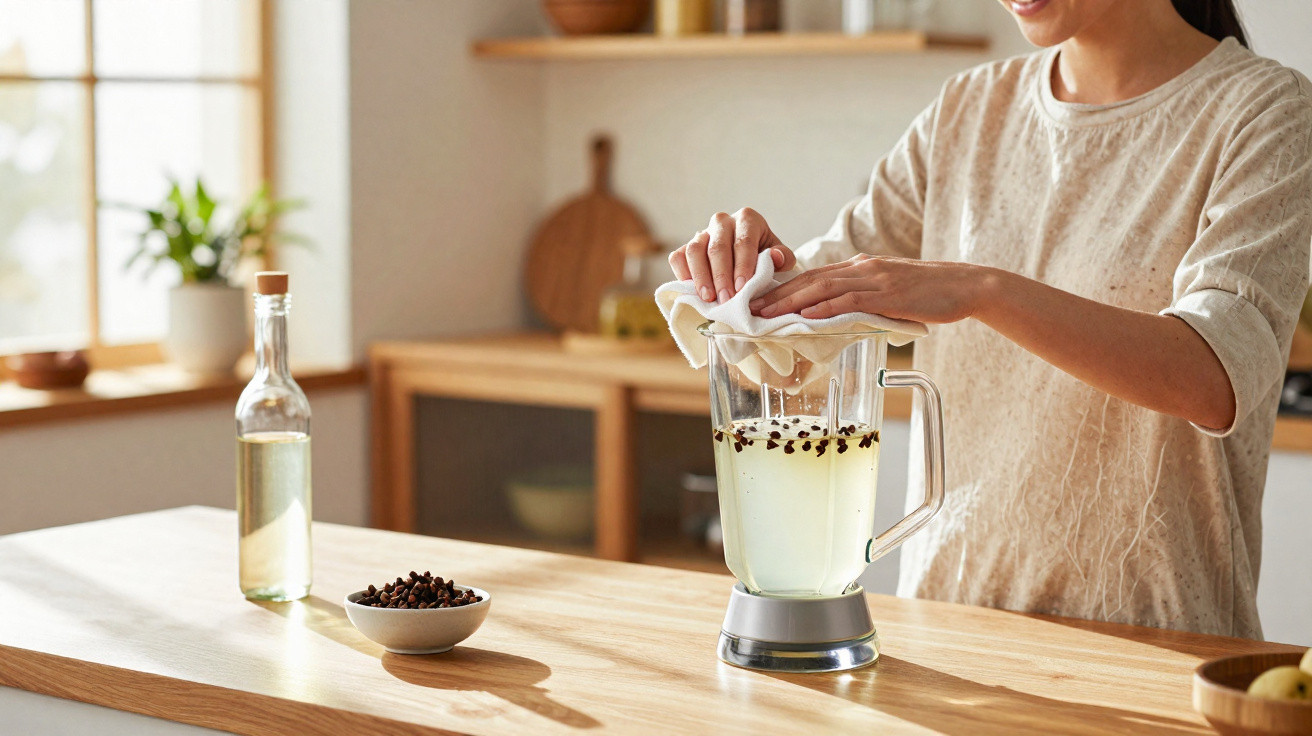
Ingredients: Use two tablespoons of whole cloves for every 500 ml of white vinegar, adjusting the ratio to achieve the desired strength. Blending: Blend the cloves and vinegar on high speed for 40 seconds, pause for 10 seconds to prevent the motor from overheating, then blend for another 20 seconds. Straining: Pass the mixture through a fine cloth or coffee filter to remove solid clove fragments, which could scratch delicate surfaces during application.
Dilution: For general furniture cleaning, dilute the strained solution using one part mixture to two parts water; use it without further dilution to treat areas with visible mould. Spray bottle: Pour it into a spray bottle for easier, more even and controlled application across surfaces. Storage: Keep any remaining solution in a sealed dark bottle in a cool place away from direct sunlight for up to 30 days, without any significant loss of effectiveness.
Straining is a stage that should not be missed, even when you are in a hurry. Crushed clove particles have uneven, abrasive edges that can scratch the melamine coating on MDF furniture when the solution is applied with a cloth. A clear, filtered liquid ensures safe application on any surface compatible with the mixture.
How often to apply it to keep furniture protected
The best application frequency depends on the setting where the furniture is kept and the space's history of dampness. For furniture in well-ventilated, low-humidity rooms, applying the diluted solution once a month as part of regular cleaning is enough to maintain active antifungal protection while keeping the surface clean and fragranced.
For furniture with a history of mould, or pieces kept in damp environments - such as bedrooms with poor airflow or areas near the kitchen and bathroom - applying it every two weeks to the most vulnerable parts, including edges, joints and cupboard backs, creates a stronger protective barrier that prevents fungi from returning far more effectively than any off-the-shelf industrial product.
Why this clove and white vinegar mixture outperforms commercial furniture cleaners
Commercial furniture cleaners are mainly formulated to add shine and fragrance to the surface, without any genuine action against fungi and bacteria established in the material's pores. Many contain silicone which, with repeated use, builds up on furniture surfaces, attracts dust more readily and makes it harder for subsequent treatments, such as maintenance waxes and varnishes, to adhere.
A clove and vinegar mixture leaves no silicone residue or chemical film on furniture once it has dried. Eugenol acts and disperses naturally, leaving only residual antifungal protection within the material's pores, while the vinegar evaporates completely without any remaining active compound that could interfere with other maintenance products. For anyone wanting to clean, protect and fragrance household furniture with one homemade product, using familiar ingredients at a negligible cost, this is one of the most complete everyday cleaning discoveries available. Share it with anyone who has MDF furniture and struggles with mould around cupboard edges and joints.

Comments
No comments yet. Be the first to comment!
Leave a Comment