
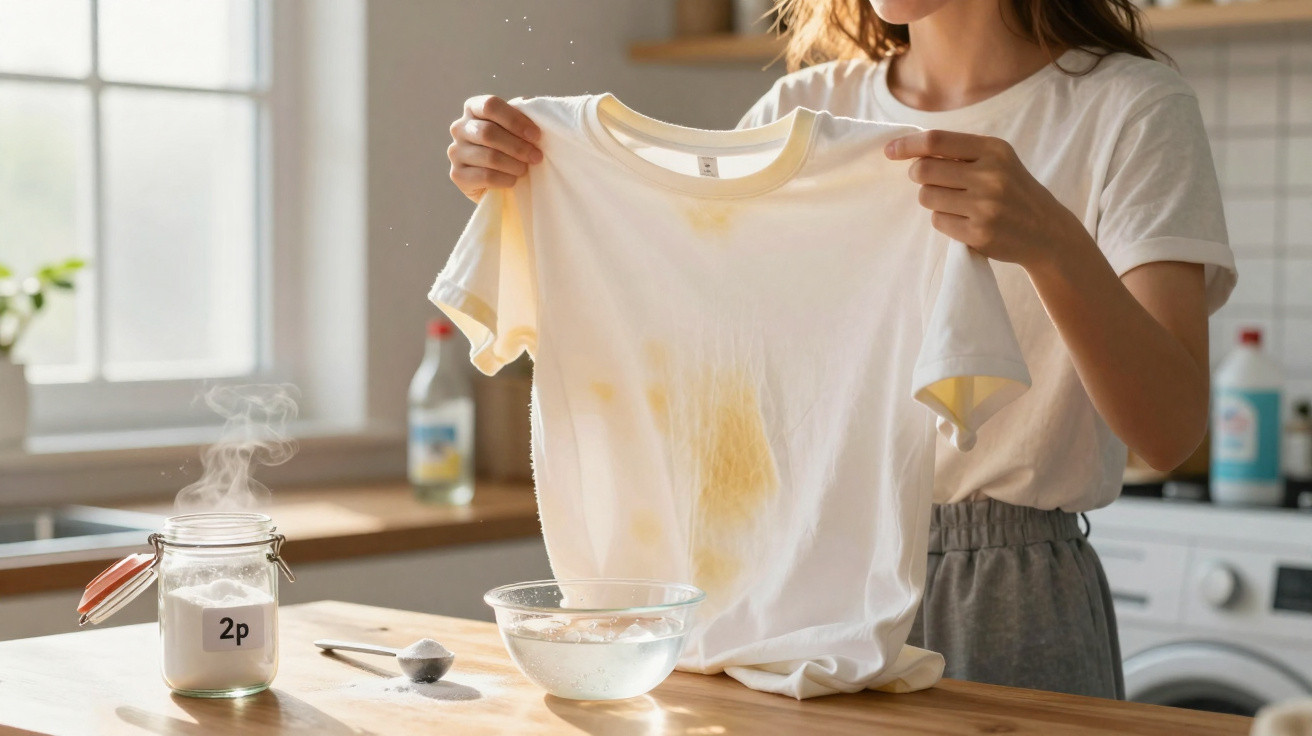
White clothes often turn yellow over time, particularly around the underarms, collar, cuffs and other areas where sweat, deodorant or product residue can build up. The so-called 2p method has become known for relying on an inexpensive, readily available ingredient: bicarbonate of soda. Used correctly, it can help lift the stain and restore a cleaner-looking finish to the fabric without immediately resorting to bleach.
Why do white clothes turn yellow?
Yellow stains are not caused by ordinary dirt alone. They are often created by a combination of perspiration, natural skin oils, deodorant, antiperspirant and detergent residue left in the fabric fibres. Over time, this mixture oxidises, making the garment look worn and aged.
Putting white clothing away without washing it thoroughly, using too much product or drying garments in a damp place can also make the issue worse. Before washing everything again in the usual way, it is worth pre-treating the stained area directly.
How does the 2p method work?
The 2p method uses bicarbonate of soda as the main ingredient in a cleaning paste. Its name comes from the low cost of the ingredient, as a small amount is usually enough to treat one garment. The paste helps target yellowing, especially when the stain is concentrated in one particular area.
The key is not to put the item straight into the washing machine and expect an ordinary wash to solve the problem. The stain should first be dampened and treated. Then wash the garment as normal, preferably in cold or warm water, but never very hot water, as heat can set some residues into the fabric even more firmly.
How to apply the 2p method to white clothes properly
To make the treatment, combine bicarbonate of soda with a little water until it forms a creamy paste. Apply it to the yellow stain, spread it with your fingers or a soft brush, and leave it to work for around 20 to 30 minutes. Then rinse and wash the garment as usual.
- mix 2 tablespoons of bicarbonate of soda with a small amount of water;
- apply the paste directly to the yellow stain;
- rub gently without damaging the fabric;
- leave it to work for 20 to 30 minutes;
- rinse and wash the clothing as usual.
For older stains, the process may need to be repeated. Even so, two gentle applications are better than scrubbing hard and damaging the clothing fibres.
When should you use vinegar or washing-up liquid as well?
If the stain is linked to deodorant or natural oils, a little mild washing-up liquid may help before applying the bicarbonate of soda paste. It works more effectively on the greasy part of the residue. White vinegar, meanwhile, can be used in a quick water soak to help loosen build-up and reduce odours.
The most important precaution is never to mix vinegar with bleach. This combination can release dangerous gases. It is also wise to test any mixture on a hidden part of the garment, particularly if the fabric is delicate or has embroidery or a special finish.
How can you stop yellowing from returning?
Once the stain has been removed, prevention makes a significant difference. Avoid storing white clothes while damp, do not use excessive amounts of detergent, and wait for deodorant to dry before putting the garment on. Washing white T-shirts soon after wearing them also helps, especially on hot days.
The 2p method works best as a pre-treatment. Bicarbonate of soda can help loosen yellowing, but the result depends on the fabric type, the age of the stain and the products built up in the fibres. With patience, correct application and suitable washing, many white clothes can regain a fresher appearance without needing to be discarded straight away.


Comments
No comments yet. Be the first to comment!
Leave a Comment