
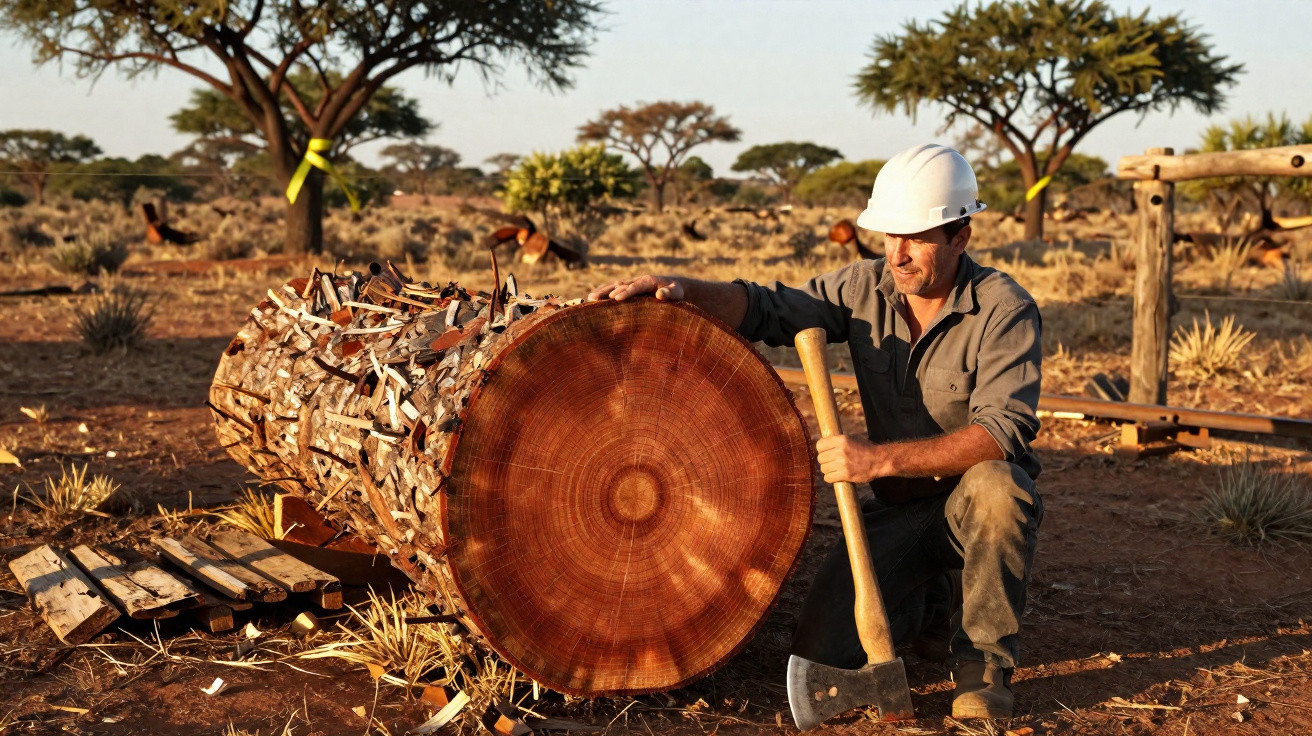
The tree most often described as producing the world’s toughest timber is the quebracho, particularly the red quebracho of the Schinopsis genus. This South American wood is renowned for its exceptional hardness, high density, and natural resistance to wear, moisture and insect attack. Its name encapsulates that reputation: “quebracho” conveys the idea of an “axe-breaker”, as working the timber demands robust tools and considerable patience.
Why is quebracho considered so tough?
Quebracho has dense fibres, a close-grained structure and high levels of natural compounds that improve its longevity. Together, these characteristics enable the wood to withstand impact, pressure, fungi, termites and exposure to the elements.
In the Janka test, which is used to assess wood hardness, certain quebracho species rank among the hardest ever recorded. The test determines the force required to press a steel ball into the timber’s surface, helping to compare resistance to scratches and dents.
Where does this tree grow naturally?
Quebracho is native to South America and occurs in parts of the Chaco region, spanning areas of countries including Argentina, Paraguay, Bolivia and Brazil. It is suited to dry, hot environments and grows slowly, conditions that help produce timber that is heavier and more compact.
That slow growth comes at a cost: trees of this kind require many years to reach a size suitable for harvesting. Consequently, extraction without proper management can place pressure on native ecosystems and reduce populations of mature trees.
What was quebracho timber historically used for?
Because of its strength, quebracho was used where timber needed to endure weight, friction and harsh weather. Rather than being valued for light, easily worked pieces, it became associated with demanding heavy-duty uses.
- Railway sleepers exposed to the weather.
- Posts, stakes and fence posts.
- Outdoor structures in contact with moisture.
- Marine components and rustic buildings.
- Extraction of tannins used for leather tanning.
Is there any wood harder than quebracho?
The answer depends on the standard being applied. In some rankings, Australian buloke is listed with a higher Janka hardness. In other commercial comparisons, red quebracho and lignum vitae are among the names most frequently mentioned for hardness, density and durability.
For that reason, “the toughest timber” is not a single, fixed category. Hardness, weight, elasticity, decay resistance, impact resistance and workability are distinct qualities. A wood may be almost impossible to scratch while still being impractical for fine joinery.
Why does this tree also require environmental care?
Quebracho timber is remarkable for its strength, but that very attribute led to extensive exploitation of the tree during various periods. Slow-growing trees cannot recover quickly when they are felled on a large scale.
Today, discussing the world’s toughest timber also means considering forest management, legal provenance and responsible use. Quebracho demonstrates how nature can produce materials with extreme performance, but its durability only has meaning when the forest supporting this tree can remain standing too.



Comments
No comments yet. Be the first to comment!
Leave a Comment